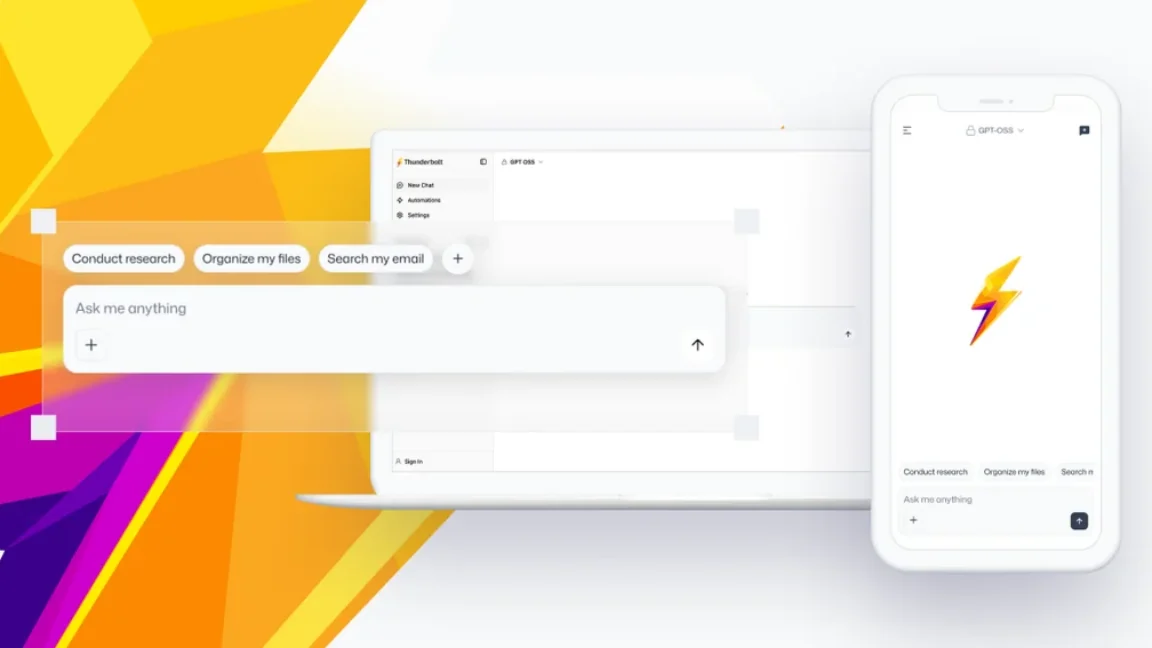
Executive Summary
- Mozilla introduces Thunderbolt, an open-source AI client leveraging deepset’s Haystack framework.
- The initiative prioritizes self-hosted infrastructure to bypass reliance on proprietary cloud models.
- Strategic shift aims to foster a decentralized AI ecosystem, reducing corporate lock-in.
Strategic Deep-Dive
The Strategic Pivot
Mozilla has officially unveiled ‘Thunderbolt,’ a new AI client architecture designed to shift the paradigm of artificial intelligence deployment. By integrating deepset’s Haystack framework, Mozilla is positioning the tool as a primary interface for local, self-hosted LLM operations. This move signals a direct challenge to the current industry standard, where enterprise and consumer data are funneled through closed-source, cloud-dependent APIs.
Technical Architecture and Specs
Thunderbolt utilizes the Haystack pipeline, a modular framework for building search and question-answering systems. By moving the inference engine to the edge—or local server—Mozilla eliminates the latency and privacy vulnerabilities inherent in third-party API calls. Key technical advantages include:
- Data Sovereignty: Local processing prevents telemetry and data harvesting by model providers.
- Modularity: The Haystack backend allows for swapping between various open-weight models (e.g., Llama 3, Mistral) without changing the core application logic.
- Decentralized Interoperability: Designed for integration with existing Mozilla tech stacks, it promotes a cross-platform approach to private AI.
Business Risks and Market Friction
While the push for decentralization is philosophically sound, the commercial path is fraught with friction:
- Hardware Constraints: Requiring self-hosted infrastructure imposes significant compute costs on the end-user or enterprise, potentially slowing adoption among non-technical demographics.
- Performance Gap: Proprietary models (GPT-4o, Claude 3.5) currently maintain a performance delta over locally hosted, open-weight models, creating a ‘quality vs. privacy’ trade-off for business users.
- Monetization Challenges: Mozilla’s non-profit structure faces difficulty competing with the multi-billion dollar R&D budgets of hyperscalers like Microsoft and Google.
Strategic Insights
Mozilla is executing a long-term play to prevent the ‘browser wars’ of the 90s from repeating in the AI era. By building the infrastructure for local AI, they are attempting to commoditize the model layer, rendering the ‘AI moat’ of Big Tech obsolete. Success depends on whether they can achieve parity in performance; if local models become ‘good enough’ for 80% of use cases, the centralized cloud-AI model faces a significant threat to its recurring revenue streams.