Executive Summary
- Blue Origin prepares for the third flight of its New Glenn rocket, featuring a reused booster.
- The transition to booster reusability marks a critical scaling phase for the New Glenn program.
- Competitive pressure intensifies as Blue Origin attempts to mirror SpaceX’s successful cost-reduction architecture.
Strategic Deep-Dive
The Technical Shift: Reusability as a Moat
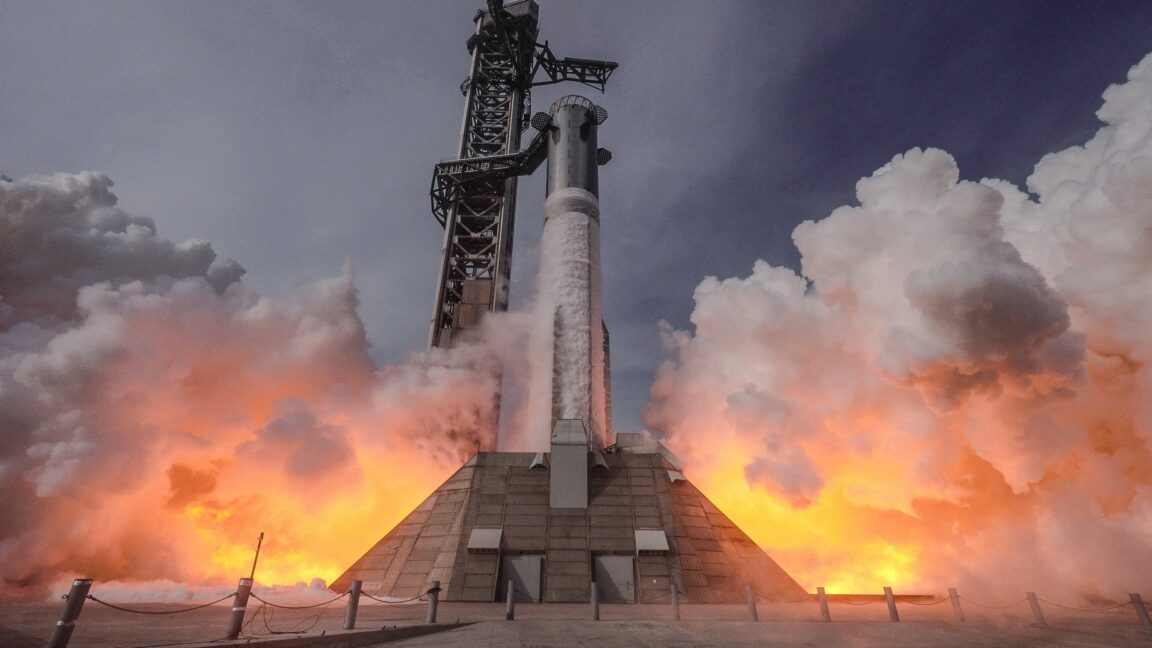
Blue Origin’s upcoming third flight of the New Glenn rocket represents more than a test of hardware; it is a validation of the vehicle’s design philosophy. By incorporating a reused booster, the company is moving toward the ‘operational cadence’ phase. Technically, New Glenn utilizes the BE-4 engine, a liquid oxygen and liquefied natural gas (LNG) propulsion system designed for high-frequency flight cycles.
The ability to recover and relaunch the first stage is the primary driver for reducing the cost-per-kilogram to orbit, a prerequisite for competing with SpaceX’s Falcon 9 and Starship architectures.
Business Risks: The Cost of Catching Up
The primary risk for Blue Origin is the ’time-to-market’ gap. While SpaceX has established a dominant market share through years of iterative flight data, Blue Origin is still in the early stages of its operational lifecycle. Any anomaly during the recovery or re-flight of this booster could lead to significant schedule slippage, eroding investor confidence and stalling the transition from development to commercial revenue generation.
Future Outlook: ESA and Market Integration
As the European Space Agency (ESA) explores tentative steps toward independent crewed launch capabilities, the landscape for heavy-lift launch providers is shifting. If Blue Origin can prove the reliability of New Glenn, it positions itself as a critical alternative for both private satellite constellations and government-backed space programs, creating a duopoly or triopoly in the heavy-lift sector that provides redundancy to the global launch market.
Strategic Insights
Blue Origin is currently in a ‘validation trap.’ The technical achievement of reusability is secondary to the business necessity of achieving high-frequency, low-cost flight intervals. Until New Glenn demonstrates consistent flight cadence, it remains a prototype rather than a market-disrupting force. The company must transition from engineering-led development to a logistics-led operation to secure its long-term viability against SpaceX.