Executive Summary
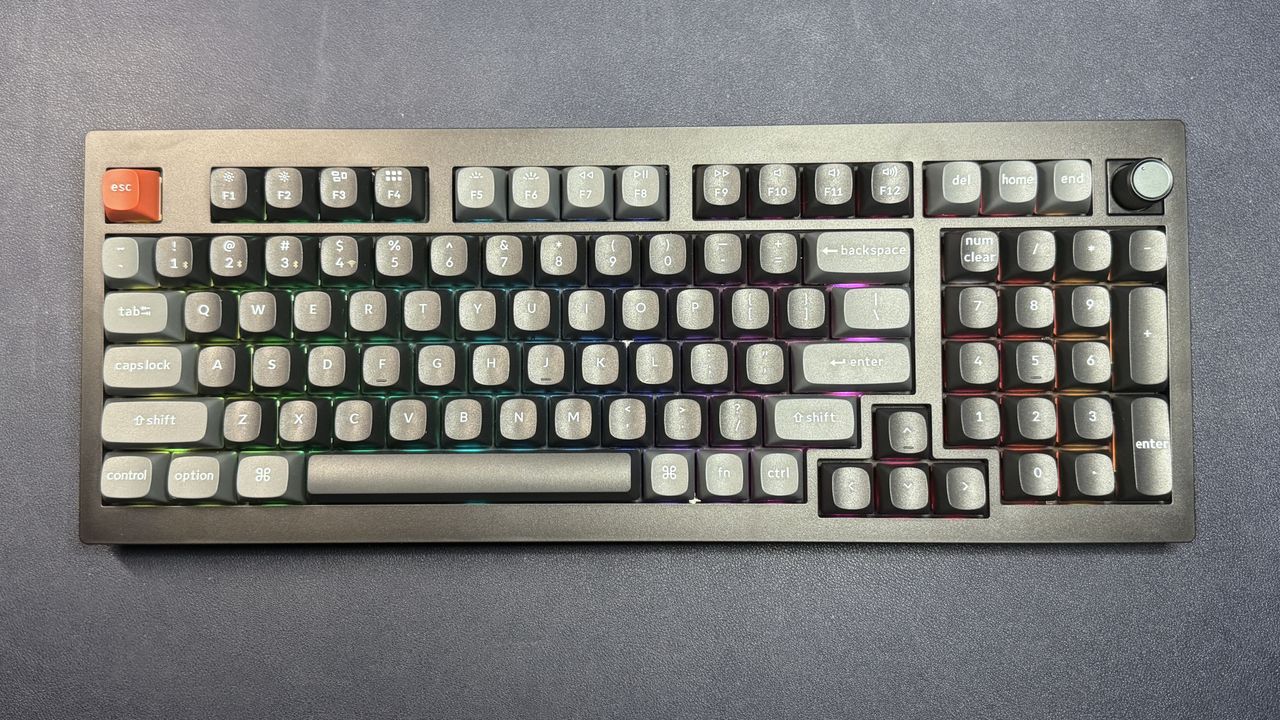
- Keychron launches the V5 Ultra 8K, bridging enthusiast-grade 8,000 Hz polling with a budget-friendly 96-percent form factor.
- The device achieves a significant technical milestone by balancing ultra-low latency with 660-hour battery efficiency.
- The move signals a commoditization of high-performance gaming features previously reserved for premium-tier peripherals.
Strategic Deep-Dive
Technical Overview
The Keychron V5 Ultra 8K represents a strategic shift in peripheral engineering. By integrating an 8,000 Hz polling rate into a 96-percent layout, the device addresses the demand for reduced input latency—a critical metric for competitive gaming—without sacrificing the utility of a near-full-size form factor. The inclusion of hot-swappable switches ensures long-term modularity, while the 660-hour battery life suggests highly optimized power management circuitry, likely utilizing advanced MCU sleep states.
Business Risks
Keychron is effectively cannibalizing its own premium product lines. By offering high-tier performance features at a lower price point, the company risks devaluing its flagship ‘Q’ series. Furthermore, the 8K polling market is becoming increasingly saturated; the primary challenge lies in whether the average consumer can discern the latency benefits of 8,000 Hz versus the standard 1,000 Hz, potentially leading to a ‘spec war’ that yields diminishing returns on investment for the manufacturer.
Future Outlook
Expect the ‘8K standard’ to become the new baseline for mid-range mechanical keyboards within the next 18 months. As sensor and MCU costs stabilize, manufacturers will pivot away from polling rate as a primary marketing differentiator, shifting focus instead toward proprietary switch actuation technologies and AI-integrated macro layers.
Strategic Insights
The V5 Ultra 8K is a tactical maneuver by Keychron to capture the ‘value-oriented enthusiast’ demographic. By democratizing high-polling rates, they are forcing competitors to abandon proprietary ‘gaming-only’ pricing models, effectively commoditizing high-performance peripherals and raising the barrier to entry for smaller boutique keyboard brands.