Executive Summary
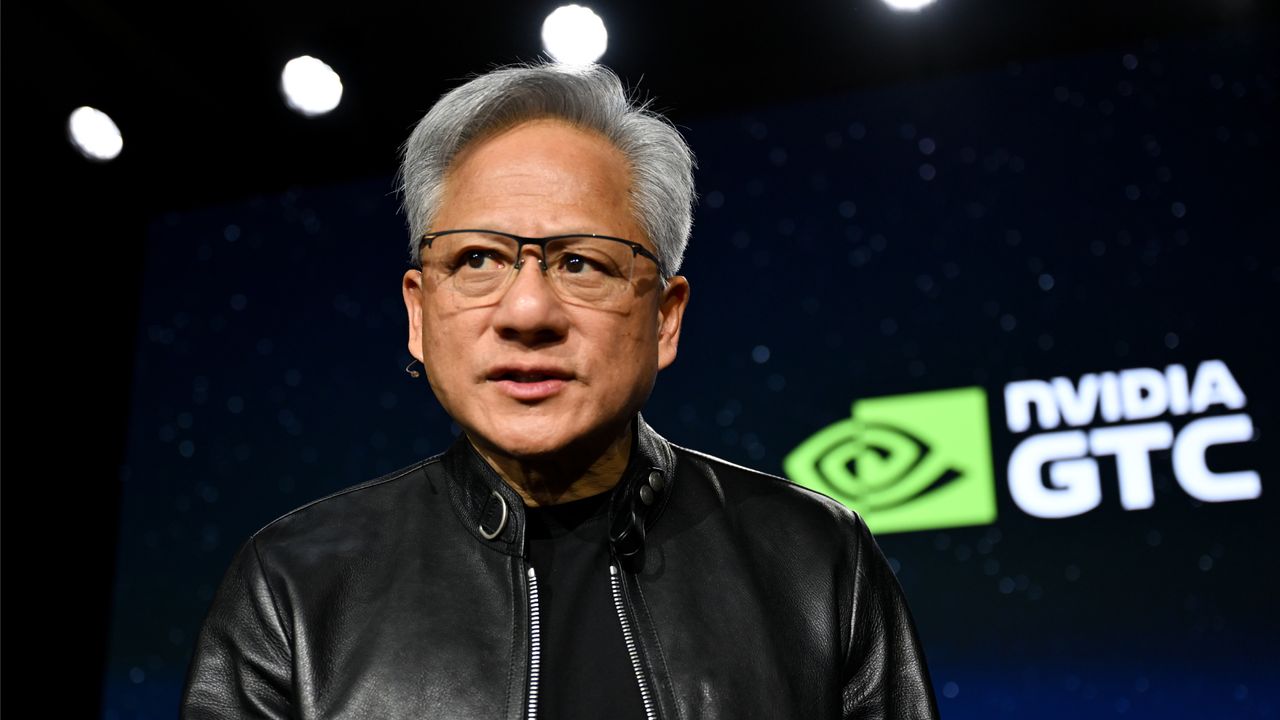
- Jensen Huang labels U.S. export bans on China as a ’losing proposition’ for American technological leadership.
- The geopolitical friction threatens Nvidia’s second-largest revenue stream, impacting data center growth.
- Nvidia is forced to pivot toward less powerful, compliant chips, complicating its long-term market dominance.
Strategic Deep-Dive
The Geopolitical Friction
Nvidia CEO Jensen Huang has publicly challenged the efficacy of U.S. government export restrictions regarding high-performance AI semiconductors to China. Huang’s stance underscores the tension between national security mandates and the commercial imperatives of the world’s most valuable chip designer.
By labeling the current policy a ’losing proposition,’ Huang argues that limiting access to the second-largest AI market incentivizes China to accelerate domestic self-sufficiency.
Technical and Market Implications
Nvidia’s primary hardware affected includes the H100 and A100 series, which are essential for Large Language Model (LLM) training. Due to current U.S. Department of Commerce mandates, Nvidia has been forced to engineer ‘de-tuned’ versions of these chips—such as the H20—to remain compliant with export licensing requirements.
- Performance Delta: Compliance-grade chips often feature reduced interconnect bandwidth (NVLink speeds), significantly hindering large-scale cluster training efficiency.
- Business Risk: China previously accounted for a substantial portion of Nvidia’s Data Center revenue. Forced exit or limitation in this region creates a vacuum that local competitors like Huawei (Ascend series) are aggressively filling.
Future Outlook
The strategic outlook for Nvidia remains bifurcated. While global demand for AI infrastructure in the U.S. and Europe remains robust, the fragmentation of the global semiconductor supply chain introduces systemic risks.
Nvidia must now navigate a dual-track strategy: maintaining technological superiority in the West while attempting to retain market share in Asia through specialized, compliant hardware iterations.
Strategic Insights
Huang’s rare display of agitation highlights a critical inflection point: the semiconductor industry is no longer merely a commercial enterprise but the primary battlefield of the 21st-century geopolitical power struggle. Investors should monitor how rapidly China’s domestic alternatives bridge the performance gap, as this will determine whether Nvidia’s ’losing proposition’ warning translates into actual long-term market share erosion.