Executive Summary
- Rice University researchers have developed a microwave-based heating method for 3D printing, allowing for sub-millimeter precision.
- The technology enables the integration of functional electronic circuits directly into the internal architecture of 3D-printed objects.
- This advancement bypasses traditional thermal limitations, offering a leap in manufacturing complexity and material efficiency.
Strategic Deep-Dive
The Technical Breakthrough
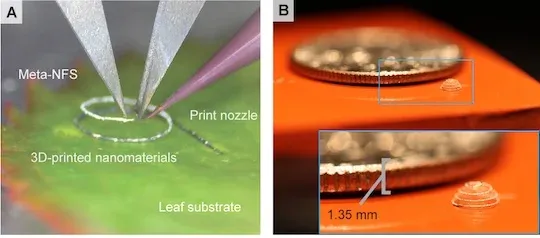
Researchers at Rice University have successfully demonstrated a method to localize microwave heating within 3D printing filaments. Unlike traditional Fused Deposition Modeling (FDM) which relies on bulk thermal extrusion, this technology allows for highly granular control over heat application. By focusing microwave energy, the system can fuse materials at a resolution comparable to the width of a human hair.
Why This Matters
Traditional 3D printing is often limited by the inability to embed complex, functional electronics without post-processing assembly. This microwave-assisted approach allows for the ‘printing’ of conductive paths and circuitries inside the object during the fabrication process. It transforms the 3D printer from a shape-forming machine into a multi-material system capable of creating fully functional electro-mechanical devices.
Business Risks and Constraints
- Scalability: Transitioning from lab-scale prototypes to industrial-grade throughput remains a significant hurdle. Microwave emitters require precise calibration to prevent material degradation or uneven curing.
- Material Compatibility: The technology is currently optimized for specific ink compositions. Developing a broader library of microwave-responsive materials is essential for commercial adoption.
- Regulatory/Safety: Integrating high-frequency microwave components into consumer or industrial hardware introduces new electromagnetic interference (EMI) and safety compliance challenges.
Strategic Insights
This development marks a shift from ‘additive manufacturing’ to ‘additive integration.’ The ability to print circuits in situ reduces the bill of materials and assembly overhead for complex robotics and IoT devices. Expect rapid patent filing activity around microwave-responsive resins; the firm that standardizes the material library for this process will control the next generation of embedded electronics manufacturing.