Executive Summary
- Field evidence indicates widespread structural failure in domestically produced Shahed variants.
- Manufacturing quality control issues are significantly reducing effective strike range and payload reliability.
- Supply chain constraints likely forcing a transition to inferior composite materials and rapid prototyping.
Strategic Deep-Dive
Technical Breakdown: The Failure of Domestic Prototyping
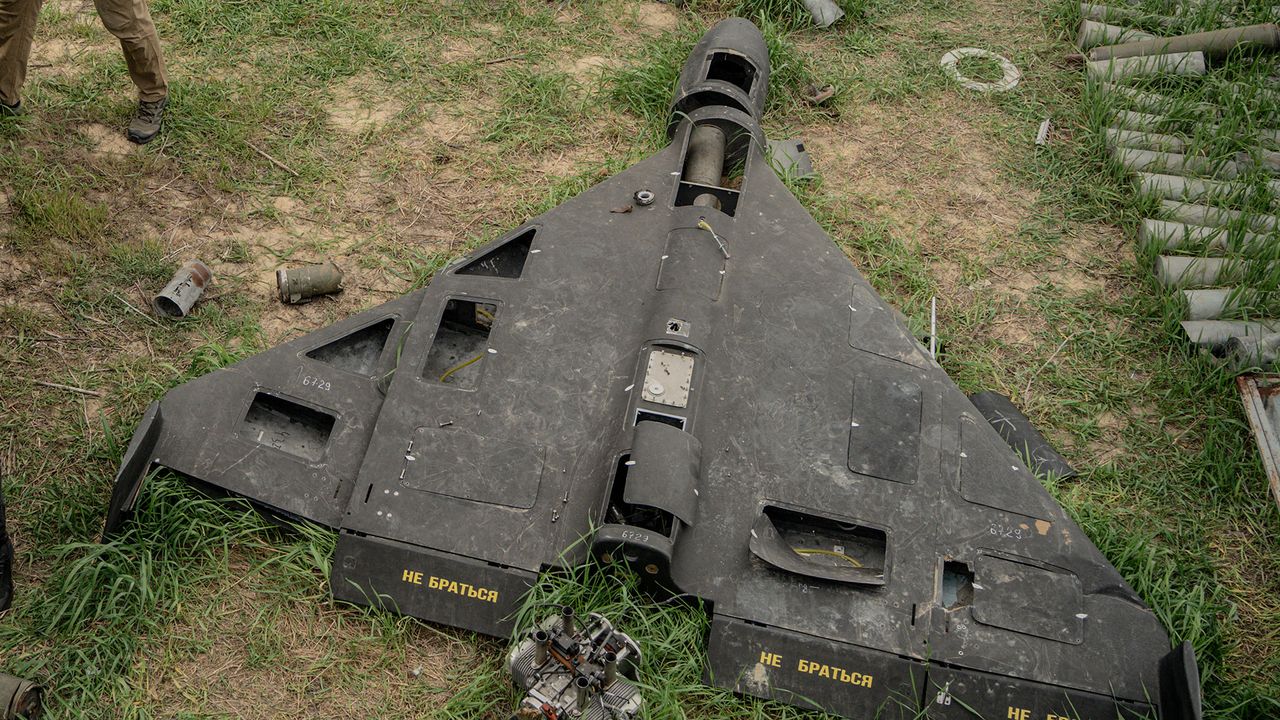
Recent field intelligence and visual data from Ukrainian Sting interceptor units confirm that Russia’s localized production of Iranian Shahed-136 drones is suffering from severe structural degradation. Unlike the original Iranian-manufactured airframes, the Russian-made clones—often referred to as ‘Geran-2’—are experiencing mid-flight structural disintegration.
Technical analysis suggests the failure stems from:
- Substandard Composites: Utilization of lower-grade resin and fiber-reinforcement materials that lack the tensile strength to withstand high-G maneuvers or thermal stress.
- Aerodynamic Instability: Inconsistent assembly of the delta-wing airframe, leading to harmonic vibrations that compromise the airframe during the terminal phase of flight.
- Component Integration: Improper mounting of the internal combustion engine (typically the Mado MD550 clone) leading to excessive airframe fatigue.
Business and Strategic Risks
The failure of these assets represents a significant ‘sunk cost’ inefficiency. For the Russian defense sector, the transition from importing mature Iranian technology to indigenous production has created a ‘quality gap.’ The risk here is two-fold: the loss of expensive guidance systems and warheads, and the erosion of the psychological deterrent effect that the Shahed platform initially provided.
Future Outlook
As Russia seeks to scale production to meet the demands of a war of attrition, the reliance on rapid, low-quality manufacturing cycles is likely to continue. We expect to see:
- Increased Reliance on Component Imports: A struggle to source high-grade aerospace adhesives and carbon fiber.
- Shift in Tactics: A potential reduction in flight speed to mitigate structural stress, making the drones easier targets for kinetic interceptors.
- Diversification of Threats: A pivot toward more robust, albeit more expensive, cruise missile systems as the Shahed platform’s reliability metrics continue to crater.
Strategic Insights
The ‘flying garbage’ phenomenon is a classic case study in the dangers of scaling production before maturing a manufacturing process. By prioritizing quantity over structural integrity, the Russian defense industrial base is effectively sabotaging its own long-range strike capability, turning a precision weapon into an unpredictable liability.