Executive Summary
- A research team at Rice University has made a significant breakthrough in additive manufacturing by utilizing microwave energy to heat 3D printer filaments with surgical precision. This technology all…
Strategic Deep-Dive
A research team at Rice University has made a significant breakthrough in additive manufacturing by utilizing microwave energy to heat 3D printer filaments with surgical precision. This technology allows for the selective heating of specialized conductive inks or filaments down to the width of a single human hair. The primary challenge in integrated 3D printing has always been the damage caused to the structural thermoplastic by the heat required to fuse metallic or conductive elements.
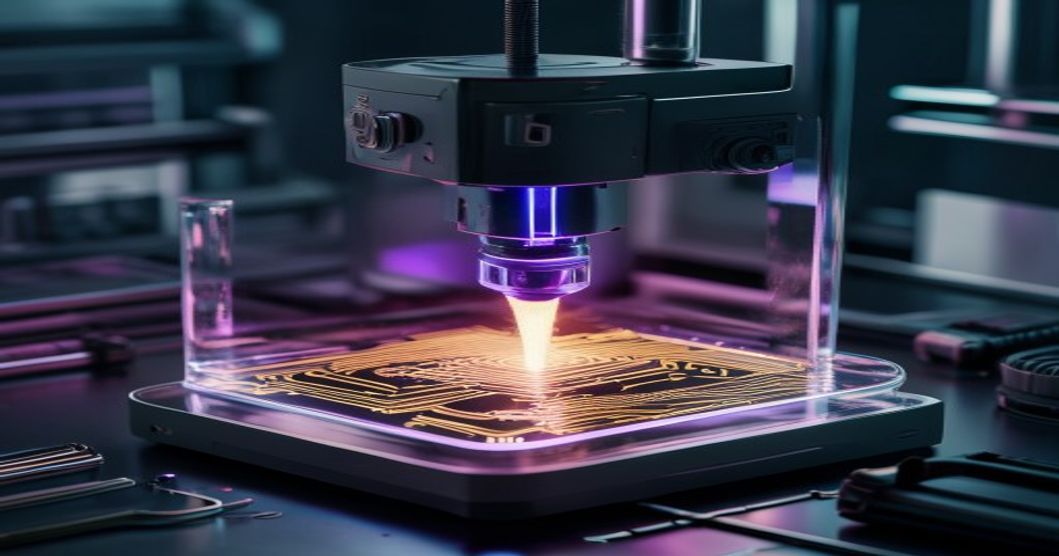
By using targeted microwaves, the Rice University team can fuse complex electronic circuits within the internal structure of a printed object without compromising the integrity of the surrounding material. This enables the fabrication of “smart” objects where sensors, antennas, and wiring are embedded directly into the mechanical body in a single, continuous process. Beyond circuit integration, this microwave-assisted method significantly enhances interlayer bonding, resulting in prints that are structurally stronger and more isotropic than those produced by traditional thermal extrusion.
This innovation effectively bridges the gap between mechanical hardware design and electronic engineering, potentially leading to a future where complex devices like medical implants or aerospace components are manufactured with their electronic nervous systems already fully functional and protected within their structural shells.