Executive Summary
- As of April 2026, systemic manufacturing failures at Russia’s Alabuga production facilities have resulted in domestic Shahed clones disintegrating mid-flight, a phenomenon extensively documented by Ukrainian Sting interceptor drones. Technical analysis suggests these “flying garbage” units suffer from catastrophic delamination and structural resonance issues due to the substitution of high-grade aerospace composites with inferior domestic materials. This degradation highlights a strategic shift where the Russian Ministry of Defense prioritizes psychological attrition through mass volume over the mechanical reliability of its long-range strike assets.
Strategic Deep-Dive
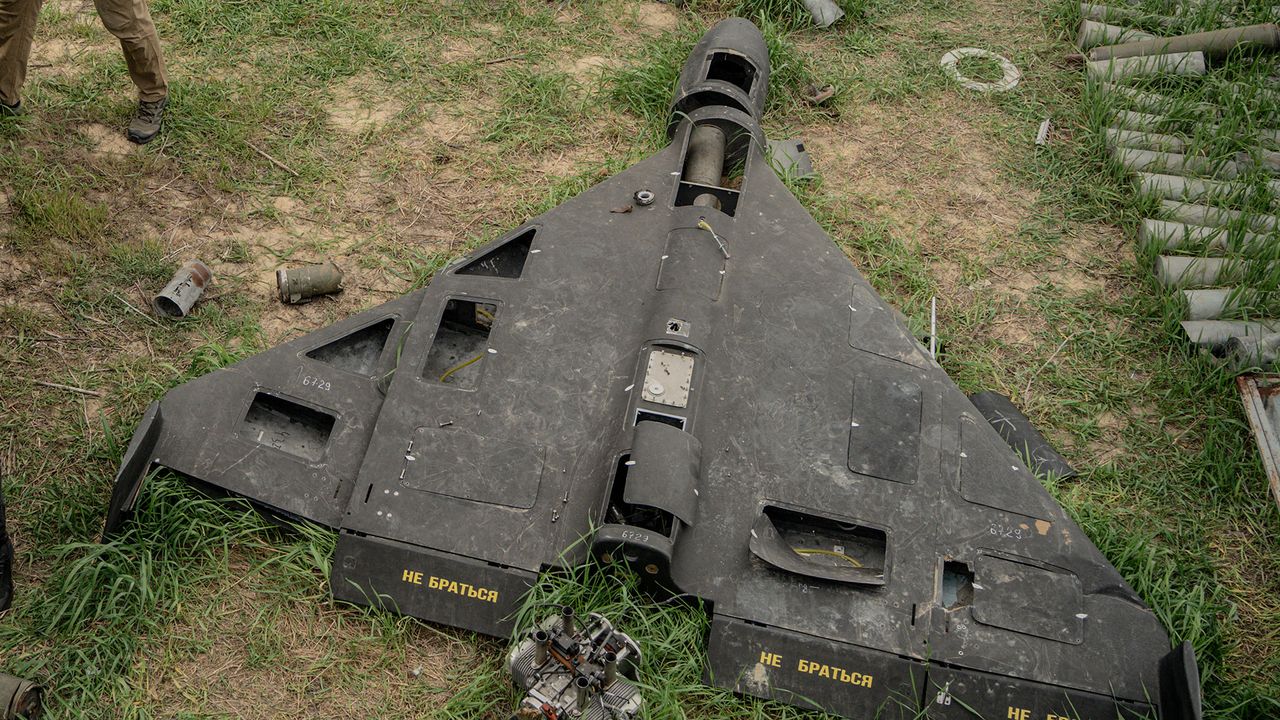
By April 20, 2026, the transition of Shahed-136 production to the Alabuga Special Economic Zone has evolved from a strategic asset into a technical liability. High-resolution telemetry and visual data from Ukrainian Sting interceptor drones confirm that the Russian-made clones are suffering from systemic structural failures. The physics of these disintegrations suggests a critical crisis in material science; specifically, the drones appear to suffer from “aerodynamic delamination.” Under the high-vibration environment of the internal combustion engine’s peak RPM, the bonding agents used in the Russian-made composite shells fail, causing the wing-root attachment points to shear off before the unit reaches its terminal phase.
The primary technical culprit is the replacement of the original Iranian-spec honeycomb-core reinforcements with a cheaper, low-density foam-fill core. While this transition was intended to simplify the supply chain and reduce costs, it has radically altered the drone’s structural integrity. The lack of specialized carbon fiber and high-grade resin has resulted in a “buoyant” but brittle flight profile.
These units possess a significantly reduced G-load tolerance compared to the original Iranian models, meaning they lack the rigidity to withstand the atmospheric turbulence and sustained vibrational stress encountered during long-range ingress.
Furthermore, these failures point to a “Sanction-Busting” manufacturing ethos where quantity is favored over survival probability. The Russian Ministry of Defense appears to have accepted a failure rate exceeding 20% in exchange for overwhelming Ukrainian Electronic Warfare (EW) and air defenses through sheer mass. However, the visual evidence of wings detaching from fuselages mid-flight underscores a broader degradation of Russian high-tech manufacturing.
By substituting precision engineering with makeshift industrial workarounds, the Alabuga production lines are producing hardware that is increasingly labeled as “flying garbage” by defense analysts worldwide.