Executive Summary
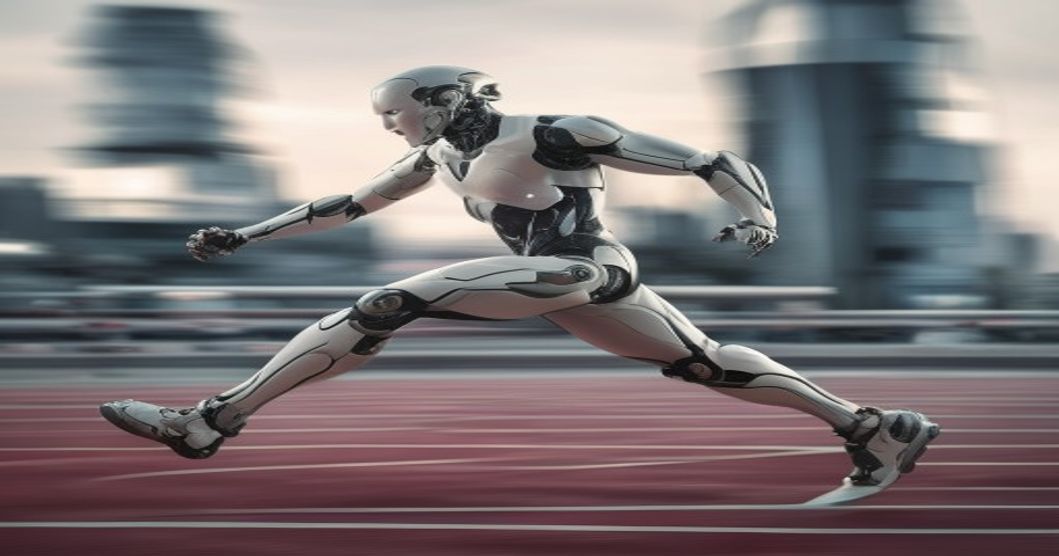
- In a stunning display of robotic evolution, the humanoid robot “Lightning” has effectively decoupled physical performance from biological constraints at the Beijing Half-Marathon. The robot crossed the finish line more than 17 minutes ahead of the top human competitor, 29-year-old elite runner Zhao Haijie. This feat was achieved through advanced bipedal kinetics and real-time balance algorithms that allowed the bot to maintain a mechanical consistency impossible for the human muscular system under prolonged stress.
Strategic Deep-Dive
In a stunning display of robotic evolution, the humanoid robot “Lightning” has effectively decoupled physical performance from biological constraints at the Beijing Half-Marathon. The robot crossed the finish line more than 17 minutes ahead of the top human competitor, 29-year-old elite runner Zhao Haijie. This feat was achieved through advanced bipedal kinetics and real-time balance algorithms that allowed the bot to maintain a mechanical consistency impossible for the human muscular system under prolonged stress.
Lightning’s performance is not just a victory of speed, but of energy efficiency and thermal management. Unlike human athletes who suffer from lactic acid buildup and heat exhaustion, Lightning’s high-torque actuators and carbon-fiber frame managed the kinetic energy of the race with near-perfect optimization. This event serves as a critical threshold where robotics moves from mimicking human motion to fundamentally exceeding human biological limits in a standard, un-augmented environment.