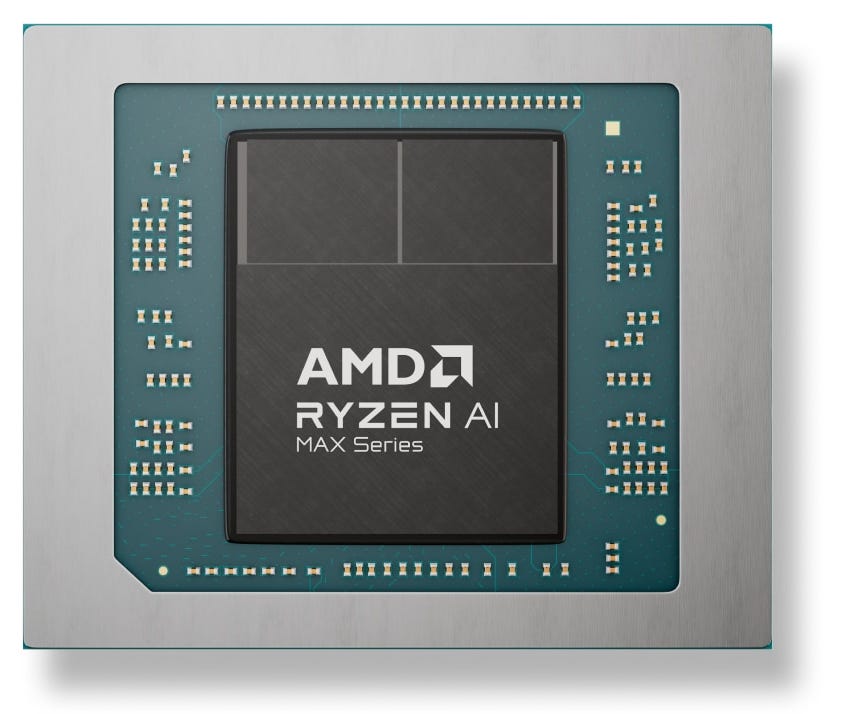
Executive Summary
- The Ryzen AI MAX series, utilizing the “Strix Halo” silicon, introduces a specialized Memory Attached Last Level (MALL) cache—widely known as Infinity Cache. This architecture is pivotal for mitigating the inherent latency of system LPDDR5X memory. By providing a high-speed buffer for the RDNA 3.5 GPU and the integrated AI engines, the MALL cache ensures that massive AI models and complex shaders remain on-chip, maximizing throughput and minimizing the energy cost of data movement.
Strategic Deep-Dive
As an expert semiconductor analyst, the branding of “Ryzen AI MAX” signifies more than a marketing shift; it represents an architectural focus on the “Memory Attached Last Level” (MALL) cache, or Infinity Cache. In high-end APUs like Strix Halo, the primary bottleneck is not just raw bandwidth, but the latency involved in fetching data from off-package LPDDR5X RAM. The MALL cache acts as a high-density, high-speed buffer located directly on the SoC fabric.
This is particularly critical for the Ryzen AI MAX series because it houses up to 40 RDNA 3.5 compute units. Without a massive cache to absorb frame-buffer requests and depth-stencil operations, the memory controller would be constantly overwhelmed, leading to high latency and frame-time variance.
Technical deep-dives into the MALL cache reveal its effectiveness in AI inferencing. Modern Large Language Models (LLMs) depend on quick access to model weights. When these weights are stored in standard system memory, the token generation speed (tokens per second) is limited by the DRAM’s latency and bandwidth.
By keeping critical layers of a transformer model within the Infinity Cache, the Ryzen AI MAX can achieve significantly higher inference speeds. This makes the laptop a viable platform for real-time AI assistants and local code generation without relying on the cloud. The cache is also instrumental in handling INT8 and FP16 quantization, where data reuse is high, allowing the NPU to stay fed with data at a fraction of the power cost compared to constant DRAM fetches.
Moreover, the synergy between the MALL cache and the Zen 5 CPU cores creates a unified memory fabric that is incredibly efficient. In creative applications like 4K video editing or 3D rendering, the cache serves as a “scratchpad” for temporary assets, reducing the round-trip time to the main memory. This architectural decision addresses the “memory wall” problem that has historically limited integrated solutions.
By 2026, as software begins to leverage larger cache hierarchies, the Ryzen AI MAX series will provide a distinctive advantage for developers who need to run heavy multi-modal AI models. The inclusion of this cache is what allows AMD to push the TDP higher without seeing diminishing returns, as the silicon can actually utilize the extra power for compute rather than wasting it on data transport across the PCB.