Executive Summary
- The transition from Counter-Strike: Global Offensive (CS:GO) to Counter-Strike 2 (CS2) marks one of the most significant technical leaps in the history of tactical shooters. Built on the Source 2 engine, CS2 introduces fundamental changes to how the game handles lighting, physics, and particle effects. The most transformative feature is the “volumetric smoke,” which now reacts dynamically to lighting, gunfire, and explosions. Unlike the static 2D sprites used in CS:GO, these smokes are 3D environmental objects that occupy space and can be partially cleared by grenades or bullets. This improvem…
Strategic Deep-Dive
The transition from Counter-Strike: Global Offensive (CS:GO) to Counter-Strike 2 (CS2) marks one of the most significant technical leaps in the history of tactical shooters. Built on the Source 2 engine, CS2 introduces fundamental changes to how the game handles lighting, physics, and particle effects. The most transformative feature is the “volumetric smoke,” which now reacts dynamically to lighting, gunfire, and explosions.
Unlike the static 2D sprites used in CS:GO, these smokes are 3D environmental objects that occupy space and can be partially cleared by grenades or bullets. This improvement, while visually stunning, places a significantly higher load on the GPU’s shader processing power.
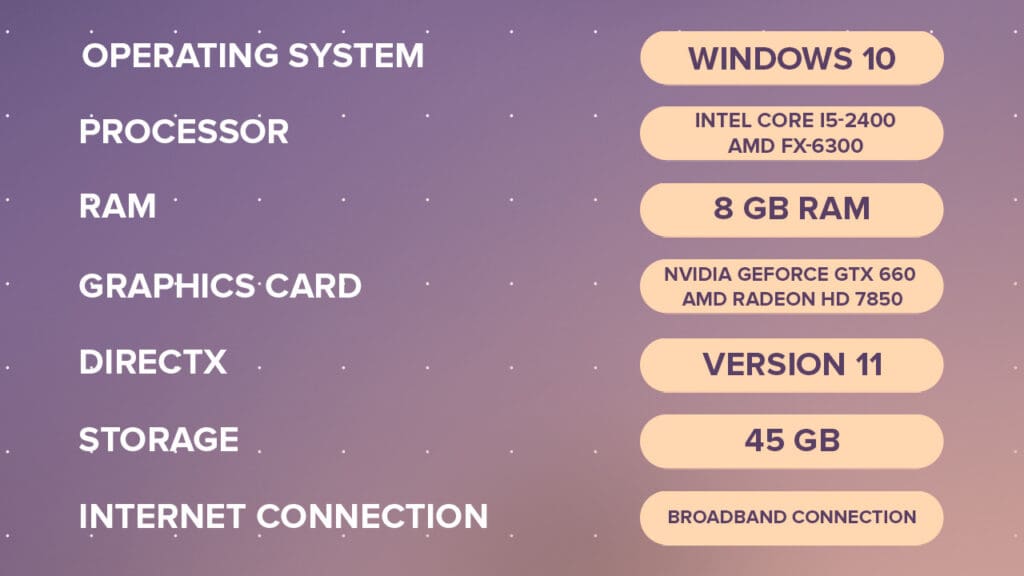
Furthermore, the lighting system has been upgraded to a physically based rendering (PBR) model. This ensures that materials like metal, water, and glass reflect light realistically, enhancing tactical clarity but demanding more from the hardware’s geometry pipelines. For players operating on older hardware that previously maintained high frame rates in CS:GO, CS2 can be a “wake-up call.” The CPU requirements have also scaled up, as the Source 2 engine is better optimized for multi-core processors, meaning quad-core chips may struggle to maintain the consistent 1% low frame times required for competitive play.
To achieve a stable 144Hz or 240Hz experience, users must look beyond minimum specifications. The game’s reliance on sub-tick updates—a system designed to make movement and shooting feel more responsive—requires a stable network connection and a CPU capable of processing high-frequency input data without stuttering. Hardware enthusiasts should prioritize mid-to-high-end GPUs with ample VRAM to handle the increased texture resolution of the revamped maps like Overpass and Inferno.
Optimization strategies now involve a careful balance of “FidelityFX Super Resolution (FSR)” settings and shadow quality to ensure that the competitive advantage of high FPS is not sacrificed for visual fidelity.