Executive Summary
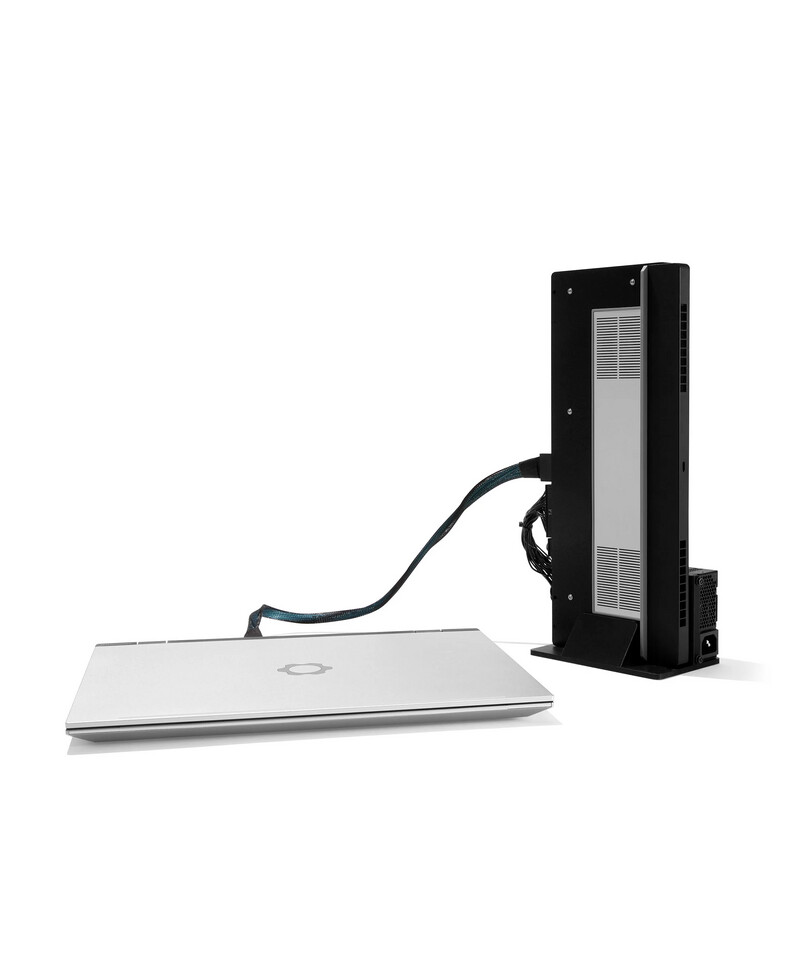
- Framework has launched an OCuLink Dev Kit for the Laptop 16, utilizing a PCIe 5.0×8 interface to deliver a theoretical 128 GT/s of throughput. By replacing the internal graphics module with a direct PCIe expansion port, the kit bypasses the protocol overhead and latency inherent in Thunderbolt solutions. This innovation enables desktop-class eGPU performance and high-speed storage integration, reinforcing Framework’s position as a leader in modular hardware sustainability.
Strategic Deep-Dive
The introduction of the OCuLink Dev Kit for the Framework Laptop 16 represents a breakthrough in mobile-to-desktop bridging. While modern laptops have long attempted to use external GPUs via Thunderbolt, the results have always been hampered by bandwidth limitations and protocol overhead. Thunderbolt 4/5, while versatile, encapsulates PCIe data within its own protocol, leading to increased latency and a maximum of 4 lanes of PCIe 4.0 or 5.0 throughput.
Framework’s approach is fundamentally different: by utilizing the Laptop 16’s Expansion Bay, they have implemented a direct PCIe 5.0×8 link. At 32 GT/s per lane, this 8-lane configuration offers a theoretical unidirectional bandwidth of 128 GT/s, effectively matching the performance of a high-end desktop’s primary motherboard slot.
The technical engineering required to maintain signal integrity at PCIe 5.0 speeds is immense. As frequencies increase, signal attenuation and electromagnetic interference become critical failure points, especially over external cables. To manage this, Framework has designed the Dev Kit to ensure that the physical path between the CPU’s PCIe lanes and the OCuLink connector is as short and clean as possible.
This likely requires the use of advanced retimers or redrivers to maintain the 128 GT/s throughput without data corruption. Unlike proprietary docks, OCuLink is an open standard that provides a “raw” PCIe connection, meaning the external device (whether it’s an NVIDIA RTX 50-series GPU or a massive NVMe RAID array) communicates directly with the processor as if it were plugged into a desktop’s PCIe slot.
This transition toward high-bandwidth modularity addresses the primary complaint of professional users: the “mobile penalty.” Previously, choosing a laptop meant sacrificing approximately 20-30% of a GPU’s performance due to Thunderbolt’s 4-lane bottleneck. With PCIe 5.0×8, that performance gap is nearly eliminated. Furthermore, this kit empowers hardware developers and enthusiasts to create specialized peripherals—such as FPGA boards for AI acceleration or 100GbE networking cards—that were previously confined to rack-mounted servers.
By transforming the Laptop 16 into a modular compute engine that can be docked into an ultra-high-performance environment, Framework is redefining the lifecycle of professional hardware. Instead of replacing the entire laptop when a new GPU generation arrives, users can simply upgrade the external peripheral, maintaining the core system for years. This not only benefits the user’s wallet but aligns with the global shift toward electronic waste reduction through sustainable hardware design.