Executive Summary
- Qualcomm CEO Cristiano Amon’s visit to South Korea signals a potential shift in the mobile processor supply chain, as the company explores Samsung’s 2nm foundry process and secures next-generation memory from Samsung and SK Hynix.
Strategic Deep-Dive
The global semiconductor power balance is shifting as Qualcomm, the dominant player in the mobile application processor (AP) market, reassesses its manufacturing and sourcing partnerships. In April 2026, Qualcomm CEO Cristiano Amon arrived in South Korea for a series of high-level meetings with leadership from Samsung Electronics and SK Hynix. This visit is far from a routine supplier check-in; it represents a strategic maneuver to secure the future of the Snapdragon roadmap amid rising costs and capacity constraints at TSMC.
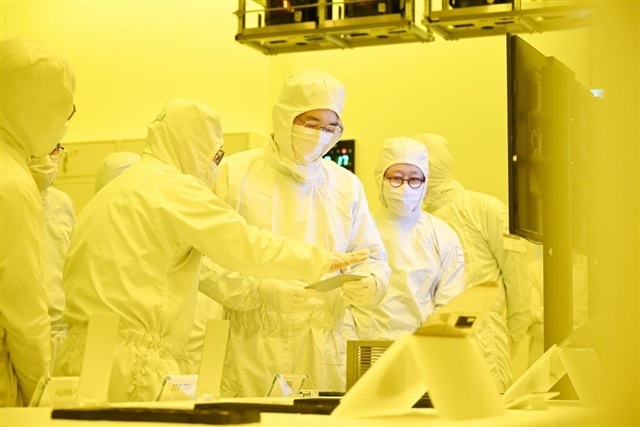
The primary objective of Amon’s visit is twofold: exploring Samsung’s 2nm foundry capabilities and securing a stable supply of next-generation AI memory. For several generations, Qualcomm has relied heavily on TSMC’s FinFET-based processes for its flagship chips. However, as the industry moves toward 2nm, the architecture is shifting to Gate-All-Around (GAA) transistors.
Samsung was the first to implement GAA at 3nm, and if they can demonstrate superior yields and power efficiency at the 2nm node, Qualcomm may shift a significant portion of its Snapdragon production back to Samsung. This would effectively break TSMC’s near-monopoly on high-end chip manufacturing and provide Qualcomm with the pricing leverage it desperately needs.
Furthermore, the “On-Device AI” era has turned memory into a critical bottleneck. Future mobile chips will require massive bandwidth to run Large Language Models (LLMs) locally. Amon’s meetings with Samsung and SK Hynix are focused on securing HBM (High Bandwidth Memory) and next-gen LPDDR6 mobile DRAM.
By fostering a “tri-party alliance” between its design house and Korea’s manufacturing giants, Qualcomm aims to ensure that its silicon is paired with the fastest memory in the world.
This visit also signals a competitive threat to TSMC. If Qualcomm, one of TSMC’s largest customers, successfully diversifies into Samsung’s 2nm GAA process, it could trigger a broader shift in the fabless industry. For South Korea, this is a massive opportunity to re-establish its foundry dominance and leverage its status as the world’s memory hub.
As AI-native smartphones become the new standard, the synergy between Qualcomm’s architecture and South Korean manufacturing could define the hardware landscape for the remainder of the decade.