Executive Summary
- As the industry pivots toward the second half of 2026, the smartphone sector is encountering a paradox: the most advanced technological achievement in history—the 2nm process node—is also its greatest economic threat. For the first time, the “Law of Scaling” is hitting a financial wall. While 2nm promises a 10-15% speed boost and a 25-30% power reduction over 3nm, the cost to achieve these gains is skyrocketing. This transition is fundamentally altering the procurement strategies of every major smartphone brand, from Apple to Xiaomi.
Strategic Deep-Dive
Introduction: The Brutal Economics of 2nm Micro-scaling
As the industry pivots toward the second half of 2026, the smartphone sector is encountering a paradox: the most advanced technological achievement in history—the 2nm process node—is also its greatest economic threat. For the first time, the “Law of Scaling” is hitting a financial wall. While 2nm promises a 10-15% speed boost and a 25-30% power reduction over 3nm, the cost to achieve these gains is skyrocketing.
This transition is fundamentally altering the procurement strategies of every major smartphone brand, from Apple to Xiaomi.
Technical Deep-Dive: GAA, EUV, and the $200 SoC
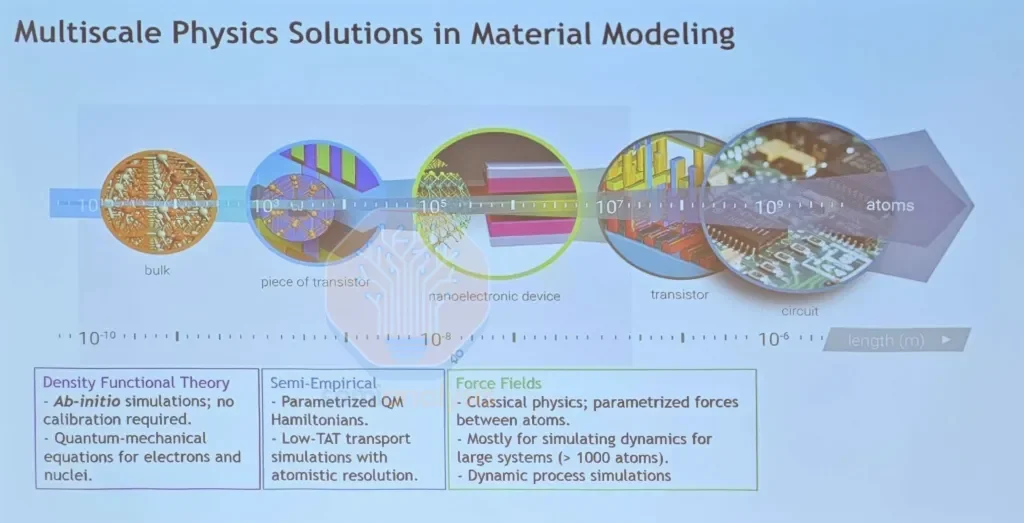
The migration to 2nm is technically defined by the mature implementation of Gate-All-Around (GAA) nanosheet transistors. Unlike the FinFET structures used in previous generations, GAA provides superior electrostatic control, but the manufacturing complexity is immense. The number of Extreme Ultraviolet (EUV) masking steps has nearly doubled compared to the 5nm era, and each mask set for a 2nm chip now costs upwards of $20 million.
For 2026 flagship SoCs like Apple’s A20 (tentative name) and Qualcomm’s Snapdragon 8 Gen 6, the estimated cost per die has surged. Analysts suggest that the unit price for a 2nm flagship processor could comfortably exceed $200. When factoring in the yields of these massive dies—which must accommodate increasingly large Neural Processing Units (NPUs) for on-device generative AI—the “cost per functional transistor” is actually rising.
Apple, being the anchor customer for TSMC’s 2nm line, will likely absorb the initial costs to maintain its premium “Pro” branding, but even Cupertino is feeling the squeeze. Qualcomm and MediaTek are in an even tougher position, as they must sell these high-priced chips to Android OEMs who are already struggling with razor-thin margins.
Market Impact: The Death of the Uniform Flagship
The most significant impact of the 2nm cost surge is the end of the “standard” flagship. In 2026 and 2027, we expect to see a drastic tiering of smartphone lineups. Apple will likely restrict the 2nm silicon exclusively to its “Ultra” or “Pro Max” models, while the base models remain on 3nm.
Similarly, Samsung may opt for a “dual-track” strategy, using 2nm for the S26 Ultra while utilizing refined 4nm or 3nm nodes for the rest of the series.
This economic pressure is also fueling a renewed interest in custom, in-house silicon. If a third-party chip from Qualcomm costs $220, brands like Oppo, Vivo, and Xiaomi may find it more cost-effective to develop their own specialized co-processors for AI and imaging, allowing them to use a slightly older, cheaper main SoC without sacrificing “AI features”—the primary marketing driver of 2026. This shift threatens the traditional market share of independent SoC vendors who can no longer rely on every flagship model adopting their latest top-tier silicon.
Future Outlook: AI as the Cost Justifier
Looking toward 2027-2028, the high cost of 2nm will become the “new normal.” To justify these prices to consumers, smartphone manufacturers will stop marketing raw clock speeds and start marketing “tokens per second” and “local LLM parameters.” The 2nm node is effectively a “Generative AI Node”; its architectural benefits are uniquely suited to the heavy, continuous workloads of on-device AI. We predict that by late 2027, the industry will move toward “System-in-Package” (SiP) designs at the smartphone level, mixing 2nm logic with older-node I/O to manage costs.