Executive Summary
- Nirav Patel, CEO of Framework, has outlined his company’s resilience during the current global RAM supply crisis, highlighting the advantages of their modular laptop design. In a surprising reveal, Patel noted that Framework’s user base now includes slightly more Linux users than Windows users, fueling their goal to create a “MacBook Pro equivalent” for the open-source community. By prioritizing repairability and standardization—including the shift toward CAMM2 memory modules—Framework is positioning itself as a sustainable alternative to the increasingly locked-down hardware ecosystems of mainstream manufacturers.
Strategic Deep-Dive
In an industry dominated by soldered components and planned obsolescence, Nirav Patel, the CEO of Framework, is leading a quiet revolution. During a recent strategic update, Patel addressed the “RAM crisis”—a period of extreme volatility in the memory market driven by the redirection of production lines toward High Bandwidth Memory (HBM) for AI servers. While companies like Apple and Dell increasingly integrate RAM directly into the motherboard to maximize thinness and margins, Framework’s modular philosophy has provided its users with a unique hedge against these market fluctuations.
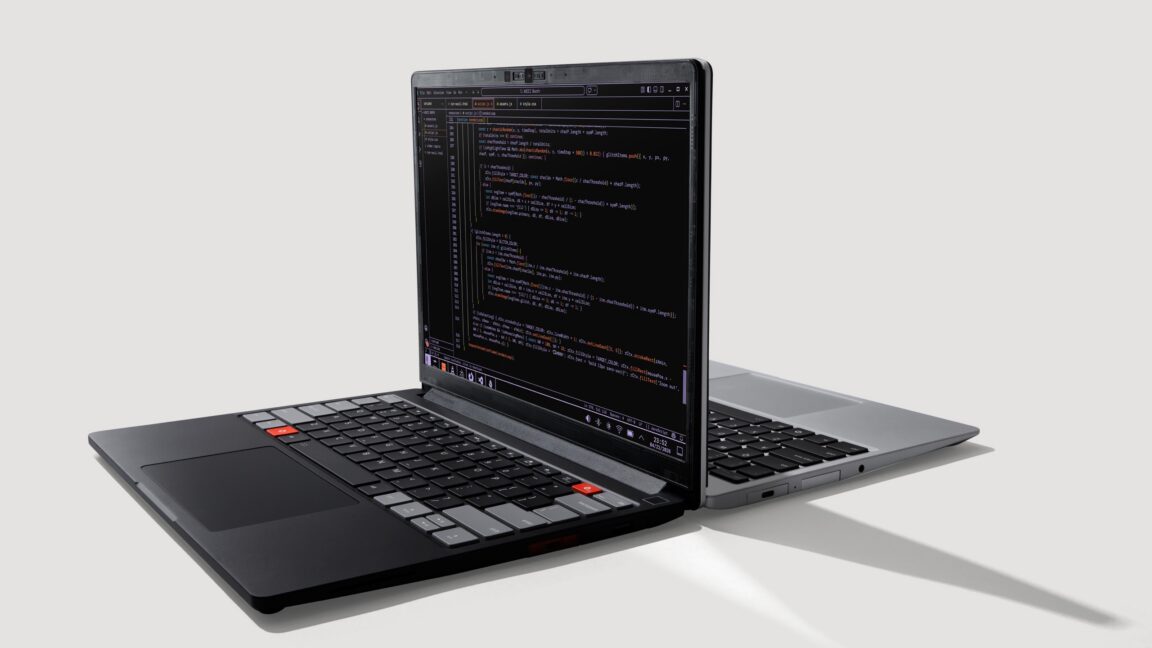
Patel revealed a significant demographic shift in the company’s customer base: for the first time, Framework now has slightly more Linux users than Windows users. This is a staggering statistic for a hardware manufacturer and reflects the brand’s deep resonance with the developer and open-source communities. Patel’s vision is to provide a “MacBook Pro for Linux users”—a machine that matches the build quality, display fidelity, and thermal performance of Apple’s premium offerings, but with the radical freedom to repair and upgrade every single component.
This isn’t just about utility; it’s about restoring the concept of hardware ownership.
The “RAM crisis” serves as the ultimate litmus test for Framework’s design ethos. Because Framework laptops utilize standard, user-replaceable slots, owners are not trapped by the initial configuration they purchased. Patel discussed the ongoing technical transition from traditional SO-DIMM slots to the new CAMM2 standard.
While SO-DIMMs are reaching their physical limits in terms of speed and density, CAMM2 offers a more compact, high-performance footprint while maintaining the modularity that Framework fans demand. By working directly with memory vendors, Framework ensures that its users can upgrade their RAM when prices stabilize, rather than being forced to buy a new $2,000 laptop because they need 16GB more of memory.
Looking ahead, Framework is doubling down on its partnership with major Linux distributions like Fedora, Ubuntu, and Arch Linux to ensure “platinum-tier” hardware support out of the box. Patel emphasized that his company is not just selling a product, but an insurance policy against the throwaway culture of modern electronics. As global supply chains remain fragile, the ability to swap a single module instead of replacing an entire motherboard is becoming an essential feature for power users and environmentally conscious consumers alike.
Framework’s success proves that there is a viable market for high-end hardware that respects the user’s intelligence and their right to repair.