Executive Summary
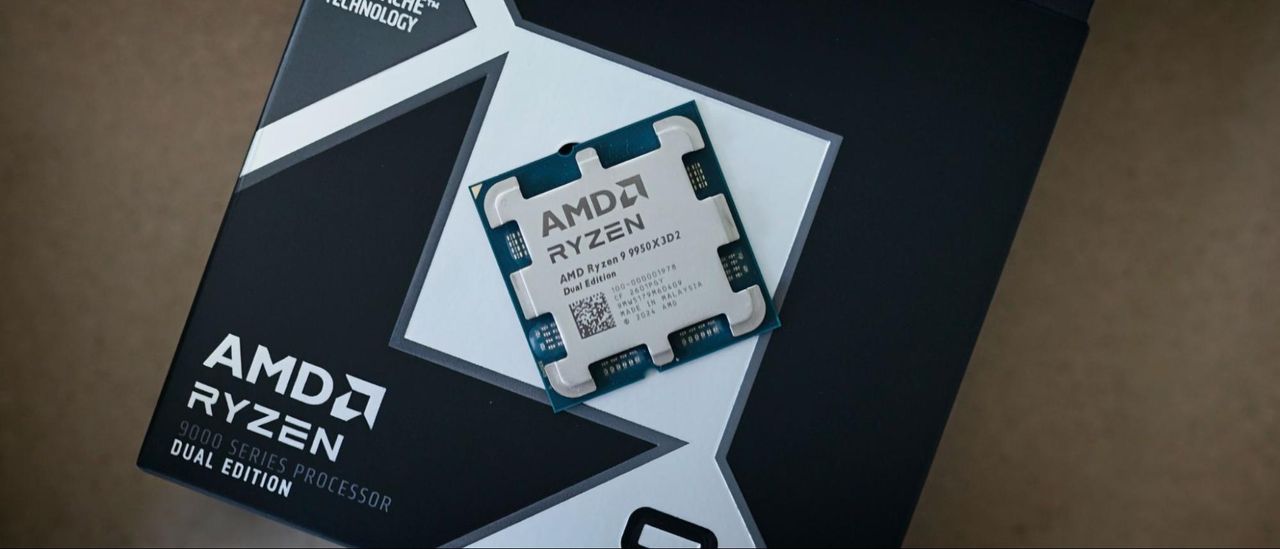
- The release of the AMD Ryzen 9 9950X3D2 represents the zenith of AMD’s 3D V-Cache technology. This processor is not merely an incremental update; it is a specialized piece of silicon designed to dominate specific, cache-heavy workloads. By leveraging TSMC’s advanced SoIC (System on Integrated Chips) bonding technology, AMD has managed to bypass the traditional latency bottlenecks that plague high-core-count processors during complex operations. Unlike previous iterations that often featured cache on only one CCD, the “D2” designation hints at a more aggressive dual-CCD cache configuration, pro…
Strategic Deep-Dive
The release of the AMD Ryzen 9 9950X3D2 represents the zenith of AMD’s 3D V-Cache technology. This processor is not merely an incremental update; it is a specialized piece of silicon designed to dominate specific, cache-heavy workloads. By leveraging TSMC’s advanced SoIC (System on Integrated Chips) bonding technology, AMD has managed to bypass the traditional latency bottlenecks that plague high-core-count processors during complex operations.
Unlike previous iterations that often featured cache on only one CCD, the “D2” designation hints at a more aggressive dual-CCD cache configuration, providing a massive pool of L3 resources across all 16 cores.
However, this technical marvel comes with a significant caveat: the price. The cost of the 9950X3D2 has been described as a “kick in the gut,” placing it firmly in the ultra-enthusiast category. This pricing strategy reflects the expensive and low-yield manufacturing process involved in stacking silicon.
Bonding the cache layers using Through-Silicon Vias (TSVs) with incredible precision is an engineering feat that commands a premium. For the average consumer, the “high cache vs. high price” dilemma is real.
While the performance gains in simulation-heavy environments like Factorio, Stellaris, or professional CFD (Computational Fluid Dynamics) software are undeniable, they do not always scale linearly. In fact, due to the thermal insulation provided by the stacked cache, clock speeds are often lower than the standard 9950X, meaning that in raw frequency-bound tasks, this expensive chip might actually perform worse.
The 9950X3D2 finds its home in the systems of those who refuse to compromise—the “Luxury Performance” tier. It is a “halo” product that bridges the gap between mainstream sockets and the HEDT (High-End Desktop) platforms of old. For industries involved in complex mathematical modeling or competitive gaming where 1% low frame rates are the only metric that matters, the time saved by the massive cache overhead can justify the financial sting.
AMD is effectively leveraging its architectural lead to command price points that were unthinkable during the pre-Ryzen era.
As we look at the broader market, the 9950X3D2 solidifies AMD’s dominance in the enthusiast segment while highlighting the challenges of the “More Cache, More Cash” reality. It puts immense pressure on Intel to innovate beyond just increasing core counts. The specialized nature of this CPU means it isn’t a universal recommendation, but for those whose workloads “click” with 3D V-Cache, there is simply no other alternative on the market.
It is a bold statement of technical superiority, proving that for the right price, silicon latency can be conquered.