Executive Summary
- The evolution of the Arm 7-series cores is a fascinating case study in shifting architectural priorities. Once the flagship “performance” offering of the Arm lineup, the lineage leading to the Cortex A725 has transitioned into the critical “middle” or “efficiency-performance” tier of modern heterogeneous computing. While the ultra-wide X-series cores capture headlines with peak single-threaded performance, the A725 is the silicon workhorse that handles the vast majority of real-world multitasking. It is designed to offer a superior performance-per-area and performance-per-watt ratio, ensuring …
Strategic Deep-Dive
The evolution of the Arm 7-series cores is a fascinating case study in shifting architectural priorities. Once the flagship “performance” offering of the Arm lineup, the lineage leading to the Cortex A725 has transitioned into the critical “middle” or “efficiency-performance” tier of modern heterogeneous computing. While the ultra-wide X-series cores capture headlines with peak single-threaded performance, the A725 is the silicon workhorse that handles the vast majority of real-world multitasking.
It is designed to offer a superior performance-per-area and performance-per-watt ratio, ensuring that high-load tasks can be sustained for hours rather than minutes.
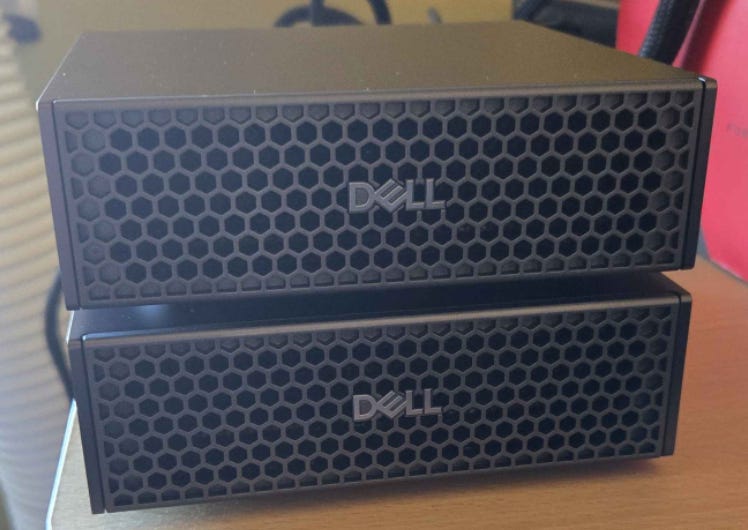
In the newly unveiled Dell Pro Max, we see the ultimate application of this strategy: the pairing of Cortex A725 cores with the Nvidia GB10 iGPU. This specific implementation highlights the importance of Total System Power (TSP) management. By utilizing the A725 for sustained multi-threaded CPU tasks, the Dell Pro Max can operate at a higher efficiency floor.
This power “savings” compared to using more power-hungry X-series cores can be reallocated to the GB10 iGPU. This dynamic power balancing allows the GB10 to boost to higher clock speeds for graphics-heavy creative applications without exceeding the device’s overall thermal budget.
The A725 architecture itself has been refined with a focus on branch prediction efficiency and prefetcher accuracy. These improvements ensure that the core spends less time waiting for data and more time doing useful work, even with a narrower pipeline than the X925. In a typical professional workflow—such as compiling code while running a browser and a video call—the A725 cores handle the background and middle-ground tasks, leaving the X-series free for the occasional foreground burst.
The synergy between a refined 7-series core and a “Big iGPU” like the GB10 creates a balanced system that achieves “Pro” performance in an ultra-thin form factor, moving away from the “performance at any cost” philosophy of legacy laptops.
Ultimately, the Dell Pro Max implementation proves that the future of computing isn’t just about the fastest individual core, but the intelligent orchestrating of specialized blocks. The A725 represents the pivot toward a more nuanced, heterogeneous approach where each block is optimized for a specific part of the power-to-performance curve. For the professional on the move, this means a device that remains cool to the touch during productivity tasks but has the architectural depth to scale up when the workload demands high-fidelity rendering or AI processing.