Executive Summary
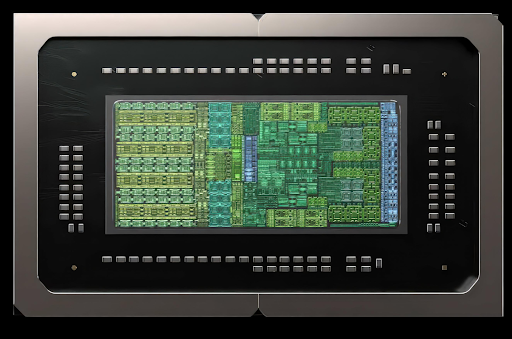
- The collaboration between Nvidia and MediaTek on the GB10 SoC marks a watershed moment for the “AI PC” era. By integrating Nvidia’s Blackwell architecture into a unified system-on-chip, the partnership targets the high-end mobile and ultra-portable laptop markets. However, the true technical marvel—and the biggest challenge—lies in the GB10’s memory subsystem. Transitioning the Blackwell architecture from the world of HBM-fed discrete cards to a shared memory SoC environment requires a radical rethinking of how the CPU and GPU access data.
Strategic Deep-Dive
The collaboration between Nvidia and MediaTek on the GB10 SoC marks a watershed moment for the “AI PC” era. By integrating Nvidia’s Blackwell architecture into a unified system-on-chip, the partnership targets the high-end mobile and ultra-portable laptop markets. However, the true technical marvel—and the biggest challenge—lies in the GB10’s memory subsystem.
Transitioning the Blackwell architecture from the world of HBM-fed discrete cards to a shared memory SoC environment requires a radical rethinking of how the CPU and GPU access data.
The GB10 utilizes a high-speed LPDDR5X or potentially LPDDR6 interface, but the secret sauce is the unified memory controller. In traditional laptops, the discrete GPU has its own VRAM, leading to massive latency penalties whenever the CPU needs to hand off data to the GPU (and vice versa) over the PCIe bus. The GB10 eliminates this via a “zero-copy” architecture.
Both the MediaTek CPU cores and the Blackwell iGPU share a single, high-bandwidth memory pool. For AI workloads, such as running a local 7B or 13B parameter LLM, this is transformative. The model weights can reside in a single location, accessed by the CPU for orchestration and by the Blackwell Tensor Cores for massive parallel multiplication without the need for redundant data transfers.
Managing this shared pool, however, introduces the risk of memory contention. A Blackwell iGPU is a bandwidth-hungry beast. To prevent the CPU from being “starved” of data—which would lead to system stutters—Nvidia and MediaTek have implemented a sophisticated hardware-level arbiter.
This scheduler uses real-time telemetry to prioritize memory requests. If the Blackwell cores are performing a heavy ray-tracing pass while the CPU is handling background OS tasks, the arbiter dynamically balances the SIMD lanes and memory channels to ensure smooth performance. As a systems architect, this level of coordination between two different IP providers (Nvidia’s GPU and MediaTek’s SoC fabric) is unprecedented.
The Blackwell integration also brings “Tensor Core” capabilities to the integrated space at a power envelope previously unthinkable. This allows for features like DLSS 4.0 and advanced AI noise reduction to function natively on a mobile platform without draining the battery in minutes. The GB10 is not merely an iGPU update; it is an architectural statement.
It proves that by combining MediaTek’s expertise in low-power mobile fabrics with Nvidia’s absolute dominance in compute architecture, the industry can create a unified platform that makes high-end AI and graphics ubiquitous. The success of GB10 will likely force competitors to abandon the discrete-GPU-only model for laptops in favor of tightly coupled, shared-memory silicon.