Executive Summary
- John Ternus’s appointment as Apple CEO signals a pivot toward “embodied intelligence,” where AI is integrated into advanced physical hardware. Having previously led Apple’s secret robotics team, Ternus is expected to transition the company from screen-based services to autonomous home devices. This era will focus on hardware-led innovation, leveraging Apple Silicon to power real-time motor control and complex sensor fusion in upcoming robotic products.
Strategic Deep-Dive
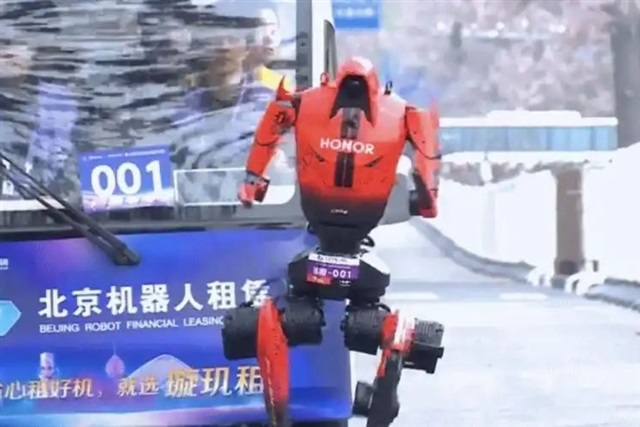
The appointment of John Ternus as CEO officially transitions Apple into its third major epoch. While Tim Cook focused on the mastery of global logistics and margin optimization, Ternus—formerly the Senior Vice President of Hardware Engineering—brings the company back to its technical and engineering roots. This is a deliberate response to the current state of artificial intelligence, which is evolving from digital “chatbots” to “embodied intelligence.” Embodied intelligence refers to AI systems that interact directly with the physical world, a field that requires deep expertise in materials science, sensor fusion, and mechanical engineering—areas where Ternus has built his career.
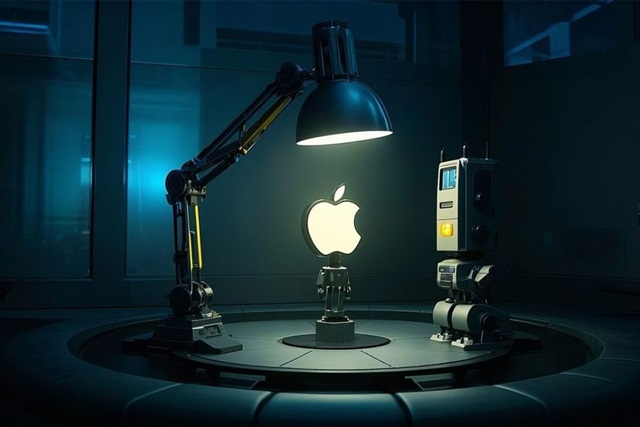
Under Ternus’s leadership, the work of Apple’s secret robotics team is expected to move from experimental R&D to center stage. The technical hurdle for “Home AI” isn’t just the large language model; it’s the hardware’s ability to navigate complex, unstructured human environments. This involves real-time processing of LiDAR data, high-torque motor control for articulated movements, and thermal management within compact consumer form factors.
Apple’s “Apple Silicon” advantage is pivotal here. By designing customized NPUs (Neural Engines) specifically for mechanical tasks, Apple can achieve on-device AI processing that its competitors, who rely on generic cloud-based solutions, cannot match. This allows for lower latency and higher privacy—key requirements for robots operating inside a home.
Strategically, Ternus’s elevation suggests that Apple believes the “smartphone era” has plateaued and the next frontier of growth lies in the physical manifestation of AI. We are likely to see the introduction of robotic home hubs, automated kitchen systems, or even advanced personal assistants that can move through space. These products will leverage Apple’s existing ecosystem—HomeKit, iCloud, and the App Store—but will differentiate themselves through breakthrough hardware.
By putting a hardware engineer at the helm, Apple is betting that the most significant innovations of the next decade will be “hard” problems that require moving atoms with the same precision that they previously moved bits. This shift ensures that Apple remains a hardware company at its core, using superior engineering to maintain its high-margin “walled garden” in an increasingly commoditized AI market.