Executive Summary
- Anthropic has unveiled “Cowork,” a desktop-native Claude agent that automates file-based workflows for non-technical users. Built in just 10 days using the company’s own Claude Code tool, it marks a significant shift toward self-evolving AI development and the democratization of agentic task execution.
Strategic Deep-Dive
Anthropic’s release of “Cowork” represents more than a mere product update; it is a signal flare for the era of recursive AI development. Traditionally, the creation of sophisticated software required months of iterative engineering. However, Cowork—a feature that allows the Claude Desktop agent to interact directly with local file systems and execute multi-step tasks—was built in a staggering 1.5-week window.
The catalyst for this velocity was “dogfooding” Claude Code, Anthropic’s own developer-centric tool. This creates a powerful feedback loop: as the coding agent improves, it builds more accessible consumer agents faster, which in turn generates more data to refine the underlying models.
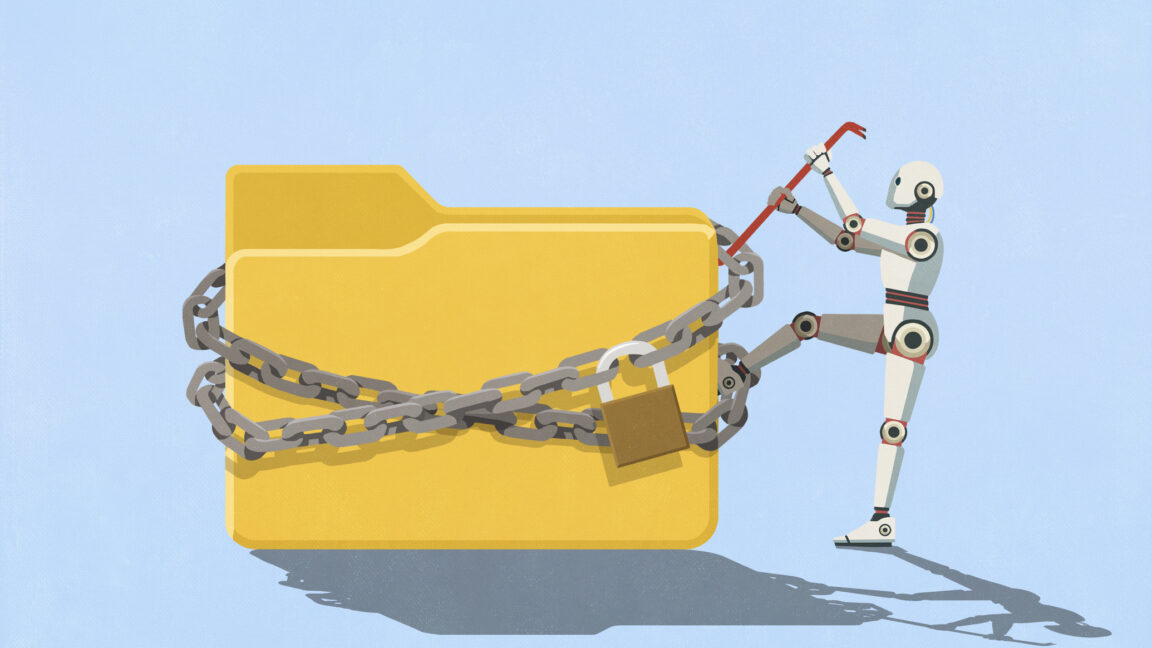
Technically, Cowork marks an architectural transition from simple text generation to complex operating system (OS) manipulation. While earlier iterations of Claude were confined to a sandbox or required manual file uploads, Cowork leverages the model’s ability to interpret file hierarchies, edit local documents, and manage workflows without user-written code. This involves a sophisticated translation of LLM weights from high-level reasoning to low-level system calls.
By enabling a “no-code” interface for these actions, Anthropic is directly challenging the established dominance of Microsoft Copilot and Google Gemini, positioning itself not just as a chatbot, but as an autonomous “coworker” capable of handling the “last mile” of enterprise productivity.
However, as a Senior Analyst, I must point out the inherent risks associated with this level of autonomy. Granting a third-party AI agent direct access to local file systems introduces significant security vectors, including the potential for prompt injection attacks that could result in unauthorized data exfiltration or file corruption. Anthropic’s challenge will be balancing this unprecedented utility with robust “guardrail” architectures.
In the competitive landscape, OpenAI is racing toward a similar “Operator” model, but Anthropic’s leverage of its own coding tools gives it a distinct advantage in development velocity.
The strategic implication is clear: the barrier between “coding” and “computing” is dissolving. When an AI can build a complex agent in 10 days to help a non-technical user manage a budget spreadsheet or a marketing campaign, the traditional software development lifecycle (SDLC) becomes obsolete. We are moving toward a future where “software” is a fluid, ephemeral layer generated on-the-fly by agents to meet the immediate needs of the user.
Anthropic’s Cowork is the first true consumer-facing proof of this disruptive paradigm.