Executive Summary
- This report examines the introduction of monthly travel recaps in Google Maps, a feature designed to provide users with a “Spotify Wrapped” style overview of their location history and movement patterns.
Strategic Deep-Dive
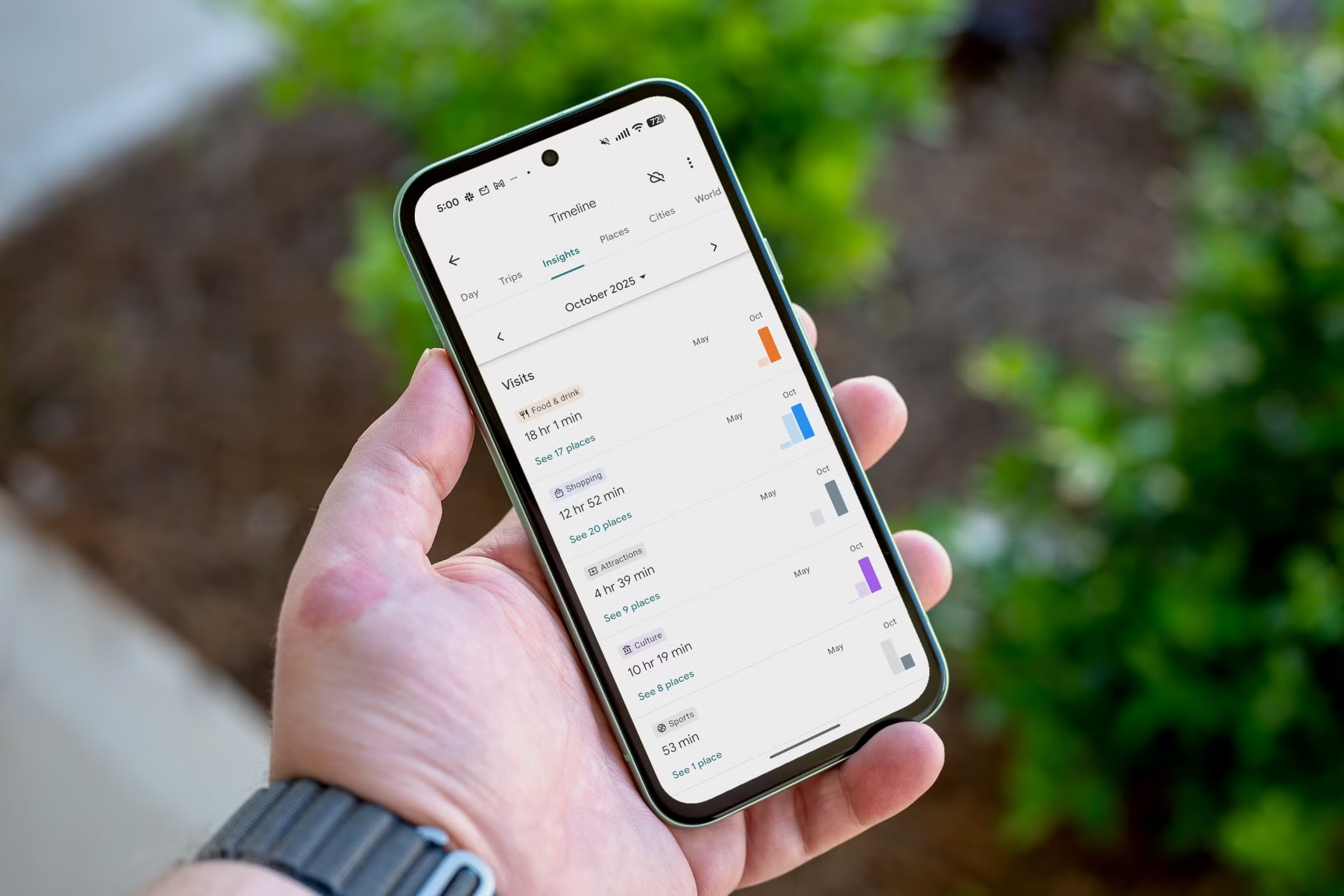
The evolution of Google Maps from a utilitarian navigation tool into a comprehensive personal diary has reached a new milestone with the introduction of “Monthly Travel Recaps.” Drawing direct inspiration from the cultural phenomenon of “Spotify Wrapped,” Google is now leveraging its vast Timeline data to offer users a stylized, engaging summary of their monthly movements. This shift represents a broader trend in the tech industry toward the “gamification” of personal data, where raw logs of location history are transformed into shareable, aesthetically pleasing insights. As of April 2026, this feature has moved beyond simple lists, offering users a high-fidelity look at their “travel personality,” including categories like “Frequent Flyer,” “Local Explorer,” or “Cuisine Connoisseur.”
Historically, Google Maps Timeline (formerly Location History) served as a passive repository of data, often viewed with a degree of skepticism or utility-based indifference. However, by repackaging this information into a monthly recap, Google is tapping into the psychological satisfaction of data reflection. These recaps do not just list places visited; they categorize travel behavior, highlight significant milestones, and provide a narrative arc to the user’s month.
This approach significantly boosts user engagement, as consumers are more likely to interact with “insights” than with “raw data.” The technical infrastructure supporting this includes sophisticated spatial clustering algorithms that can differentiate between a quick stop at a gas station and a meaningful afternoon spent at a park, ensuring the “recap” feels curated rather than automated.
From a technical standpoint, this feature coincides with Google’s critical pivot in privacy management: the migration of Timeline data from the cloud to on-device storage. This transition is essential for the long-term viability of location tracking in a privacy-conscious market. By processing these recaps locally on the user’s smartphone, Google attempts to mitigate the “creep factor” associated with constant server-side surveillance.
However, the underlying strategic objective remains user retention. By providing a service that catalogs memories and travel habits, Google creates a “sticky” ecosystem. The more data a user accumulates over years, the higher the switching cost becomes, as migrating a lifetime of personal travel history to a competitor is nearly impossible.
Furthermore, these recaps influence how users perceive their own mobility and environmental impact. Whether it is discovering a new favorite cafe or realizing the startling extent of a daily commute, the visualization of trajectory lines and heat maps provides a sense of self-awareness that traditional maps lack. As Google continues to refine this feature, we can expect deeper integration with other Alphabet services, potentially offering carbon footprint estimates or hyper-local business rewards based on the patterns identified in these summaries.
The transition from a simple “A to B” tool to a “reflective life log” is now functionally complete, positioning Google Maps as the ultimate arbiter of our digital and physical footprints.