Executive Summary
- Nous Research, backed by Paradigm, has released NousCoder-14B, a competitive programming model trained in just four days using 48 Nvidia B200 GPUs. This milestone demonstrates how high-density Blackwell compute can enable small, agile teams to match the performance of proprietary giants like Claude 3.5 Sonnet.
Strategic Deep-Dive
The debut of NousCoder-14B from Nous Research is a landmark moment in the hardware-software co-optimization era. While the industry has been obsessed with the sheer scale of parameter counts, Nous Research has shifted the focus to training efficiency and throughput. By utilizing 48 of Nvidia’s flagship B200 Blackwell GPUs, the team completed a comprehensive training cycle for a 14-billion parameter model in a mere 96 hours.
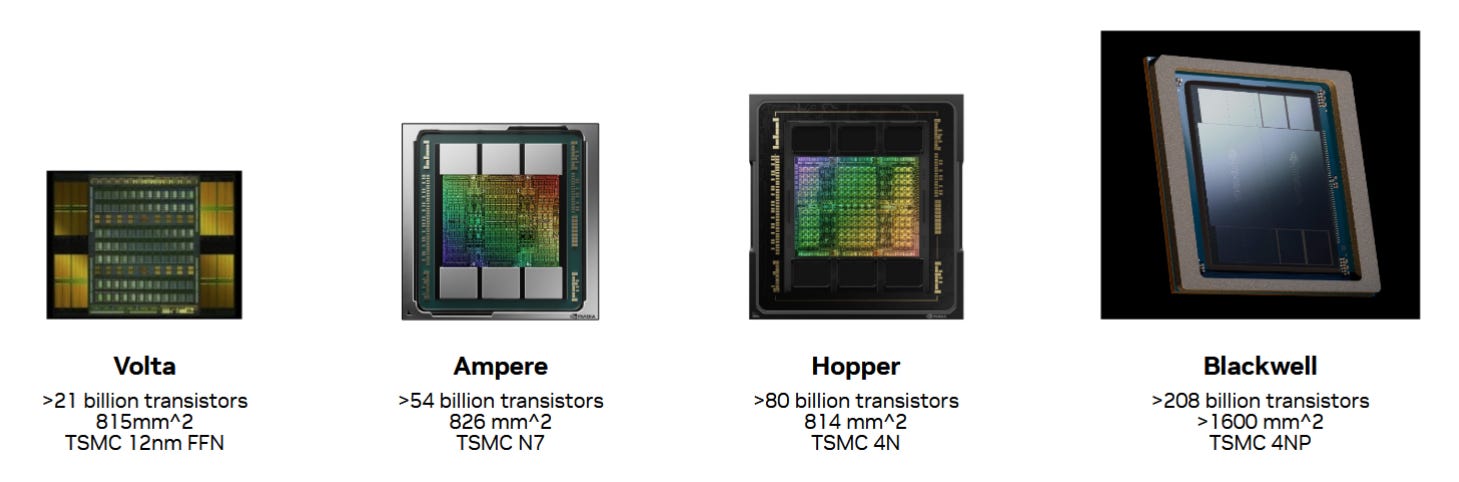
To put this in perspective, achieving this level of proficiency on previous-generation H100 clusters would have taken weeks. The B200’s Blackwell architecture, with its enhanced memory bandwidth and FP4/FP6 precision capabilities, allows for significantly higher arithmetic intensity, which is critical for the dense logic required in competitive programming.
NousCoder-14B enters a market currently bifurcated between massive proprietary models (like OpenAI’s o1 or Claude 3.5 Sonnet) and lightweight open-source alternatives. However, Nous Research’s model effectively bridges this gap. On several coding benchmarks, it matches the reasoning capabilities of models ten times its size.
This is not just a win for open-source; it is a validation of the “Specialized sLLM” strategy. For enterprise developers, a 14B model is the “sweet spot”—it is small enough to run on private infrastructure with low latency, yet robust enough to handle complex software architecture tasks and debugging.
The backing of Paradigm, a heavyweight in the decentralized technology and venture space, provides the necessary capital to access such elite hardware clusters. This investment underscores a broader trend: the democratization of high-end compute. When an agile startup can rent a B200 cluster and produce a world-class model in less than a week, the “moat” that big tech companies built through sheer compute spending begins to evaporate.
The value now shifts toward the quality of the training data and the ingenuity of the architectural optimizations.
For the global developer community, NousCoder-14B is a manifesto for transparency. Unlike closed-source APIs, this model can be fine-tuned on private codebases without risking data leakage to third-party providers. In the coming years, we expect to see a surge of such “high-intensity, low-duration” training projects.
The success of NousCoder-14B proves that with the right hardware-software synergy, the time-to-market for state-of-the-art AI is no longer measured in months, but in days.