Executive Summary
- Hewlett Packard Enterprise (HPE) is proactively addressing the impending challenge of “Q-day”—the point at which quantum computers gain the power to break existing public-key cryptography. While the event is years away, HPE is integrating quantum-ready security and computing capabilities into its current artificial intelligence and high-performance computing (HPC) stacks. This initiative ensures that enterprise infrastructure remains resilient against future quantum threats while leveraging quantum advancements for complex problem-solving.
Strategic Deep-Dive
The concept of “Q-day” has evolved from a theoretical academic concern into a strategic deadline for enterprise infrastructure, and Hewlett Packard Enterprise (HPE) is leading the response. Q-day refers to the hypothetical point in time when quantum computers reach sufficient stability and qubit scale (likely in the thousands of logical qubits) to effectively break today’s standard public-key cryptography, such as RSA and Elliptic Curve Cryptography (ECC). Since this development would compromise everything from global financial ledgers to highly classified national security communications, the race is on to implement “Post-Quantum Cryptography” (PQC) algorithms.
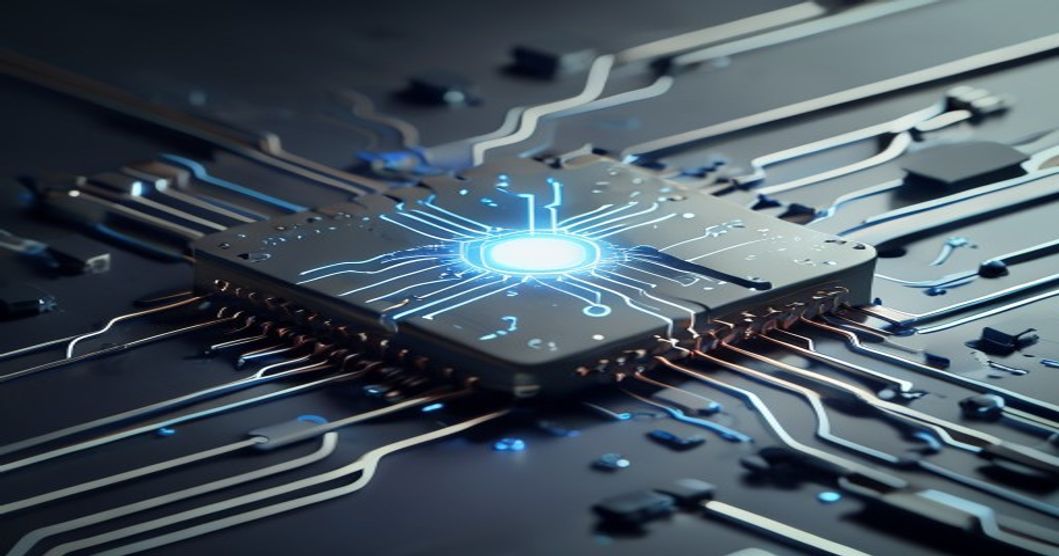
HPE is positioning its portfolio to be quantum-resistant today by embedding NIST-approved PQC standards directly into its hardware and software infrastructure.
The technical challenge is multifaceted. Quantum computing is a double-edged sword: it offers the potential to solve optimization and material science problems that are impossible for classical supercomputers, but it simultaneously renders existing security protocols obsolete. HPE’s approach is to weave quantum readiness into the existing Artificial Intelligence and High-Performance Computing (HPC) stacks.
This means that as enterprises build out their AI training environments using HPE GreenLake or Cray supercomputers, they are simultaneously installing the hardware-level “roots of trust” necessary to switch to quantum-resistant encryption without a total system replacement. This hybrid model ensures that classical data centers can host quantum-safe algorithms alongside traditional workloads.
Currently, the market context for quantum is shifting from lab-based experiments to “institutional readiness phases.” Organizations that handle highly sensitive, long-lived data—such as financial institutions, healthcare providers, and government agencies—cannot afford to wait. The “Harvest Now, Decrypt Later” threat is the primary driver for immediate action. Malicious actors are currently stealing encrypted data with the intent to decrypt it years from now when quantum tech matures.
HPE’s role is to provide the bridge, ensuring that the HPC environments used for modern AI training are future-proofed against these long-term decryption strategies.
Strategic implications suggest that quantum readiness will soon become a mandatory checkbox in enterprise procurement. By integrating these capabilities now, HPE is addressing the decade-long security lifecycle of enterprise hardware. Furthermore, by linking quantum readiness to the AI stack, HPE allows companies to explore quantum-enhanced AI algorithms while staying within a secure environment.
The ultimate goal is to ensure that when Q-day finally arrives, the transition is a seamless software-defined update rather than a catastrophic failure of the global digital economy. As an industry analyst, I view HPE’s move as a necessary hedge against systemic risk, positioning the company as the “safe harbor” for enterprise data in the quantum era.