Executive Summary
- JEDEC expands LPDDR6 roadmap with 512 GB density targets and SOCAMM2 integration
Strategic Deep-Dive
JEDEC Expands LPDDR6 Roadmap with 512 GB Density Targets and SOCAMM2 Integration
JEDEC Solid State Technology Association has announced an expansion of the LPDDR6 (JESD209-6) standard, targeting a maximum memory capacity of 512 GB, designed to alleviate memory bottlenecks. This initiative is particularly crucial for the burgeoning “Edge AI” market where Large Language Models (LLMs) must operate locally on mobile devices and workstations. Handling AI models with billions of parameters without cloud connectivity demands server-grade memory capacity, making 512 GB LPDDR6 a pivotal solution to address existing hardware limitations.
SOCAMM2 Standard: A New Paradigm in Memory Design and Enhanced Flexibility
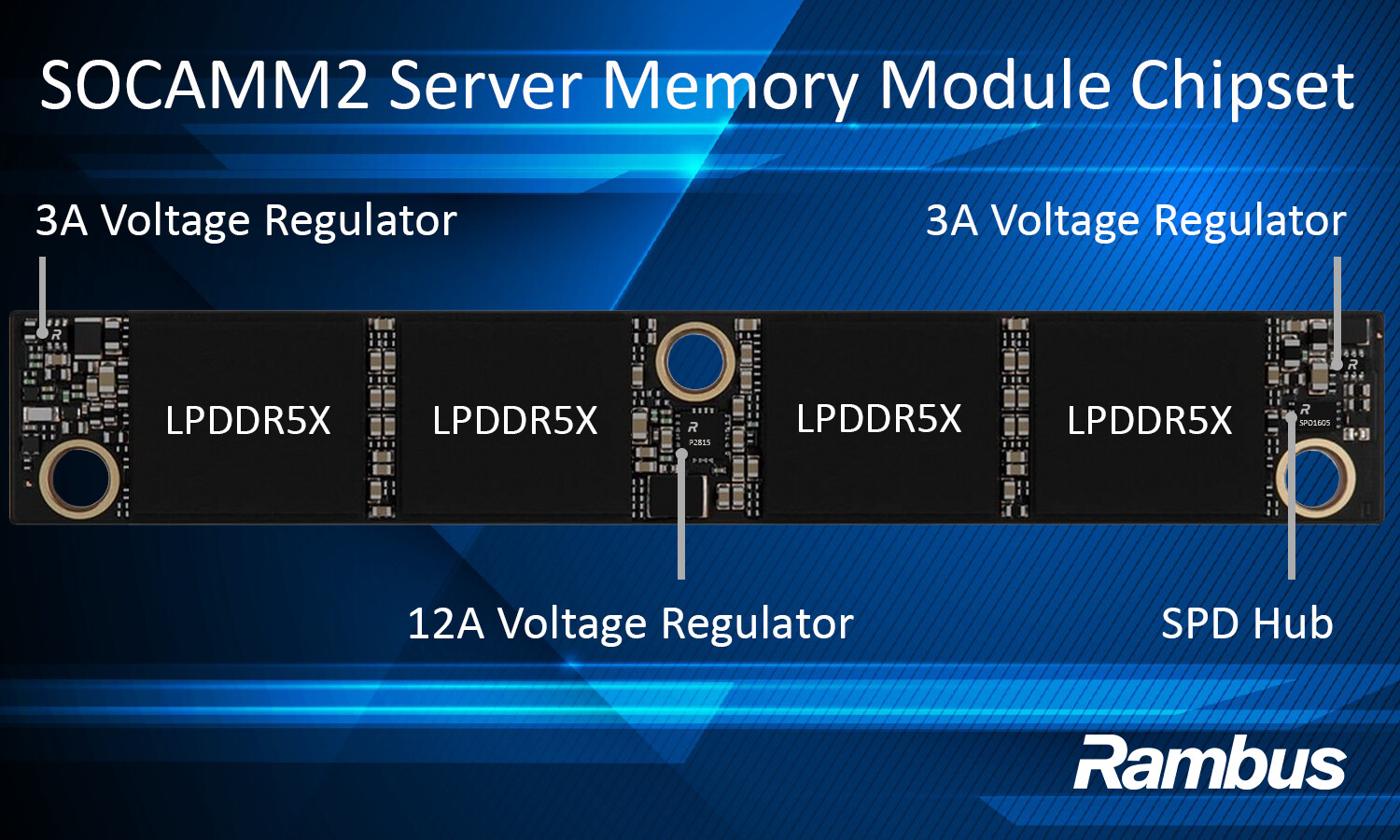
Accompanying this announcement is the emphasis on the SOCAMM2 standard, poised to revolutionize memory implementation. Traditional LPDDR memory has been constrained by an “on-board” approach, directly soldered to the motherboard for power efficiency and signal integrity. This approach hindered upgrades and maintenance.
SOCAMM2 retains the characteristics of LPDDR6, being high-speed bandwidth and low power consumption, while introducing a replaceable, modular form factor. This provides system manufacturers with greater design flexibility, while enabling users to expand memory capacity as needed.
Technical Implications and Future Outlook
To achieve the high capacity of 512 GB, the memory industry is expected to implement sophisticated die-stacking technologies and advanced packaging processes. This blurring of the lines between mobile and server memory represents an essential step towards facilitating real-time multimodal AI processing. Furthermore, enhanced on-die Error Correction Code (ECC) technology to boost data reliability will also be incorporated in the standard.
As major memory manufacturers such as Samsung Electronics, SK Hynix, and Micron accelerate product development in accordance with this standard, high-performance AI laptops featuring SOCAMM2 are projected to become mainstream in the market from the second half of 2026.