Executive Summary
- As we move into mid-2026, the streaming landscape has undergone a tectonic shift, characterized by what industry insiders are calling “The Great Content Purge.” Netflix, once the champion of the “infinite library” model, has officially announced the cancellation or conclusion of nine significant series this year. This list spans high-budget original dramas, beloved animated series, and various reality-based shows. This isn’t a sign of Netflix failing; rather, it is a cold, calculated pivot from a growth-at-all-costs mindset to a profitability-first strategy. The era of the “blank check” for cr…
Strategic Deep-Dive
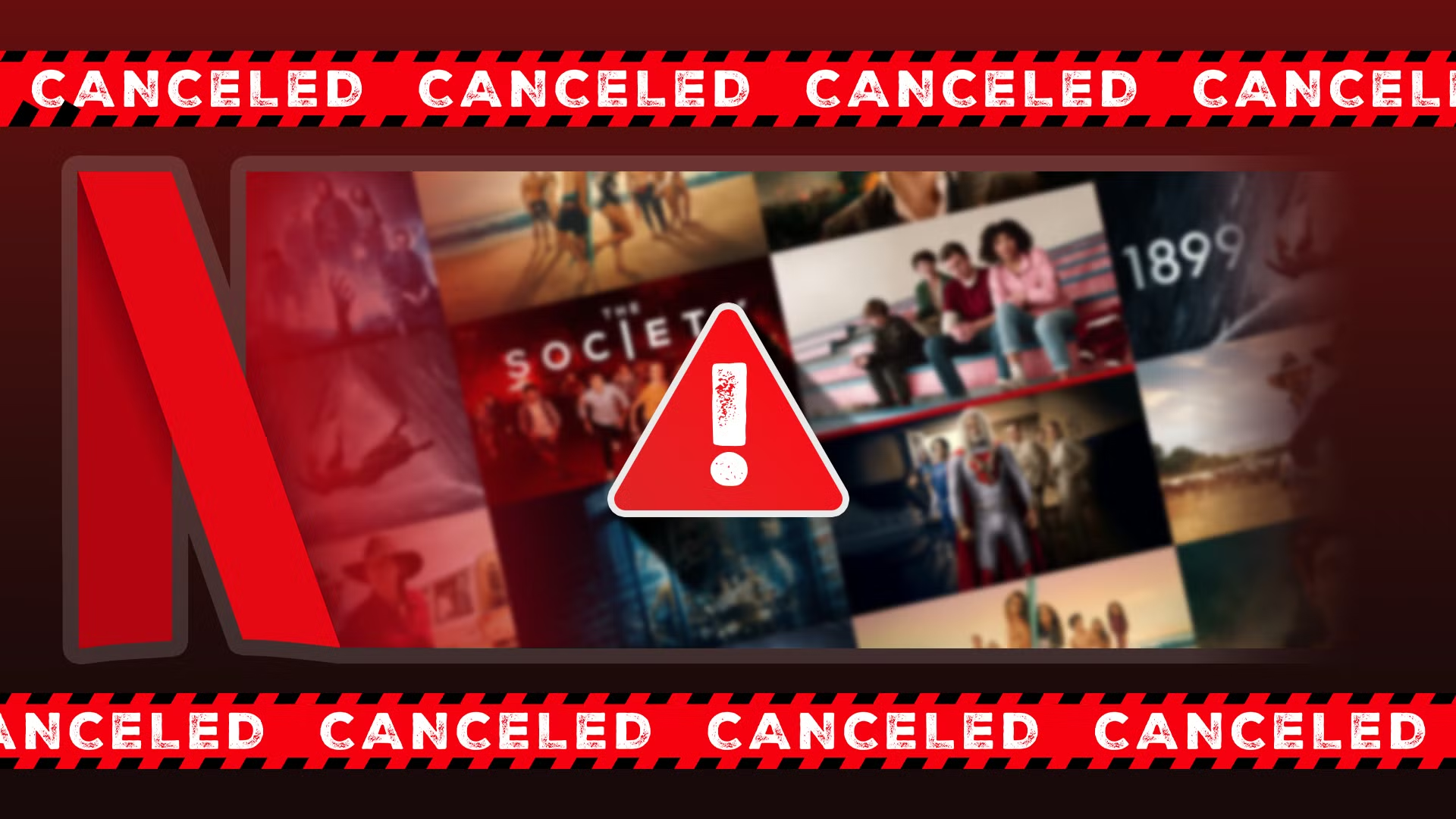
As we move into mid-2026, the streaming landscape has undergone a tectonic shift, characterized by what industry insiders are calling “The Great Content Purge.” Netflix, once the champion of the “infinite library” model, has officially announced the cancellation or conclusion of nine significant series this year. This list spans high-budget original dramas, beloved animated series, and various reality-based shows. This isn’t a sign of Netflix failing; rather, it is a cold, calculated pivot from a growth-at-all-costs mindset to a profitability-first strategy.
The era of the “blank check” for creators has ended, replaced by an algorithm-driven mandate that demands immediate and sustained return on investment.
The decision to cut these nine specific shows is rooted in a metrics-driven philosophy focused on “Completion Rates” and “Efficiency-to-Cost Ratios.” Netflix’s data indicates that while many shows attract a large number of viewers for the first episode, the drop-off rate is the true predictor of a show’s value. If a series fails to maintain a high percentage of viewers through the final credits, it is no longer seen as an asset for subscriber retention. Furthermore, the “Season 3 Curse” remains a potent factor.
By the third season, production costs typically spike due to pre-negotiated salary bumps for cast and crew. If a show’s growth curve has plateaued by this point, Netflix’s current financial logic dictates it is more efficient to cancel the series and redirect those hundreds of millions of dollars into new “Season 1” projects or licensed “comfort” content with lower risk profiles.
The impact on original animation is particularly stark. Animation has a long lead time and high production costs, making it a difficult fit for the fast-paced, quarterly-driven demands of 2026 streaming economics. Netflix is increasingly favoring licensed hits—shows like “Suits” or “The Office”—which provide high engagement hours at a fraction of the cost of original production.
For the subscriber, this means a transition from a platform defined by groundbreaking, high-concept risk-taking to one that functions more like a curated, digital cable package. While this ensures Netflix’s fiscal health and satisfies shareholders, it creates a vacuum in the creative ecosystem, as niche and experimental stories struggle to survive in a world where the algorithm is the ultimate judge and executioner.