Executive Summary
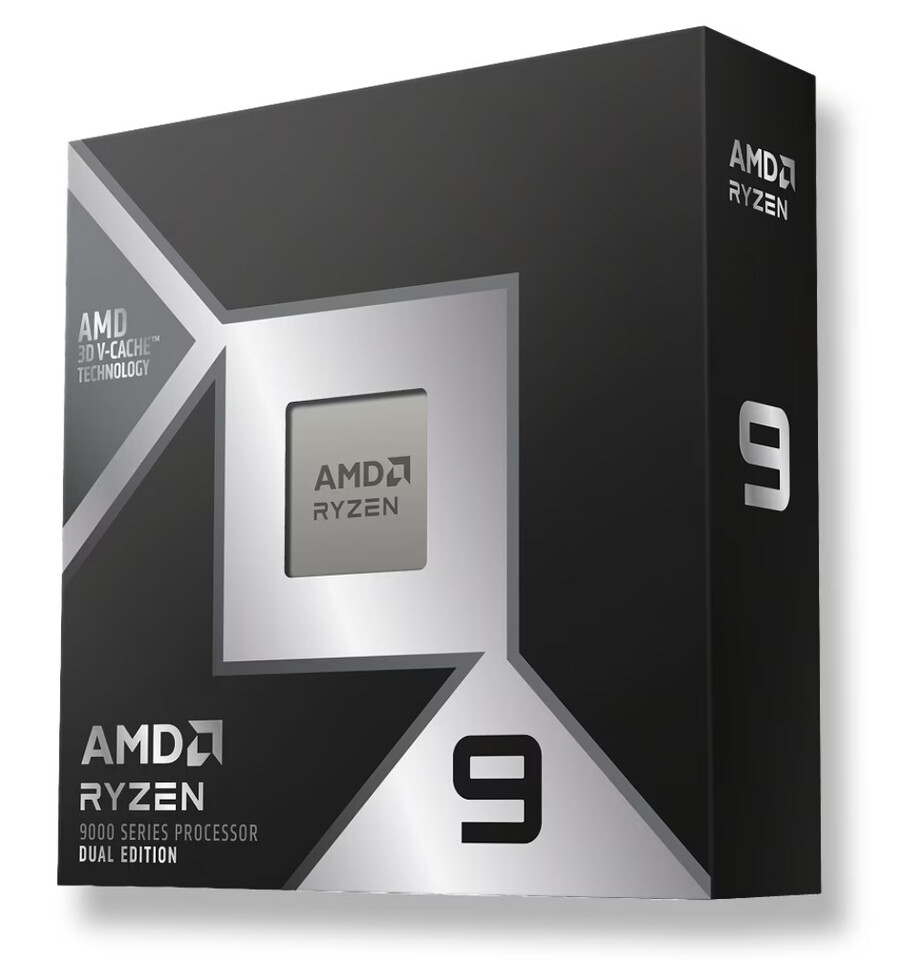
- On April 23, 2026, AMD redefined the high-end desktop (HEDT) landscape with the launch of the Ryzen 9 9950X3D2 Dual Edition. Utilizing the sophisticated Zen 5 architecture and pioneering a dual-stacked 2nd Gen 3D V-Cache configuration, this processor eliminates the performance asymmetry of previous generations to provide a unified powerhouse for developers, workstation professionals, and elite gamers.
Strategic Deep-Dive
The debut of the AMD Ryzen 9 9950X3D2 Dual Edition marks a seminal moment in semiconductor packaging and consumer-grade high-performance computing. Historically, AMD’s 3D V-Cache implementations were restricted to a single Core Complex Die (CCD). While this provided a massive boost to gaming workloads, it introduced a “cache residency” dilemma for the Windows and Linux schedulers.
Threads had to be meticulously managed to ensure latency-sensitive tasks remained on the cache-heavy die, while high-frequency tasks were pushed to the “naked” die. With the 9950X3D2, AMD has solved this architectural bottleneck by applying 2nd Gen 3D V-Cache across both Zen 5 CCDs, creating a symmetrical L3 cache environment that provides consistent, ultra-low latency across all 16 cores.
From a systems architect’s perspective, the move to a “Dual Edition” reflects a mastery over the thermal and signal integrity challenges inherent in vertical stacking. The 2nd Gen 3D V-Cache utilizes an improved hybrid bonding process that allows for thinner dies and better thermal conductivity between the Zen 5 cores and the integrated heat spreader (IHS). This is critical because the primary trade-off of 3D stacking has always been the thermal “blanket” effect, which traditionally forced lower clock speeds.
By refining the bonding pitch and thinning the silicon, AMD has managed to maintain high boost clocks while providing an unprecedented pool of L3 cache—likely exceeding 128MB of specialized memory.
For developers and software engineers, the implications are profound. Compilation times for massive codebases often hinge on memory subsystem throughput and cache hit rates. By providing a massive, uniform cache pool, the 9950X3D2 significantly reduces cache misses during complex branch-heavy operations.
Similarly, in professional creative suites involving 3D rendering or high-resolution video grading, the expanded cache acts as a high-speed buffer, minimizing the need to round-trip data to the system DRAM. This effectively bridges the gap between traditional consumer CPUs and the Threadripper workstation line.
Furthermore, the integration of the “Zen 5” architecture brings significant IPC (Instructions Per Clock) gains. When paired with dual V-Cache, these improvements are amplified in simulation-heavy environments, such as computational fluid dynamics or large-scale AI local inference. AMD is no longer just targeting the enthusiast gamer; they are positioning the 9950X3D2 as a viable alternative to entry-level HEDT platforms.
As we move further into an era of data-dense applications, the transition to symmetrical die stacking will likely become the new gold standard for high-performance silicon.