Executive Summary
- NASA’s Jet Propulsion Laboratory (JPL) has deactivated one of Voyager 1’s science instruments to preserve a critically low power supply.
- The 46-year-old probe’s Radioisotope Thermoelectric Generators (RTGs) are losing output as the Plutonium-238 fuel naturally decays.
- Engineers are implementing a high-stakes “swap” to low-power alternative components, aiming to provide a one-year “breathing room” for interstellar data.
Strategic Deep-Dive
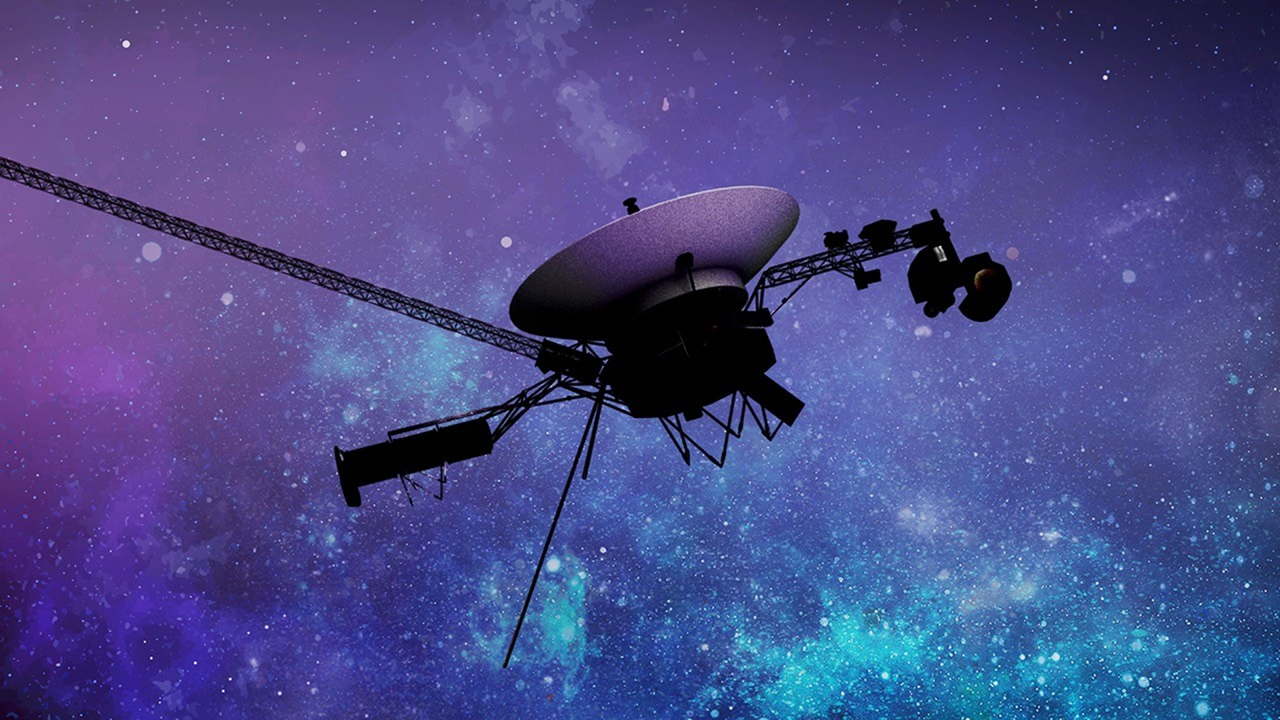
Voyager 1, the furthest human-made object in existence, is currently battling the inevitable laws of physics in the freezing void of interstellar space. NASA’s Jet Propulsion Laboratory (JPL) recently initiated a series of emergency protocols following an unexpected and sharp decline in the spacecraft’s available electrical power. To save the mission from a total system collapse, engineers were forced to permanently shut down one of the probe’s few remaining active science instruments.
This move is described by JPL as a desperate but necessary measure to grant the 46-year-old spacecraft “about a year of breathing room” to continue its unprecedented mission beyond our solar system.
The hardware at the center of this crisis is the Radioisotope Thermoelectric Generator (RTG). Voyager 1 does not use solar panels; instead, it relies on three RTGs that convert heat generated from the natural radioactive decay of Plutonium-238 pellets into electricity. However, after nearly five decades of continuous operation, the efficiency of these nuclear batteries has degraded significantly.
The plutonium fuel is past its initial prime, and the thermocouples—the devices that convert that heat into power—have also aged, resulting in an annual loss of approximately 4 watts of total power. At a distance of over 15 billion miles from Earth, even a 4-watt loss is catastrophic for a system operating on a razor-thin energy budget.
Managing this power crisis requires a level of engineering ingenuity that borders on the miraculous. Because Voyager 1 is so distant, any command sent from Earth travels at the speed of light but still takes over 22 hours to arrive. Real-time monitoring is impossible.
JPL’s strategy involves a complex “hardware swap,” where the roles of energy-intensive components are transferred to lower-power alternatives or repurposed legacy circuits. Furthermore, the team must manage the “thermal bus” of the craft. As instruments are turned off, they stop generating waste heat, which can cause the fuel lines and communication hardware to freeze.
Engineers must carefully balance the electrical load to ensure critical components remain warm enough to function while staying under the strict power ceiling.
This instrument shutdown represents the beginning of the mission’s final act. By sacrificing the data from one sensor, JPL hopes to prolong the operation of the spacecraft’s high-gain antenna and its primary flight data system. This will allow Voyager 1 to continue transmitting unique observations from the interstellar medium—the space between stars that remains a mystery to modern science.
While the spacecraft will eventually become a silent wanderer in the cosmos, these intensifying countermeasures prove that 1970s hardware, when managed with modern brilliance, can endure far beyond its original design life in the harshest environment imaginable.