Executive Summary
- Nvidia’s new Rubin CPX accelerator focuses specifically on the prefill phase of AI inference, prioritizing compute FLOPS over memory bandwidth. By utilizing a single-die configuration, the Rubin CPX reduces inter-die interconnect latency and addresses the specific compute-bound bottlenecks of initial prompt processing.
Strategic Deep-Dive
Source: SemiAnalysis
Date: 2026-04-23
URL: https://semianalysis.com/2025/09/10/another-giant-leap-the-rubin-cpx-specialized-accelerator-rack/
Nvidia has introduced a specialized architectural leap with the Rubin CPX accelerator, a hardware solution designed to resolve the specific inefficiencies found in current AI inference pipelines. While previous generations of accelerators focused on general performance across all AI tasks, the Rubin CPX is highly optimized for the “prefill phase” of inference. This phase, where the model processes the initial prompt and generates the internal state (the KV cache) before token-by-token generation begins, has distinct computational requirements compared to the subsequent “decode phase.”
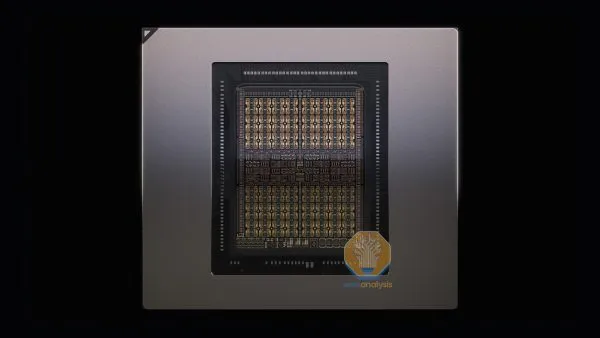
The Rubin CPX architecture is characterized by its single-die design, which marks a strategic departure from the multi-chip module (MCM) approach used in the Blackwell series. By utilizing a single die, Nvidia eliminates the inter-die interconnect latency that can hamper high-speed computations. In this configuration, the Rubin CPX heavily emphasizes compute FLOPS (floating-point operations per second) over memory bandwidth.
This is a critical trade-off: while the decode phase is memory-bound—limited by how fast data can be moved from memory to the processor—the prefill phase is primarily compute-bound. Prefill operations involve massive matrix-matrix multiplications (GEMMs), which scale directly with the raw processing power of the silicon.
Comparing the Rubin CPX to the previously announced March 2024 GB200 NVL72 Oberon rack-scale architecture reveals Nvidia’s surgical approach to inference. The GB200 is designed for high-throughput, general-purpose inference and training at scale. However, the Rubin CPX acts as a specialized node within a data center that specifically handles the “ingestion” part of a request.
As applications move toward longer context windows—such as analyzing entire technical manuals or massive codebases—the time spent in the prefill phase becomes a critical bottleneck. A single-die Rubin CPX can process these massive prompts much faster than an MCM-based unit, which must manage data synchronization between separate dies.
This diversification of the hardware lineup allows data center operators to balance their fleets between compute-heavy prefill nodes and bandwidth-heavy decode nodes. This optimization reduces the total cost of ownership (TCO) by ensuring that each phase of the inference pipeline is handled by the hardware best suited for it. By delivering the Rubin CPX, Nvidia is ensuring that as AI context lengths grow, their infrastructure remains the fastest for “time-to-first-token” (TTFT), a key metric for user experience in real-time AI applications.
This specialized approach effectively creates a higher barrier to entry for competitors who are still struggling to match Nvidia’s general-purpose performance.