Executive Summary
- An investigation into the technical divide between x86 and ARM architectures in gaming, examining how platform-specific hardware shapes user demographics and engagement.
Strategic Deep-Dive
The Socio-Technical Divide of Gaming Platforms
The contemporary gaming landscape has evolved far beyond a unified market; it is now an archipelago of distinct technical “worlds.” As an Information Architect, we categorize these segments not just by brand, but by the underlying hardware architecture. The divide between x86-based systems (PC and Consoles) and ARM-based mobile devices has created two divergent paths for content delivery. PC gaming remains the peak of high-performance computing, where users demand granular control over hardware interrupts, GPU clock speeds, and low-level API access (such as Vulkan or DirectX 12).
In contrast, the mobile and streaming sectors prioritize accessibility and thermal efficiency over raw computational power.
Hardware Abstraction and the Rise of Streaming
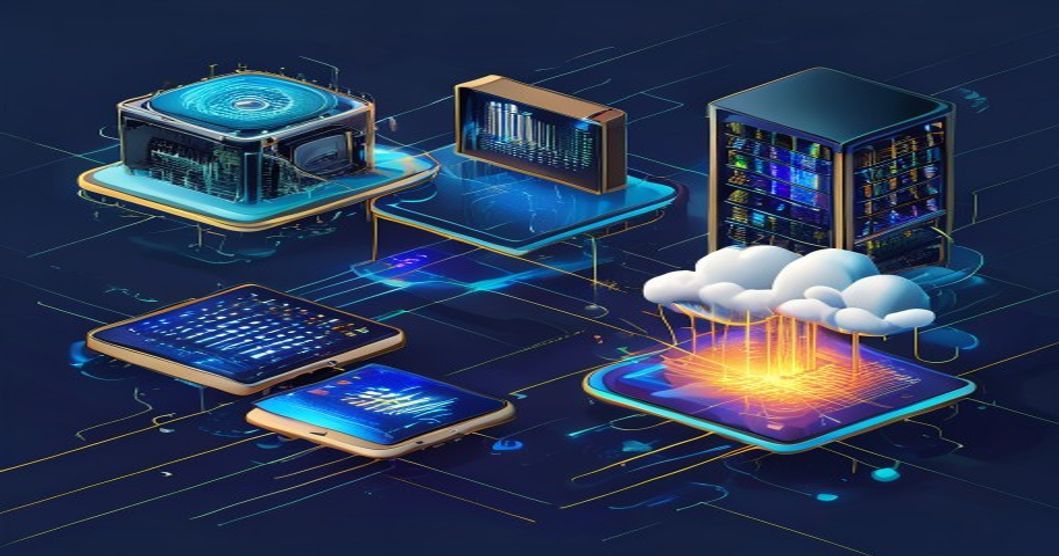
The most disruptive force in this fragmented ecosystem is the maturation of cloud-based hardware abstraction. By offloading the heavy lifting—rasterization, ray tracing, and physics calculations—to server-side NVIDIA L40G or similar data-center GPUs, streaming services allow high-fidelity experiences on hardware that lacks dedicated graphic silicon. This “hardware-agnostic” approach is bridging the gap for a new demographic of gamers who prioritize convenience.
Technically, the challenge shifts from local rendering to network congestion management, requiring advanced video codecs like AV1 and low-latency networking to maintain a semblance of the traditional local experience.
Cross-Platform Convergence and Engine Scalability
Despite the hardware divide, we are seeing a technical convergence through scalable engines like Unreal Engine 5 and Unity. These engines provide an abstraction layer that allows developers to deploy a single project across PC, mobile, and console. However, the “Experience Gap” persists due to input latency and UI constraints.
Mobile gamers interact through high-latency touch interfaces, while PC gamers utilize low-polling-rate peripherals. This technical reality dictates game design: mobile titles often feature autonomous elements and simplified control schemes, whereas PC and console titles lean into high-precision, low-latency interactions. As 5G and fiber optics expand, the technical walls between these worlds will thin, but the unique “gamer types” defined by their hardware choices will remain distinct due to the sociocultural habits formed by these technical constraints.