Executive Summary
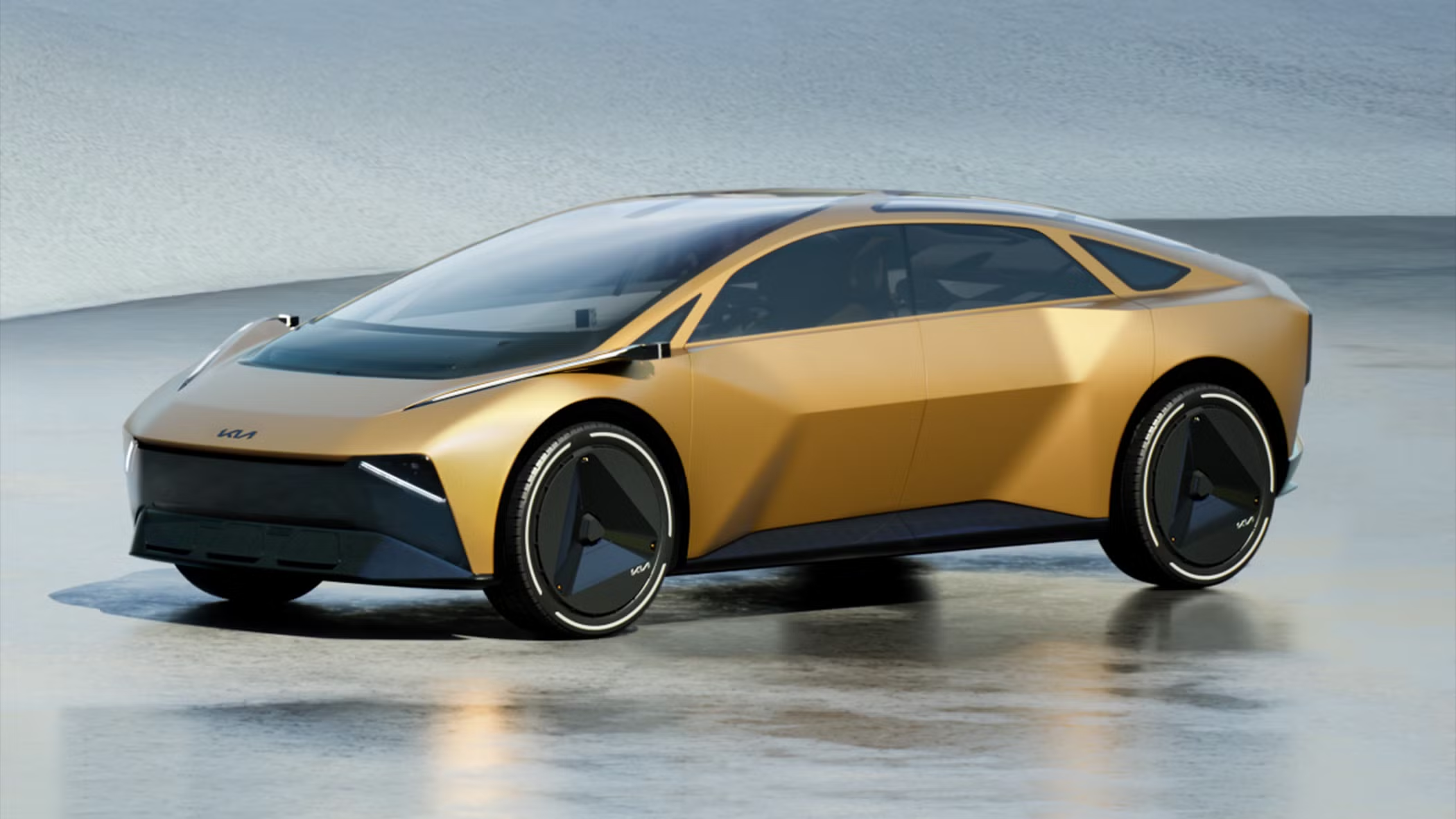
- Kia’s Vision Meta Turismo concept signals a decisive shift in high-performance EV design, prioritizing a “Software-Defined” experience. By integrating a lounge-inspired cabin with advanced holographic AR interfaces, Kia is moving beyond raw horsepower to offer a multi-sensory “Meta” journey that redefines luxury for the 2027 model year and beyond.
Strategic Deep-Dive
The unveiling of the Kia Vision Meta Turismo concept at the close of April 2026 marks a watershed moment for the Hyundai Motor Group. As the industry grapples with the plateauing of traditional EV performance metrics, Kia is pivoting toward the “experience economy.” The Meta Turismo is not merely a high-performance electric vehicle; it is a sophisticated mobile terminal designed for a world where Software-Defined Vehicle (SDV) architecture is the baseline. By 2026, the novelty of instant electric torque has faded, and Kia understands that the next frontier of “performance” lies in how a vehicle processes and presents data to its occupants.
The interior of the Meta Turismo is a radical departure from the driver-centric cockpits that have defined sports cars for a century. Replacing the traditional bucket seats are “lounge-style” modular units that can rotate and reconfigure based on the driving mode. In autonomous transit, the cabin transforms into a digital sanctuary.
This shift reflects a broader market insight: as Level 3 and Level 4 autonomy become more prevalent in 2026, the value of the interior space is skyrocketing. Kia is positioning itself as a leader in this “third space” evolution, directly challenging European luxury incumbents who have been slower to abandon legacy interior layouts.
Technical integration in the Meta Turismo centers on its advanced Augmented Reality (AR) ecosystem. Unlike the basic HUDs of 2024, this system utilizes the entire windshield as a transparent OLED canvas. This “Meta” layer overlays real-time telemetry, environmental data, and social connectivity directly onto the driver’s field of vision.
For the performance enthusiast, this means “ghost racing” against previous laps or visualizing the optimal racing line on a mountain pass. For the passenger, it offers immersive entertainment that syncs with the car’s motion, mitigating motion sickness while providing a cinematic experience.
Furthermore, the Meta Turismo serves as a halo project for Kia’s high-end aspirations. By blending high-performance electric motors—likely targeting a sub-3-second 0-60 mph time—with a luxury-first interior, Kia is encroaching on territory once reserved for brands like Porsche or Maserati. The market analyst view here is clear: Kia is no longer satisfied with being a value leader.
They are aiming for the “techno-luxury” crown, leveraging South Korea’s dominance in display technology and software integration to create a product that feels like a generation ahead of its competitors. As we look toward the 2027 production cycle, the Meta Turismo will likely dictate the design language for the entire GT line, cementing Kia’s status as a top-tier innovator in the global EV landscape.