Executive Summary
- The recent $500 price reduction for the Lenovo Legion 5i at B&H Photo, bringing the final cost to $1,599, marks a strategic maneuver in the mid-to-high-end gaming laptop segment. As a systems architect, I evaluate this not just as a retail discount, but as a deliberate aggressive market share grab. By positioning a device with a 32GB RAM baseline and an RTX 5070 (Blackwell mobile architecture) at this price, Lenovo is effectively undercutting competitors like Razer and Alienware by nearly 30% for equivalent specs. This move targets the “prosumer” demographic that requires high-performance hard…
Strategic Deep-Dive
The Strategic Value of the $1,599 Price Point
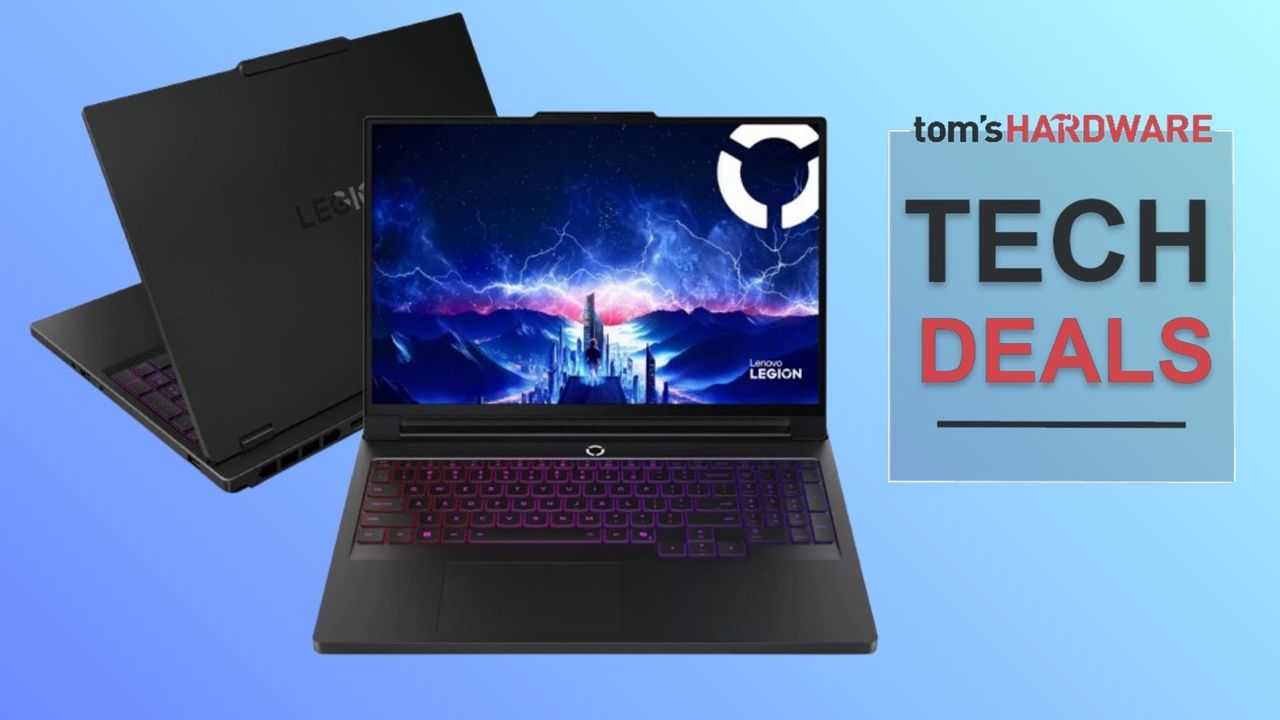
The recent $500 price reduction for the Lenovo Legion 5i at B&H Photo, bringing the final cost to $1,599, marks a strategic maneuver in the mid-to-high-end gaming laptop segment. As a systems architect, I evaluate this not just as a retail discount, but as a deliberate aggressive market share grab. By positioning a device with a 32GB RAM baseline and an RTX 5070 (Blackwell mobile architecture) at this price, Lenovo is effectively undercutting competitors like Razer and Alienware by nearly 30% for equivalent specs.
This move targets the “prosumer” demographic that requires high-performance hardware for both high-refresh-rate gaming and localized AI development.
RTX 5070 and OLED: A Synergistic Hardware Marriage
The inclusion of the NVIDIA GeForce RTX 5070 mobile GPU is the cornerstone of this build. Based on the Blackwell architecture, this GPU requires careful thermal management to maintain its Total Graphics Power (TGP) without throttling. Lenovo’s “Coldfront 5.0” thermal system must handle the concentrated heat density of the smaller Blackwell die.
When paired with a 16:10 QHD+ (2560x1600) OLED display, the synergy is palpable. The infinite contrast of OLED and 100% DCI-P3 color coverage complement the RTX 5070’s Ray-Reconstruction and DLSS 4 capabilities. For architects and creators, the move to a 16:10 aspect ratio provides 11% more vertical screen real estate compared to standard 16:9 panels, a critical factor for productivity in timelines and CAD software.
32GB RAM: The New Baseline for LLMs and Productivity
While 16GB of DDR5 has been the standard for years, the Legion 5i’s 32GB configuration acknowledges the changing software landscape of 2026. High-end gaming is no longer the only intensive task; the rise of local Large Language Models (LLMs) and stable diffusion tools requires significant VRAM and system memory buffers. 32GB ensures that the system doesn’t rely on slow NVMe paging during heavy multitasking.
From a hardware lifecycle perspective, this 32GB baseline extends the machine’s relevance by at least 24 months, preventing the inevitable “memory stutter” seen in modern AAA titles like “Cyberpunk 2077: Phantom Liberty” or professional video encoding suites.
Thermal Constraints and Chassis Engineering
One must analyze the TGP (Total Graphics Power) allocation. In a chassis as thin as the Legion 5i, the RTX 5070 likely operates at a balanced 115W-140W range. To maintain $1,599 while offering OLED and 32GB RAM, Lenovo has prioritized internal component density.
The use of a Phase-Change Liquid Metal thermal interface is likely required to keep the Intel Core i9 or i7 HX-series CPU from thermal-clipping during sustained loads. This is not a “clearance” of old stock; it is a strategic entry using a mature chassis design to deliver high-end Blackwell performance to the mass market.