Executive Summary
- As artificial intelligence transitions into the “agentic” phase, the focus is shifting toward autonomous systems that can perceive, decide, and act without continuous human intervention. These distributed agents require real-time collaboration across various environments, which is exposing the limitations of current centralized AI models. This evolution necessitates a fundamental rethinking of wide-area network (WAN) and edge infrastructure to support low-latency, high-autonomy decision-making at the point of action.
Strategic Deep-Dive
The paradigm of artificial intelligence is moving beyond the “chat” interface of Large Language Models (LLMs) into the sophisticated era of Agentic AI. This new phase is characterized by autonomous systems that do not merely respond to prompts but possess the inherent capability to perceive their surroundings, make strategic decisions, and execute actions independently. Crucially, these systems function without constant human oversight, operating across highly distributed environments and collaborating with other agents in real-time.
This shift represents a fundamental transition from centralized, cloud-based AI to a more fluid, distributed architecture, which has massive implications for global network infrastructure and computational topology.
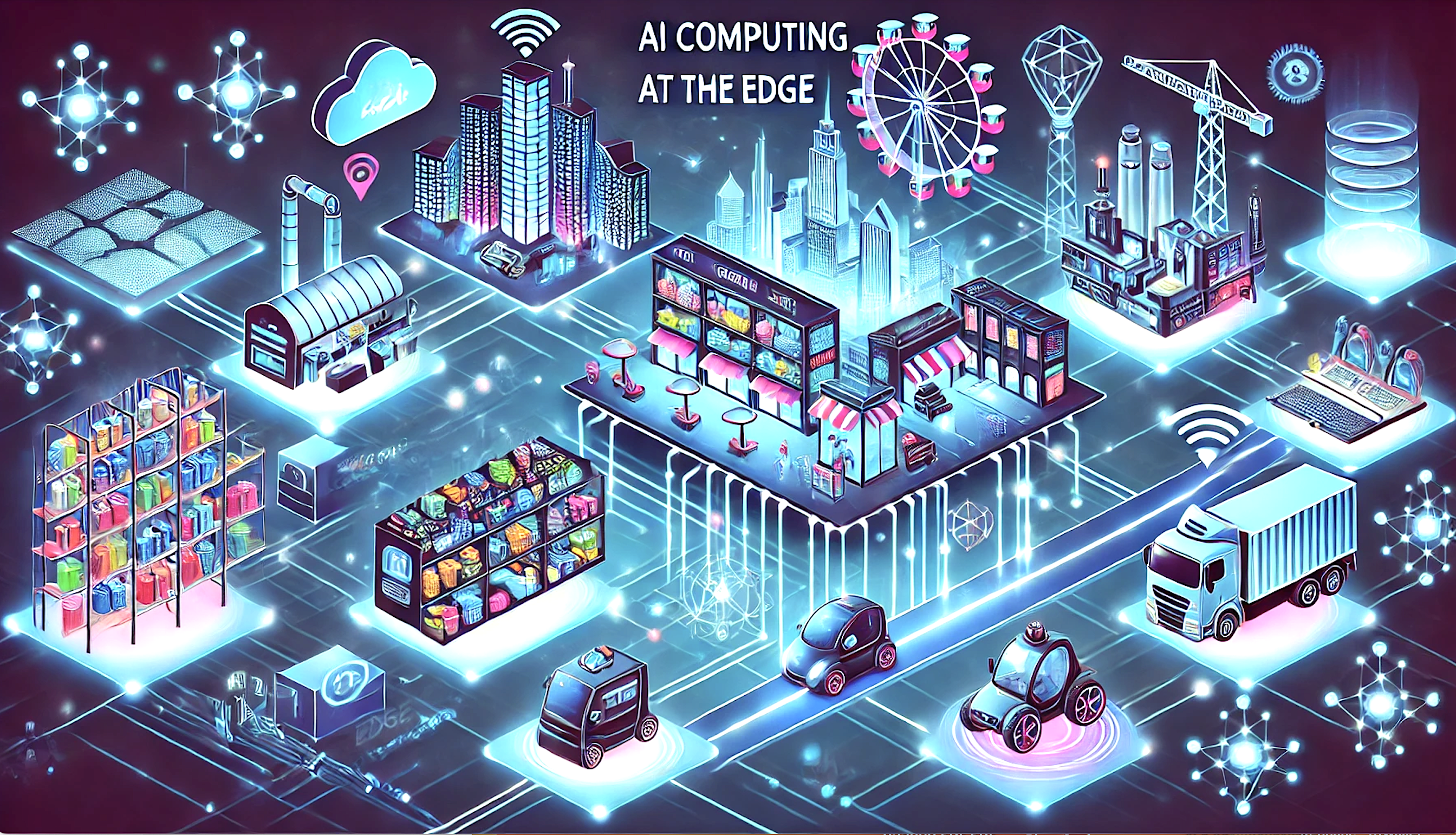
The technical core of this shift lies in the critical need for localized intelligence and “compute-on-path” services. Centralized AI models, while powerful for massive training runs, suffer from backhaul latency issues that are unacceptable for autonomous agents operating in the real world—such as industrial robots, autonomous vehicles, or smart city infrastructure. For an agent to execute the “Perceive-Decide-Act” loop in milliseconds, the computational processing must occur closer to the source of data.
Consequently, the network edge is becoming the new battleground for AI deployment. Traditional wide-area networks (WANs) were designed to funnel data to large, centralized data centers; however, Agentic AI requires a bidirectional flow of information where decision-making is localized but global coordination remains persistent.
Market context suggests that as companies move away from monolithic, static models, they are looking for ways to integrate “swarms” of agents that can work together to solve complex tasks. This requires an infrastructure that can support high-speed, secure, and reliable communication between agents using specialized protocols and Software Defined Networking (SDN) optimized for AI traffic. The shift to the edge is not just about reducing latency; it is about resilience and autonomy.
If an agent at the edge loses connection to the central cloud, it must still possess enough local “inference capacity” to function safely and effectively. This demand is driving a new wave of investment in specialized edge-AI chips and localized storage solutions.
Long-term strategic implications involve a complete overhaul of how we think about “connectivity.” In an Agentic AI world, the network is no longer just a passive pipe; it is a collaborative space where intelligence is woven into the fabric of the connection itself. Infrastructure providers must evolve to provide not just raw bandwidth, but integrated intelligence layers. Organizations that fail to adapt their edge strategies will find their AI agents hobbled by the speed of light and the bottlenecks of legacy architectures.
The future of AI is not confined to the cloud—it is everywhere, operating autonomously at the edge of the world, requiring a network that is as smart as the agents it connects.