Executive Summary
- Facing intense component cost pressures, Huawei is pivoting to an integrated AI device portfolio—spanning PCs, wearables, and phones—leveraging its in-house chips and HarmonyOS to maintain margins and market relevance.
Strategic Deep-Dive
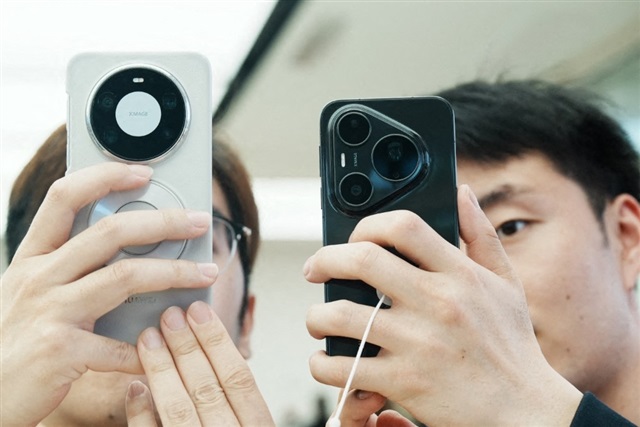
Huawei is navigating the 2026 hardware crisis with a dual-pronged strategy that emphasizes extreme vertical integration. During its latest product launch, the company acknowledged the significant pressure that rising component costs—particularly memory, high-end CMOS sensors, and advanced substrates—are placing on smartphone profit margins. However, rather than scaling back its premium aspirations, Huawei is doubling down on an integrated ecosystem as its primary defense against inflationary pressures.
By utilizing its in-house developed Kirin processors and the proprietary HarmonyOS NEXT, Huawei can optimize its hardware and software in a way that third-party Android users simply cannot. This integration allows for “computational hardware efficiency,” where software-side AI optimizations allow the device to perform at flagship levels even when using slightly less expensive or more readily available components. This vertical control partially offsets the rising Bill of Materials (BOM) that is currently plaguing its rivals.
Furthermore, Huawei is broadening its portfolio to include a wide array of AI-driven devices beyond the smartphone. The company showcased new AI-integrated PCs, powered by custom silicon and featuring “HarmonyOS Intelligence,” alongside advanced wearables that offer clinical-grade health tracking. This ecosystem-centric approach serves as a hedge against the thinning margins in the mobile sector.
If a customer is locked into the HarmonyOS ecosystem via their laptop and watch, Huawei can capture cumulative value through services and high-margin accessories, even if the primary handset’s margin is squeezed by memory price hikes.
This shift from a “hardware manufacturer” to an “AI ecosystem provider” is Huawei’s strategic answer to geopolitical constraints and the current semiconductor supply-demand imbalance. By positioning its devices as “AI-first” productivity tools, Huawei is tapping into the premium segment’s willingness to pay a surplus for seamless device interconnectivity. In the 2026 market, where component costs are volatile, the ability to control the entire stack—from the kernel of the OS to the micro-architecture of the chip—is becoming the ultimate competitive advantage, ensuring Huawei’s survival and relevance despite global economic headwinds.