Executive Summary
- The collaborative research between Samsung Electronics and POSTECH, recently featured in the journal Nature under the title “Switchable 2D-3D display through a metasurface lenticular lens,” represents a seminal moment in optical engineering. For decades, the display industry has struggled with the inherent physical limitations of refractive optics. Traditional 3D viewing systems rely on macro-scale lenticular sheets or parallax barriers that are not only bulky but also degrade the resolution of 2D content due to fixed optical properties. This research effectively dismantles those barriers by i…
Strategic Deep-Dive
Breakthrough in Metasurface-Based Optical Displays: A Paradigm Shift
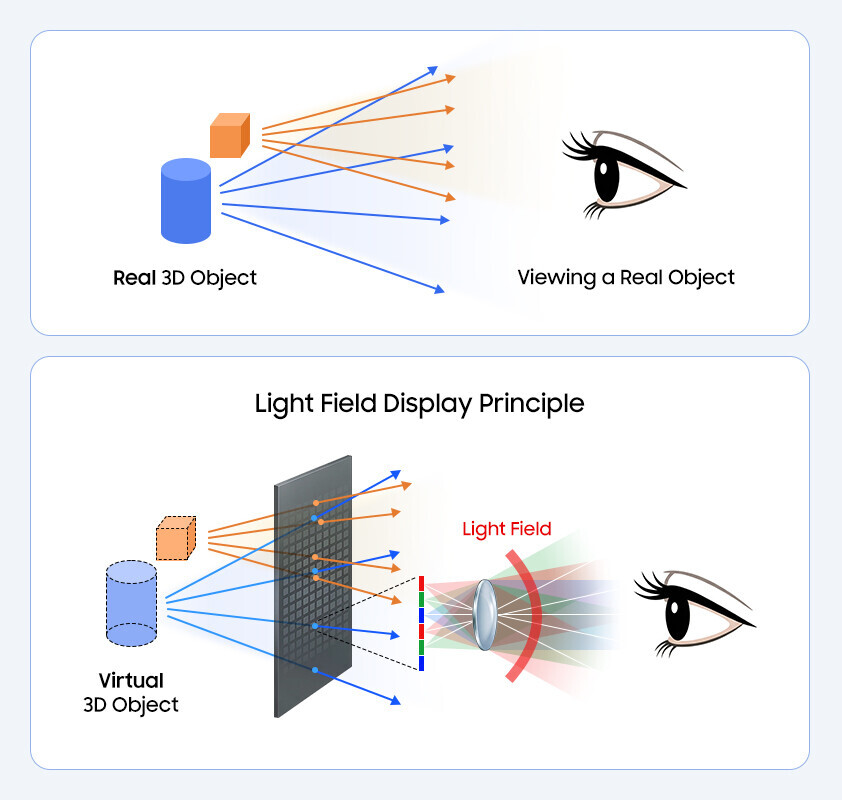
The collaborative research between Samsung Electronics and POSTECH, recently featured in the journal Nature under the title “Switchable 2D-3D display through a metasurface lenticular lens,” represents a seminal moment in optical engineering. For decades, the display industry has struggled with the inherent physical limitations of refractive optics. Traditional 3D viewing systems rely on macro-scale lenticular sheets or parallax barriers that are not only bulky but also degrade the resolution of 2D content due to fixed optical properties.
This research effectively dismantles those barriers by introducing metasurfaces—engineered nanostructures that manipulate light at the sub-wavelength scale.
The Physics of Metasurface Lenticular Lenses
At the technical core of this innovation is the application of sub-wavelength lithography to create an array of meta-atoms. These nanostructures allow for the precise control of the wavefront, enabling the lens to switch its focal properties dynamically. Unlike traditional glass lenses that rely on thickness and curvature to refract light, metasurfaces utilize phase discontinuities to steer light beams.
This allows the display to maintain an ultra-thin form factor, a critical requirement for integration into the next generation of smartphones and wearable AR/VR hardware. The ability to control phase, amplitude, and polarization simultaneously means that the display can toggle between a standard 2D high-resolution mode and a stereoscopic 3D mode without the ghosting effects or luminosity loss that plagued previous iterations of the technology.
Industry-Academia Synergy and Market Implications
The synergy between Samsung’s advanced semiconductor manufacturing capabilities and POSTECH’s specialized research in nano-photonics has accelerated the transition of meta-optics from theoretical physics to a functional hardware prototype. This partnership is significant because it addresses the scalability of metasurface production, utilizing existing lithographic processes to envision a future where high-performance 3D displays are mass-produced. From a Total Addressable Market (TAM) perspective, the implications are vast.
As the industry moves toward spatial computing and agentic interfaces, the demand for hardware that can seamlessly blend two-dimensional data with three-dimensional spatial environments will skyrocket.
Future Roadmap: Toward Lightweight XR Hardware
Beyond consumer electronics, the Samsung-POSTECH breakthrough provides a blueprint for the evolution of Extended Reality (XR). Current VR headsets are often criticized for their bulk; by replacing traditional heavy lenses with metasurface-based optics, the industry can achieve the long-sought goal of ‘glasses-like’ form factors. Furthermore, the high diffraction efficiency achieved in this study ensures that battery life—a constant bottleneck for mobile devices—is not compromised.
This research establishes a new gold standard for optical leadership, positioning the Samsung-POSTECH alliance at the forefront of the global display landscape as they continue to refine the yield management and reliability of these nanostructures for real-world deployment.