Executive Summary
- SK Hynix has provided a definitive market outlook stating that HBM demand will outstrip production capacity for the foreseeable future. Despite record-breaking capital expenditures, the structural complexity of next-generation AI memory manufacturing creates a persistent ‘supply-restricted’ environment that poses a significant challenge for global hyperscalers and AI developers.
Strategic Deep-Dive
The global semiconductor landscape is witnessing a defining paradigm shift, where the scarcity of high-bandwidth memory (HBM) has moved from a tactical concern to a strategic crisis. SK Hynix, a dominant force in this sector, has issued a stark warning: the demand for HBM is projected to outpace supply for several years. This assessment reflects a deep-seated structural imbalance within the AI hardware supply chain, suggesting that the industry is entering a ‘supply-restricted’ era that will define the competitive landscape of the late 2020s.
The Engineering Paradox: High Investment vs. Limited Output
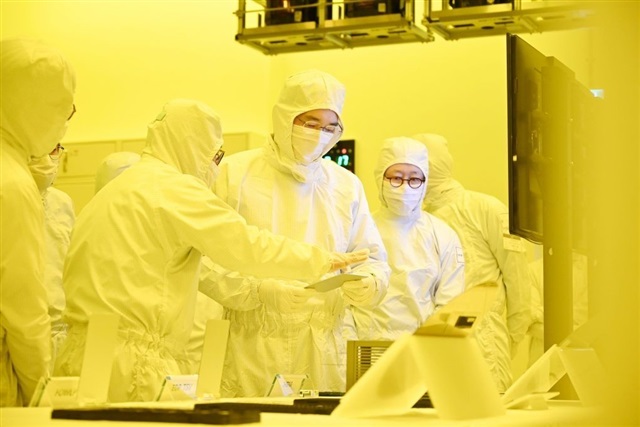
The fundamental challenge lies in the widening gap between the massive capital injections from memory makers and the actual deliverable capacity. While SK Hynix is aggressively ramping up investments to build new fabrication lines and upgrade existing ones, the physics of HBM manufacturing presents unique hurdles. Unlike standard DRAM, HBM involves complex vertical stacking and Through-Silicon Via (TSV) technology.
As the industry moves toward 12-layer and 16-layer HBM3E and eventually HBM4, the precision required for vertical alignment and thermal management increases exponentially. These technical difficulties lead to lower-than-expected yields, meaning that even with more silicon wafers entering the line, the final output of high-quality, AI-ready modules remains constrained. This engineering paradox ensures that supply cannot simply be ’turned on’ to meet the insatiable hunger of AI hyperscalers.
Strategic Friction and the Allocation War
This persistent shortage is creating significant strategic friction between memory providers and their high-profile clients, including NVIDIA and major cloud service providers (CSPs). In an environment where demand consistently exceeds capacity, the power dynamic shifts toward the manufacturer. We are seeing a shift where HBM allocations are negotiated years in advance, often involving upfront capital commitments from customers to secure future production lines.
This ’lock-in’ effect underscores that HBM is no longer a commodity; it is a critical strategic asset. For SK Hynix, maintaining this technological lead is essential, but the inability to fulfill the total market volume poses a risk to the broader AI innovation cycle. If memory capacity remains the primary bottleneck, the release cycles of next-generation large language models (LLMs) and autonomous systems may be forced to decelerate.
Investigative Outlook: The Manufacturing Hegemony
From an investigative perspective, the HBM shortage serves as a case study in the return of manufacturing hegemony. In the previous software-led era, hardware was often viewed as a scalable backdrop. Today, the physical constraints of the fab have become the primary determinant of global tech progress.
SK Hynix’s multi-year outlook suggests that the AI era will be defined by those who can master the most difficult manufacturing processes at scale. As we look toward 2026 and beyond, the competition will move beyond simple capacity to ‘yield-optimized performance.’ Companies that fail to secure their memory supply chain today will find themselves at a structural disadvantage in the global AI race, as the era of abundant hardware has officially come to an end.