Executive Summary
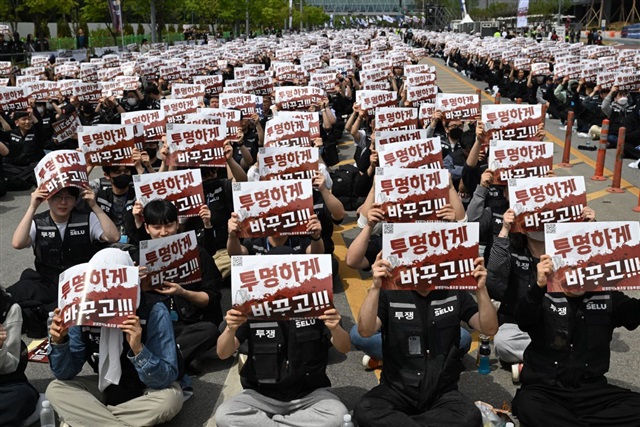
- The mobilization of 40,000 workers at Samsung Electronics’ Pyeongtaek campus represents an unprecedented seismic shift in the industrial relations of South Korea’s tech titan. With approximately one-third of the total workforce unified in protest, the scale of this action dwarfs any previous labor dispute in the company’s history. The looming 18-day strike, scheduled for May, is no longer a mere internal HR issue; it is a critical threat to the global semiconductor supply chain that could have long-lasting socio-economic ramifications.
Strategic Deep-Dive
Historic Labor Unrest at the Pyeongtaek Semiconductor Nexus
The mobilization of 40,000 workers at Samsung Electronics’ Pyeongtaek campus represents an unprecedented seismic shift in the industrial relations of South Korea’s tech titan. With approximately one-third of the total workforce unified in protest, the scale of this action dwarfs any previous labor dispute in the company’s history. The looming 18-day strike, scheduled for May, is no longer a mere internal HR issue; it is a critical threat to the global semiconductor supply chain that could have long-lasting socio-economic ramifications.
Socio-Economic Impact and the Fragility of Global Supply Chains
The Pyeongtaek campus is the beating heart of Samsung’s advanced manufacturing, housing the critical lines for HBM3E and next-generation HBM4 production. In the semiconductor industry, continuity is the prerequisite for viability. A 18-day work stoppage is catastrophic for ‘clean room’ operations, where even a minor fluctuation in staffing levels can lead to contamination or the loss of entire wafer batches.
The socio-economic impact of such a disruption would be felt globally. As the primary supplier of memory components for cloud service providers and consumer electronics giants, any delay in Samsung’s output will inevitably lead to price spikes and component shortages across the global market. Furthermore, the national economy of South Korea, which is heavily reliant on Samsung’s export performance, faces a significant risk of a downturn if this conflict is not resolved swiftly.
Strategic Vulnerability: Losing the HBM and Foundry War
From an analyst’s perspective, this labor unrest comes at the worst possible time for Samsung’s management. The company is currently engaged in a high-stakes war for dominance in the HBM (High Bandwidth Memory) sector against SK Hynix and Micron. Stability and reliability are the two qualities most prized by customers like NVIDIA and Apple.
If Samsung cannot guarantee manufacturing continuity due to internal instability, it risks losing these tier-one customers to competitors who can offer a more stable supply chain. The potential loss of foundry contracts to Intel or TSMC is a very real threat if management-labor relations are perceived as a systemic risk. This labor action highlights the fragility of being a global leader; technical superiority means little if the human infrastructure required to run the fabs is compromised.
Management Challenges and Future Stability
For Samsung’s leadership, the challenge is twofold: they must negotiate a settlement that prevents the 18-day strike while maintaining a cost structure that allows for massive R&D investment. The scale of the 40,000-worker protest suggests that traditional, top-down management tactics are losing their efficacy in the face of a younger, more vocal workforce. The resolution of this crisis will serve as a bellwether for labor relations across the entire East Asian high-tech sector.
Failure to find a sustainable middle ground could lead to a permanent degradation of Samsung’s competitive edge, transforming a labor dispute into a long-term strategic decline. The next 18 days will determine whether Samsung can retain its position as the reliable backbone of the global digital economy.