Executive Summary
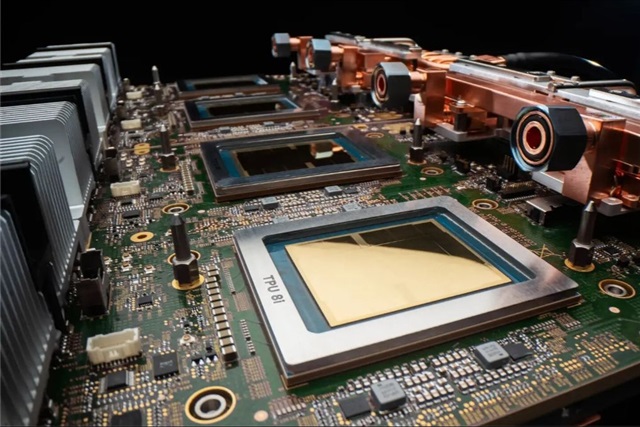
- Google Cloud has introduced the eighth-generation TPU v8t for AI training and TPU v8i for inference, signaling a major move toward workload-specialized AI infrastructure.
Strategic Deep-Dive
During the Google Cloud Next ‘26 keynote, Google Cloud unveiled a landmark evolution in its custom silicon roadmap with the formal introduction of the eighth-generation Tensor Processing Unit (TPU). This generation signifies a definitive strategic pivot toward workload specialization by bifurcating the TPU architecture into two distinct, task-specific variants: the TPU v8t, meticulously optimized for the training of massive foundation models, and the TPU v8i, engineered specifically for high-efficiency inference. This architectural split reflects Google’s sophisticated understanding of the diverging computational profiles and memory bandwidth requirements for building versus deploying production AI models at a global scale.
The TPU v8t (training) is built as a computational powerhouse, prioritizing massive raw throughput and high-speed inter-chip interconnects (ICI) to facilitate seamless distributed processing across sprawling pods containing thousands of units. It is designed to minimize the time-to-train for increasingly complex generative AI architectures. Conversely, the TPU v8i (inference) focuses on maximizing requests-per-second while drastically reducing latency and Thermal Design Power (TDP).
By tailoring the hardware to these specific phases of the machine learning lifecycle, Google aims to deliver a level of energy efficiency and cost-effectiveness that general-purpose GPUs struggle to match. This approach allows Google Cloud customers to dynamically fine-tune their infrastructure expenditures based on their precise workload profile, rather than subsidizing the excess capabilities of a one-size-fits-all silicon solution.
From a market analyst’s perspective, this strategic shift toward heterogeneous AI computing highlights the intensifying race among cloud hyperscalers to mitigate their reliance on merchant silicon providers like NVIDIA. By owning the entire stack—from the TPU’s instruction set architecture (ISA) to the integrated software frameworks—Google can achieve radical optimizations in memory pooling and workload scheduling that are unavailable to hardware vendors supporting a broad range of legacy legacy tasks. Furthermore, the v8i’s emphasis on energy sustainability addresses a critical existential threat to the data center industry: the soaring carbon footprint of continuous AI inference.
As AI models become ubiquitous in every consumer application, the energy required for inference alone will soon dwarf training costs. Google’s v8t and v8i represent the vanguard of the next phase in the AI arms race: a transition away from generic compute clusters toward a highly refined, task-specific silicon paradigm that promises to make the next generation of artificial intelligence both economically viable and environmentally responsible.