Executive Summary
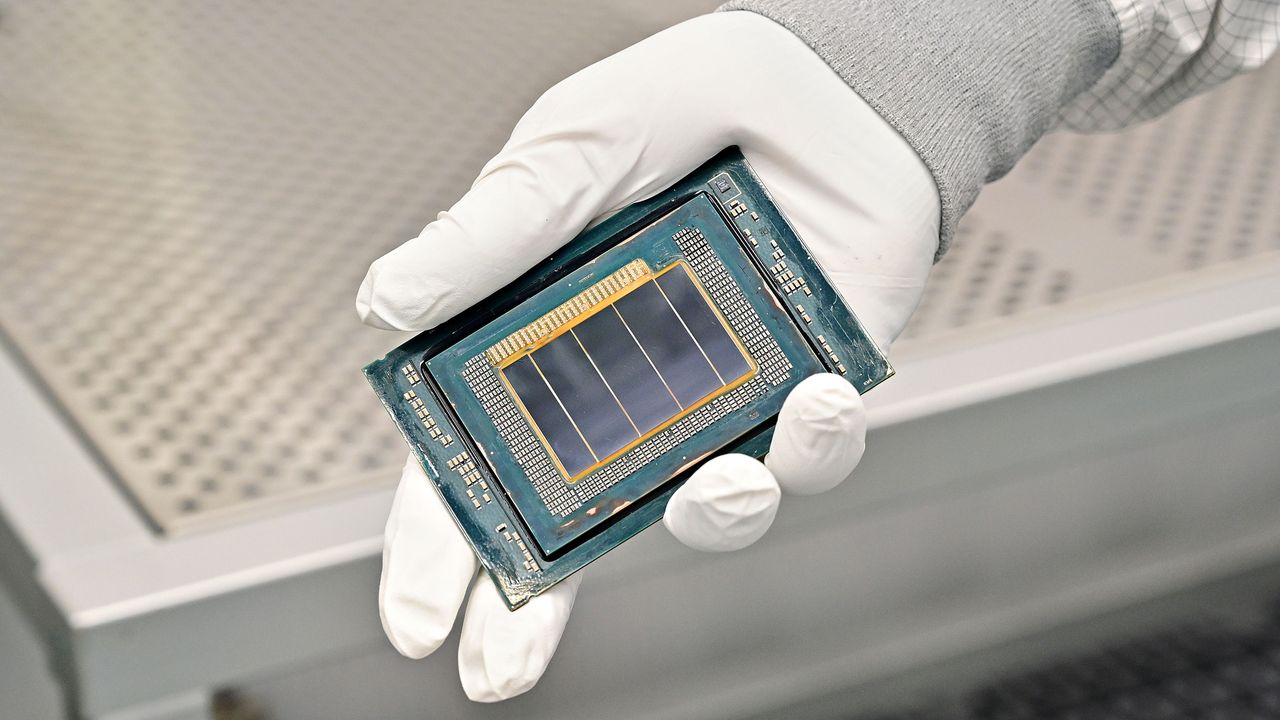
- In a strategic pivot to optimize its $135B capex budget, Meta has partnered with Amazon to deploy tens of millions of Graviton5 ARM cores, prioritizing general-purpose CPU efficiency for the complex orchestration required by autonomous AI agents.
Strategic Deep-Dive
Infrastructure Diversification in a GPU-Scarce World
Meta Platforms is making a decisive shift in its AI infrastructure roadmap by signing a multi-billion dollar agreement with Amazon Web Services (AWS) for the deployment of tens of millions of Graviton5 ARM-based CPU cores. This deal marks a significant departure from the prevailing industry narrative that AI progress is solely tied to the availability of Nvidia’s H100 and B200 GPUs. Despite Meta’s staggering $135 billion capital expenditure budget for 2026, the company is hitting the economic and logistical limits of a GPU-only strategy.
By integrating high-performance, energy-efficient ARM CPUs, Meta is aiming to build a more resilient and cost-effective foundation for its expanding AI ecosystem.
The Rise of Agentic AI and the Need for Orchestration
The technical rationale behind the Graviton5 deal lies in the specific requirements of ‘Agentic AI.’ Unlike standard Large Language Models (LLMs) that primarily focus on parallelized text generation, AI agents are designed to perform multi-step reasoning, manage autonomous workflows, and interact with various software APIs. These tasks fall under the category of ‘inference orchestration.’ While GPUs excel at the heavy lifting of model training and large-scale parallel inference, they are often less efficient—both in terms of power and cost—at handling the sequential, branching logic required for real-time agent coordination.
Graviton5’s ARM architecture is uniquely suited for these CPU-intensive workloads. Its superior performance-per-watt allows Meta to handle billions of real-time reasoning steps without the prohibitive power costs associated with massive GPU clusters. This move suggests that the future of ‘Agentic AI’ will rely on a heterogeneous compute model: GPUs will handle the dense matrix multiplications of the core models, while efficient ARM CPUs like Graviton5 will act as the ‘brain’ that orchestrates the agent’s actions and decisions.
Strategic Implications: Custom Silicon and Hybrid Clouds
For Amazon, this deal is a monumental validation of its custom silicon strategy. By winning Meta as a massive, multi-year customer, AWS has proven that its Graviton chips can compete with traditional x86 processors from Intel and AMD in the most demanding AI environments. For Meta, this partnership provides a necessary release valve for its compute pressure.
It allows the company to reallocate its limited GPU resources toward its most advanced training projects (like Llama 4 and beyond) while ensuring that its consumer-facing AI agents have a scalable and affordable inference engine.
Competitive Landscape: The Shift Toward Efficiency
The broader tech industry is likely to follow Meta’s lead. As AI models move from ‘research prototypes’ to ‘mass-market utilities,’ the focus must shift from raw performance to price-performance. Google has already seen success with its TPU and Axion ARM chips, and Microsoft is ramping up its Maia accelerators.
Meta’s massive bet on Graviton5 signals that the ‘AI hardware war’ is entering a new phase where the winner will be the company that can most effectively manage the ‘cost-of-compute’ per user. This shift marks the end of the experimental era and the beginning of the industrial era of AI, where infrastructure efficiency is the ultimate competitive advantage.