Executive Summary
- Princeton University researchers have pioneered a 3D bioelectronic device that integrates living neurons into a sophisticated electronic mesh, enabling biological computation and advanced study of neural energy efficiency.
Strategic Deep-Dive
The Convergence of Living Tissue and 3D Electronics
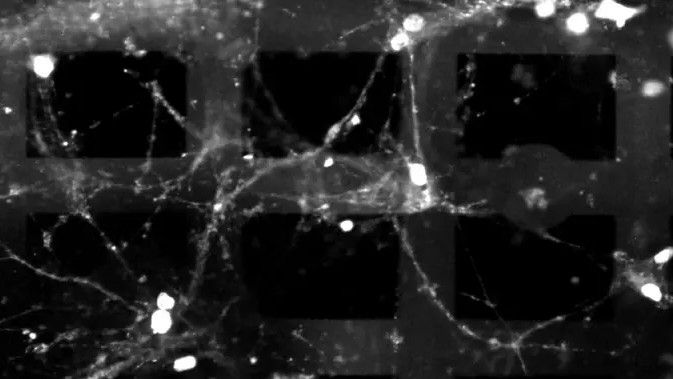
In a landmark development for the field of bioelectronics, researchers at Princeton University have engineered a sophisticated 3D device that effectively bridges the gap between biological systems and electronic hardware. Unlike traditional planar electrode arrays that offer limited interaction with neural cultures, this device utilizes a specifically designed 3D electronic mesh. By embedding living brain cells within this intricate scaffold, the team has created an environment where neurons can survive, form synaptic connections, and function outside the biological body.
This architecture is not merely a passive container; it serves as an active interface that facilitates high-fidelity interaction between biological neural networks and digital monitoring systems, allowing for a level of spatial resolution previously unattainable in bio-hybrid research.
Engineering the Biological Computer: Methodology and Logic
The primary technical achievement of this project lies in its ability to enable isolated neurons to perform rudimentary computational tasks. While modern silicon processors rely on billions of transistors to execute binary logic through the flow of electrons, biological neurons utilize electrochemical signals and ion-channel modulation with a level of energy efficiency that current synthetic hardware cannot match. The Princeton researchers are leveraging this 3D mesh design to observe how neural signals can be harnessed for computation, effectively treating the neural cluster as a living logic gate.
This process involves the integration of conductive polymers and micro-electrodes that can both stimulate and record from individual cells within the 3D volume. By observing how these cells respond to stimuli and process input signals, the researchers are gathering critical data on how biological networks manage complex information flow with minimal heat dissipation and power consumption.
Scientific Implications for Energy Efficiency and Neuromorphic Design
Beyond the immediate goals of biological computation, this device serves as a powerful platform for neuromorphic engineering. The human brain operates on a power envelope of approximately 20 watts, an achievement that remains the ‘holy grail’ for AI hardware architects struggling with the massive energy demands of modern data centers. By studying the brain’s extraordinary energy efficiency in a controlled, electronically-integrated environment, scientists can identify specific biological principles—such as temporal coding and sparse signaling—that could be emulated in future silicon-based AI chips.
Furthermore, the 3D environment allows for a more accurate simulation of brain function than traditional 2D cultures, providing a new frontier for studying neurological diseases like Alzheimer’s and Parkinson’s. By monitoring how these pathologies disrupt the electrical pathways within the 3D mesh, researchers can test the efficacy of pharmacological interventions in real-time. This research represents a significant leap toward understanding the complex synergy between organic life and synthetic electronics, aiming to unlock the secrets of brain function and its unparalleled processing capabilities to redefine the future of computing infrastructure.