Executive Summary
- Volkswagen is pivoting its electrification strategy by integrating high-efficiency ‘full’ hybrid systems into the iconic Golf and potentially its SUV siblings, aiming to bridge the gap between internal combustion and full EVs in the competitive US market.
Strategic Deep-Dive
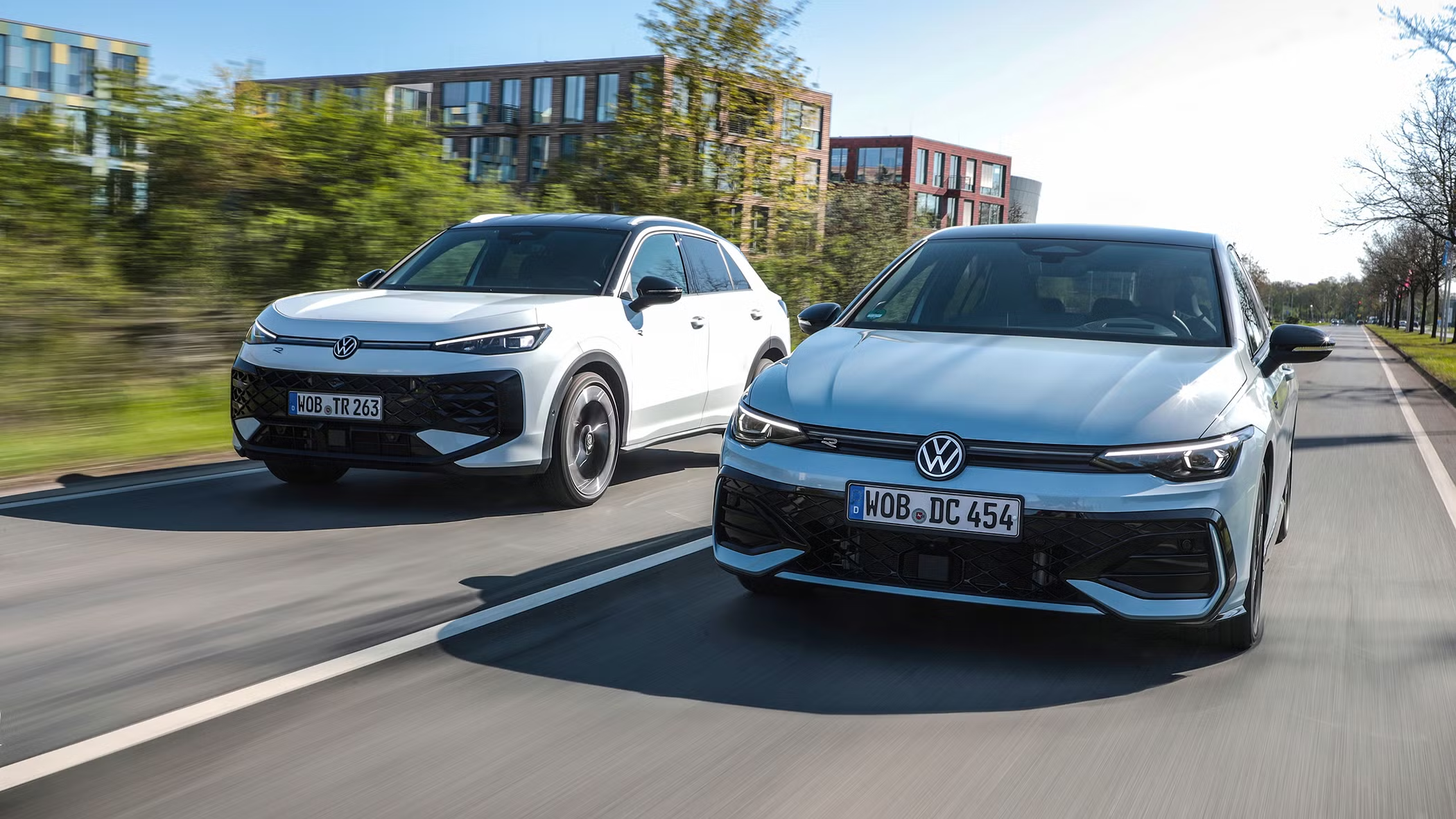
The automotive industry is witnessing a significant recalibration as Volkswagen (VW) announces the integration of ‘full’ hybrid (HEV) technology into its quintessential Golf lineup. This move represents a calculated shift in the company’s propulsion strategy, moving beyond the lightweight assistance of mild hybrids and the infrastructure dependency of plug-in hybrids (PHEV). By focusing on a self-charging full hybrid system, VW is addressing a critical market segment that seeks maximum fuel efficiency without the ‘range anxiety’ or charging logistics associated with purely electric vehicles.
This strategic pivot is particularly visible through the lens of the MQB Evo platform’s modularity. The technical architecture of the MQB allows for a seamless transition of hybrid components across various vehicle classes, meaning that the full hybrid system pioneered for the Golf will likely find its way into the T-Roc and other high-volume SUV models. This is a crucial expansion, as SUVs continue to dominate global sales charts, and a hybrid powertrain could significantly lower the fleet-wide carbon footprint while maintaining profitability.
From a technical perspective, the ‘full hybrid’ designation implies a more robust electric motor and a larger battery capacity compared to 48V mild hybrid systems, enabling short bursts of purely electric driving and more aggressive regenerative braking. This technological leap is essential for meeting increasingly stringent Euro 7 and EPA emissions standards. However, the most pressing question for analysts is the North American trajectory.
For years, the US market has seen a narrowing of the Golf lineup to high-performance variants like the GTI and Golf R. Introducing a standard ‘Full Hybrid’ Golf would signal a major reversal, prioritizing mass-market efficiency over niche performance. Given that US consumers are currently gravitating toward hybrids at a faster rate than BEVs, VW faces a dilemma: risk cannibalizing its ID.4 sales or miss the hybrid gold rush currently enjoyed by Toyota and Honda.
Furthermore, the integration of hybrid tech into SUVs like the T-Roc or a potential hybrid Tiguan would be a game-changer for VW’s US dealerships. The Senior Analyst view suggests that while VW’s long-term goal remains ‘Way to Zero’ emissions, the mid-term reality requires a diverse powertrain mix. By leveraging the internal combustion engine’s established supply chains and combining them with advanced electric drivetrains, VW is insulating itself against the volatility of the lithium-ion battery market.
This approach allows the manufacturer to maintain high production volumes and defend its global market share while the charging infrastructure catches up to the EV vision. Ultimately, the success of the Golf Full Hybrid will be measured by its ability to convince tech-savvy but pragmatic consumers that a hybrid VW is the optimal bridge to the future, particularly in regions where the transition to a fully electric grid remains a decade-long endeavor.