Executive Summary
- Intel Corporation has delivered a watershed Q1 2026 earnings report, silencing skeptics and reinforcing its pivotal role in the global AI transition. The semiconductor pioneer reported revenue of $13.6 billion, a decisive 9.4% beat over the $12.4 billion consensus. Even more striking was the bottom-line performance: non-GAAP earnings per share (EPS) reached $0.29, obliterating the 1-cent consensus estimate by a factor of 29. This extraordinary profitability is a byproduct of Intel’s aggressive restructuring and its timely focus on AI-integrated CPU architectures, leading to a year-to-date stoc…
Strategic Deep-Dive
Intel Corporation has delivered a watershed Q1 2026 earnings report, silencing skeptics and reinforcing its pivotal role in the global AI transition. The semiconductor pioneer reported revenue of $13.6 billion, a decisive 9.4% beat over the $12.4 billion consensus. Even more striking was the bottom-line performance: non-GAAP earnings per share (EPS) reached $0.29, obliterating the 1-cent consensus estimate by a factor of 29.
This extraordinary profitability is a byproduct of Intel’s aggressive restructuring and its timely focus on AI-integrated CPU architectures, leading to a year-to-date stock rally exceeding 80%. The financial community is now re-evaluating Intel as a primary beneficiary of the AI expansion rather than a legacy incumbent.
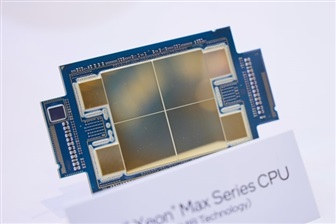
The qualitative engine behind these numbers is the Data Centre and AI division, which saw a 22% year-over-year revenue surge to $5.1 billion. This growth trajectory highlights a maturing market where enterprises are realizing that GPUs cannot operate in a vacuum; they require robust, AI-optimized host processors to manage data orchestration and inference tasks efficiently. Intel’s success in this segment suggests that its strategy to bake AI acceleration directly into its core silicon is yielding high-margin dividends.
As hyperscalers and sovereign nations build out massive data clusters, Intel’s DCAI portfolio has become a critical component of the modern compute rack, balancing the raw power of accelerators with intelligent control and processing.
Beyond the raw numbers, the revelation of a strategic collaboration with Elon Musk on his ambitious “Terafab” chip project has sent ripples through the industry. This alliance is a major victory for Intel Foundry Services (IFS) 2.0. By partnering with Musk—a figure known for demanding extreme scale and efficiency in compute—Intel is positioning its foundry as the premier Western alternative to East Asian dominance in high-end manufacturing.
The Terafab initiative suggests a new paradigm in chip design, focusing on unprecedented levels of integration and throughput for AI training. For Intel, this is not just about manufacturing; it’s about establishing a third pole in the global foundry market, creating a competitive triad alongside TSMC and Samsung.
Analysts view this move as an indicator of Intel’s successful vertical integration and its ability to attract high-profile architectural partners. The Terafab project likely leverages Intel’s advanced packaging technologies and its 18A process node, signaling that the company’s technical roadmap is back on track. As the AI hype cycle settles into a more sustainable phase of infrastructure building, Intel’s combination of soaring data center revenue and high-stakes foundry partnerships indicates a robust long-term outlook.
The company has successfully navigated the transition from a general-purpose processor manufacturer to a central pillar of the AI-driven global economy, proving that its core CPU IP and burgeoning foundry arm are indispensable to the future of high-performance computing.