Executive Summary
- The parallel US$20 billion investments by Nvidia (acquiring Groq’s IP and talent) and OpenAI (committing to Cerebras systems) signal a strategic shift away from generic GPU reliance toward specialized AI architectures like LPUs and wafer-scale systems.
Strategic Deep-Dive
The year 2026 marks a watershed moment in the semiconductor industry as the primary architects of the AI revolution, Nvidia and OpenAI, execute nearly identical US$20 billion strategies to secure their future. At the close of 2025, Nvidia CEO Jensen Huang orchestrated a massive US$20 billion acquisition of Groq’s intellectual property and engineering talent. This move was not merely a defensive play to eliminate a rising rival but a calculated offensive to integrate Groq’s specialized Language Processing Unit (LPU) architecture into Nvidia’s dominant platform.
Unlike traditional GPUs that rely heavily on High Bandwidth Memory (HBM) and face non-deterministic latency due to cache misses, Groq’s LPU utilizes an SRAM-based, software-defined architecture. This allows for massive bandwidth and deterministic execution, which is critical for the burgeoning ‘agentic AI’ market where real-time response is paramount.
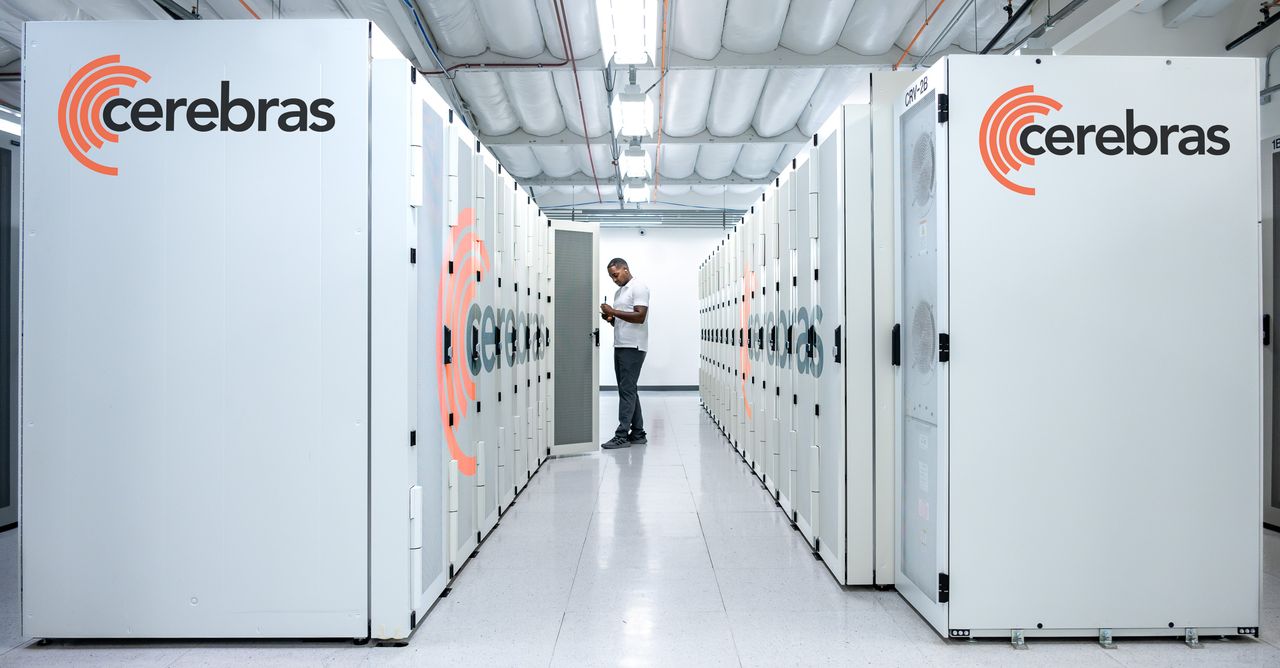
Simultaneously, OpenAI has signaled its intent to diversify its hardware reliance by committing to a purchase agreement worth over US$20 billion with Cerebras, another major disruptor in the AI chip space. The symmetry between these two figures—US$20 billion for acquisition by Nvidia and US$20 billion for infrastructure procurement by OpenAI—underscores the critical value placed on specialized hardware in the current era. Cerebras systems, known for their Wafer-Scale Engine (WSE), offer a radical alternative to traditional clustered GPU environments.
By keeping the entire processing array on a single piece of silicon, Cerebras eliminates the ‘memory wall’ and communication bottlenecks inherent in multi-chip interconnects. For OpenAI, this commitment ensures a steady supply of high-performance compute tailored to their specific scaling laws, potentially reducing the massive ‘compute tax’ imposed by generic hardware vendors.
This transition from generic GPU reliance to specialized architectures represents a fundamental pivot in the global tech roadmap. As the industry moves toward ‘agent-centric’ computing, the requirements for low latency and high throughput in inference tasks have surpassed the capabilities of traditional general-purpose architectures. Nvidia’s strategic move to acquire Groq’s talent allows them to maintain a foundry-neutral design advantage while expanding their IP portfolio into the inference-specific domain.
Meanwhile, OpenAI’s massive capital commitment to Cerebras demonstrates that the software giants of the AI world are no longer content to be mere customers; they are actively shaping the physical silicon layer to suit their proprietary models. The parallel investments suggest that the winner of the next phase of the AI war will not be the one with the most raw TFLOPS, but the one with the most efficient, specialized interconnects and processing units designed for an inference-heavy, low-latency future. This $40 billion collective bet fundamentally redefines the valuation of specialized IP versus generic manufacturing scale.