Executive Summary
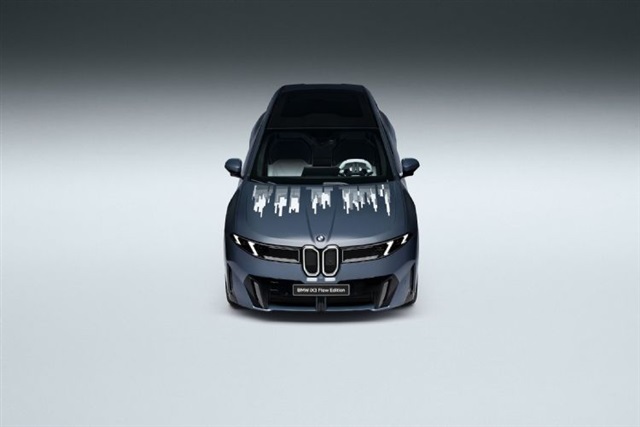
- The debut of the BMW iX3 Flow Edition at Auto China 2026 represents the first commercial mass-production application of E Ink Prism technology, transforming vehicle surfaces into dynamic, low-power digital interfaces.
Strategic Deep-Dive
The automotive hardware landscape has reached a definitive milestone with the official introduction of the BMW iX3 Flow Edition at Auto China 2026. This launch signals the transition of E Ink Prism technology from a conceptual marvel showcased at CES to a fully validated, mass-produced automotive component. E Ink, the primary architect of this electrophoretic breakthrough, has successfully demonstrated that electronic paper is no longer restricted to the controlled environments of e-readers but can withstand the brutal thermal envelopes and mechanical stresses inherent in the automotive lifecycle.
The BMW iX3 Flow Edition stands as the world’s first vehicle to integrate this dynamic surface technology on a commercial scale, effectively ending the era of static automotive aesthetics.
From a data systems architecture perspective, the integration of E Ink Prism involves more than just a surface-level film application. It requires a sophisticated control layer that interfaces with the vehicle’s central nervous system to synchronize visual changes with driver modes or environmental triggers. The Prism film itself utilizes bistable technology, meaning the electrophoretic particles remain in their designated state without a continuous power supply.
This architectural choice is critical for the vehicle’s energy budget; in an era where every milliampere of battery capacity is scrutinized for range optimization, E Ink’s near-zero power consumption in static states provides a strategic advantage over traditional LED or OLED-based exterior lighting. The technology facilitates a ‘Software-Defined Exterior,’ where the vehicle’s visual signature can be updated via over-the-air (OTA) patches, much like a smartphone interface.
The engineering hurdles overcome for this mass-production cycle were immense. Automotive-grade materials must survive a temperature delta ranging from sub-zero winters to scorching desert heat, all while maintaining signal integrity across the conductive backplane. The mass production of the iX3 Flow Edition confirms that E Ink and BMW have perfected the lamination processes required to adhere these sensitive films to complex 3D curvatures without inducing micro-cracks or delamination.
Furthermore, the functional implications extend into thermodynamics; by shifting the car’s exterior to a lighter shade in high-heat environments, the vehicle can reduce the thermal load on the HVAC system, thereby extending the driving range of the electric drivetrain.
Looking forward, this development sets a new benchmark for the mobility sector. As competitors scramble to replicate this interactive capability, E Ink’s first-mover advantage in establishing a robust supply chain for automotive-grade electronic paper will likely lead to a broader ecosystem of ‘Smart Surfaces.’ We are witnessing a shift where hardware is no longer a static container but a dynamic interface. For the global tech journalist, the BMW iX3 Flow Edition is not just a car; it is the debut of a new category of programmable matter that will redefine consumer expectations for personalization and functional design in the hardware domain.
The success of this mass-production run will inevitably catalyze the adoption of similar technologies in smart infrastructure, public transit, and high-end consumer electronics, marking a broader trend toward low-power, high-impact visual hardware.