Executive Summary
- As AI computing shifts toward inference, a fierce foundry battle between Samsung and TSMC has erupted over Nvidia’s LPU orders—a direct result of the Groq acquisition. Samsung is utilizing its HBM supply as strategic leverage.
Strategic Deep-Dive
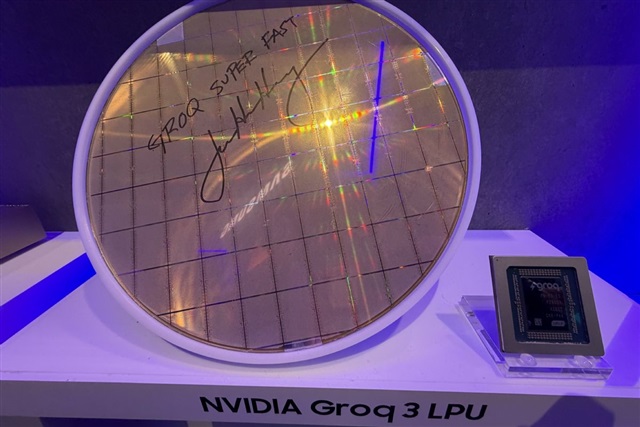
The AI industry has reached a critical inflection point, transitioning from resource-heavy training to an era dominated by inference and autonomous agent-centric computing. Nvidia’s strategic acquisition of Groq to internalize Language Processing Unit (LPU) technology—as detailed in our analysis of the $20 billion bet—has directly ignited a high-stakes competition between the world’s leading foundries, Samsung Electronics and TSMC. Both giants are now vying for the lucrative LPU manufacturing contracts that will power the next generation of real-time AI devices.
Samsung is adopting an aggressive strategy by using its High Bandwidth Memory (HBM) production capabilities as competitive leverage. By offering a bundled approach that integrates cutting-edge foundry services with guaranteed HBM supply, Samsung aims to resolve the persistent supply chain bottlenecks that have hampered AI chip designers. This ‘one-stop-shop’ value proposition is particularly attractive for LPU designs, where the synergy between memory bandwidth and logic processing is the primary performance driver.
While TSMC continues to rely on its established process maturity and robust Open Innovation Platform (OIP) ecosystem, Samsung’s HBM leverage is creating the first significant crack in TSMC’s dominance over Nvidia’s high-end orders. As AI silicon moves toward highly specialized designs for edge inference and agentic tasks, the winner of this ‘Foundry War’ will be the one who can provide the most seamless integration of memory and processing power.