Executive Summary
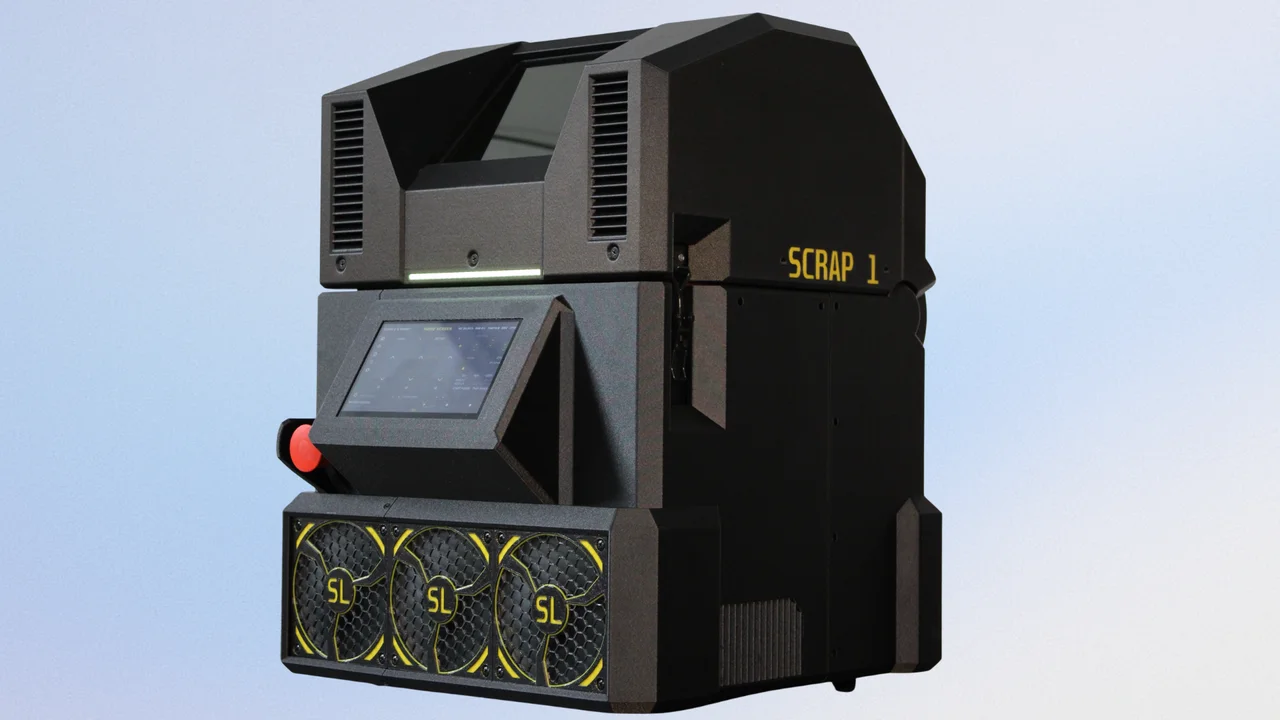
- Scrap Labs has launched the Scrap 1, a disruptive $9,600 workbench-scale LPBF metal 3D printer designed to bring industrial-grade manufacturing capabilities to independent laboratories and small-scale workshops.
Strategic Deep-Dive
The landscape of additive manufacturing is witnessing a seismic shift with the introduction of the Scrap 1 by Scrap Labs. For decades, Laser Powder Bed Fusion (LPBF) has been the gold standard for high-performance metal 3D printing, yet its adoption has been severely restricted by the astronomical costs associated with industrial-grade systems, which often command price tags ranging from $250,000 to over $1 million. The Scrap 1 aims to shatter this barrier with a starting price of just $9,600, effectively shrinking industrial-grade technology down to a workbench-friendly form factor without sacrificing the core mechanics that make LPBF superior to extrusion-based metal printing.
Technically, LPBF works by spreading a thin layer of metallic powder—such as stainless steel, titanium, or aluminum—across a build plate. A high-precision laser then selectively melts the particles to form a solid layer, a process repeated thousands of times. The Scrap 1 integrates a sophisticated optical engine and a simplified recoater blade system that manages to maintain micron-level precision in a much smaller footprint.
One of the most significant engineering challenges Scrap Labs addressed was the management of the inert gas environment. LPBF requires an oxygen-free chamber, typically filled with Argon, to prevent oxidation during the melting process. By optimizing the build volume and chamber sealing, the Scrap 1 minimizes gas consumption, making it feasible for standard workshop environments that lack specialized industrial infrastructure.
The implications for small-scale laboratories and independent hardware developers are profound. Previously, creating a custom titanium component for a satellite bracket or a specialized medical implant required outsourcing to expensive service bureaus, resulting in long lead times and high per-unit costs. With the Scrap 1, the iteration cycle for high-stress components can be reduced from weeks to mere days.
This creates a fail-fast environment for hardware engineers, mirroring the rapid development cycles seen in software engineering. Furthermore, the democratization of this technology empowers educational institutions to provide students with hands-on experience in advanced metallurgy and additive manufacturing physics, fields that were previously theoretical for most universities.
However, the $9,600 price point also invites scrutiny regarding long-term durability and the absolute precision of the integrated laser system compared to multi-million dollar counterparts from legacy leaders. Industrial systems utilize complex feedback loops and thermal monitoring to ensure 99.9% part density—a standard that Scrap Labs will need to prove over time. Despite these hurdles, the Scrap 1 represents a pivotal moment in the hardware industry.
It signals a transition where metal 3D printing moves from a niche industrial luxury to a foundational tool for the modern engineer’s workbench, potentially disrupting the traditional CNC machining market for complex, low-volume metal parts.