🔍 Executive Summary
- Innolux is pivoting from a traditional display manufacturer to a leader in advanced semiconductor packaging by leveraging its core TFT infrastructure.
- The adoption of Redistribution Layer (RDL) and Through-Glass Via (TGV) technologies addresses the thermal and stability limitations of organic substrates.
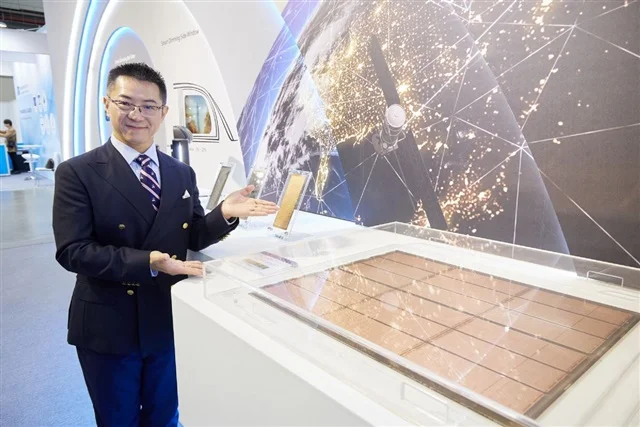
- Through Fan-Out Panel Level Packaging (FOPLP), the company is optimizing the integration of Mini/Micro LEDs and high-performance computing components.
Strategic Deep-Dive
Innolux is executing a sophisticated strategic pivot, positioning its legacy Thin-Film Transistor (TFT) manufacturing capabilities as a disruptive force in the advanced semiconductor packaging landscape. By moving beyond traditional display panels, the company is targeting the lucrative backend sector, specifically focusing on Fan-Out Panel Level Packaging (FOPLP). As a Senior Hardware Systems Analyst would note, the brilliance of this move lies in the synergy between large-area display processing and the needs of modern high-performance computing (HPC).
Innolux’s integration of Redistribution Layer (RDL) and Through-Glass Via (TGV) technologies represents a significant leap forward in solving the physical constraints of current packaging methods.
Traditional organic substrates, while cost-effective, suffer from thermal expansion mismatch and warping when paired with high-power AI silicon. Innolux’s TGV technology utilizes glass substrates, which offer superior dimensional stability and heat dissipation characteristics. TGV allows for vertical electrical connections through the glass with much higher precision than mechanical drilling on organic materials, facilitating shorter interconnects and significantly reduced signal latency.
Furthermore, the use of RDL on a large panel format allows for a much higher throughput compared to traditional wafer-level packaging, providing a clear path to cost reduction for advanced chipsets. This technology is also being aggressively deployed in the Mini LED and Micro LED segments, where precise alignment and electrical performance are non-negotiable. By blurring the lines between display manufacturing and semiconductor assembly, Innolux is not just diversifying its revenue; it is creating a new category of ‘Display-Centric Packaging.’ This approach is particularly relevant for the next generation of IoT devices and AI accelerators, where the demand for high-density integration meets the need for thermal management and structural integrity.
Innolux’s entry into the top tier of advanced packaging highlights a broader trend where display giants are becoming essential architects of the semiconductor ecosystem.