Executive Summary
- A breakthrough in robotic control software utilizes kinematic intelligence to decouple hardware constraints from motion planning, preventing joint failure and facilitating hardware-agnostic collaborative learning.
Strategic Deep-Dive
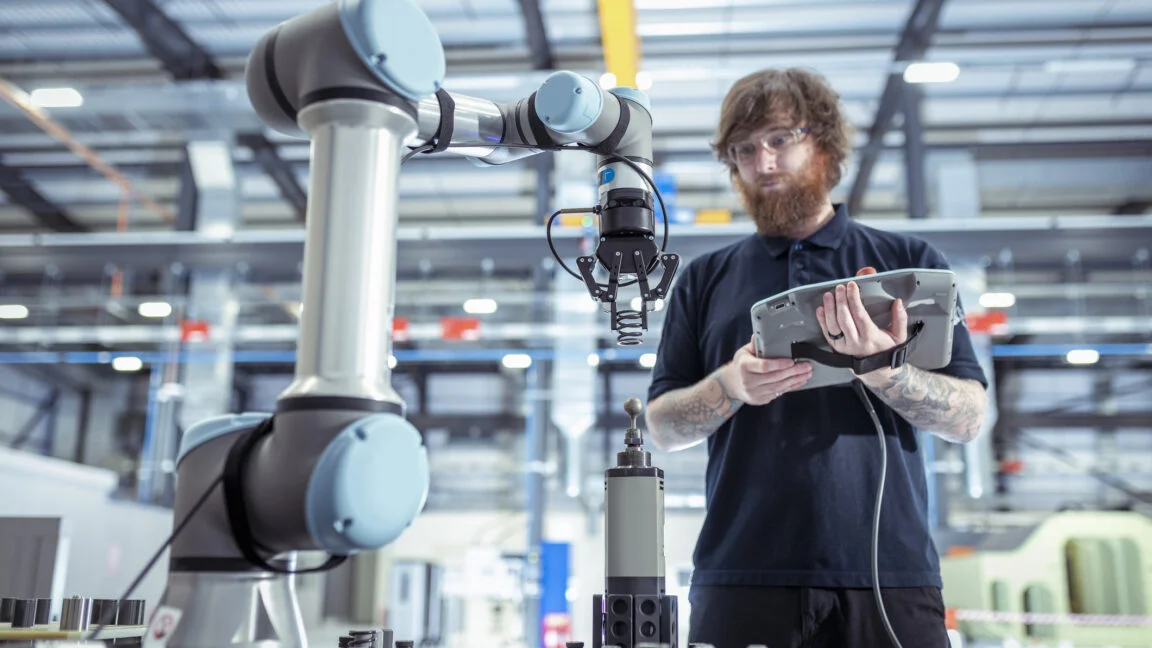
The field of robotics is currently undergoing a paradigm shift as software-driven kinematic intelligence begins to solve the mechanical vulnerabilities that have long plagued complex hardware. As reported by Ars Technica, a sophisticated new control framework allows robots to internalize and predict their own physical limits, effectively neutralizing the risk of joint jamming—a common failure mode where mechanical components interlock due to misalignment or excessive torque. At the heart of this innovation is a high-level layer of hardware abstraction.
By decoupling the motion planning algorithms from the specific physical parameters of individual actuators, the system enables what industry experts call ‘Zero-shot transfer’ of learning.
Mathematically, this entails mapping the robotic kinematics into a latent representation that remains constant regardless of the robot’s specific degrees of freedom or limb lengths. This architectural breakthrough means that a robot’s operational intelligence is no longer siloed within its own metal frame. Instead, robotic systems can now share and refine their control loops across diverse platforms, allowing a humanoid to benefit from the dexterity data gathered by a multi-fingered industrial manipulator.
This hardware-agnostic approach is a strategic leap toward universal automation, where the intelligence stack evolves independently of the physical iterations.
From a global systems perspective, the implications for maintenance and operational expenditure (OPEX) are profound. Traditional robotics relies heavily on rigid physical stops or simplistic limit switches, which often fail to account for dynamic stresses that lead to jamming. Kinematic intelligence, however, implements a software-defined ‘protective envelope’ around the robot’s workspace.
By continuously simulating the mechanical stress on every joint and adjusting movement paths in real-time to avoid high-risk configurations, the software significantly enhances the longevity of expensive hardware. This shift signals a transition from reactive repair to proactive algorithmic preservation. As the industry moves toward more autonomous and collaborative environments, the ability of robots to ‘know’ their own bodies and learn from disparate hardware configurations will become the gold standard for kinematic efficiency.
This advancement underscores a broader trend in AI hardware: as physical components become more standardized, the true competitive advantage will lie in the abstraction layers that manage them, ensuring both performance and physical integrity in increasingly complex operational scenarios.