🔍 Executive Summary
- The transition of humanoid robots into domestic settings necessitates a fundamental shift in end-effector design. Tendon-driven dexterous hands have emerged as the primary hardware solution to simulate human-like agility within complex, unstructured environments, addressing the critical trade-off between mechanical power and biological precision.
Strategic Deep-Dive
While the world’s attention remains fixated on Large Language Models (LLMs) acting as the ‘brain’ of humanoid robots, the true battle for domestic market dominance is being fought in the ’limbs.’ Specifically, the development of tendon-driven dexterous hands has become the defining hardware challenge for robots entering unstructured home environments. According to DIGITIMES Research, the shift from predictable industrial settings to the high-entropy world of household tasks requires a radical departure from traditional robotic gripper design. Industrial robots rely on high-torque, rigid mechanical linkages that are effective for heavy lifting but fail when tasked with delicate activities like handling glassware or folding laundry.
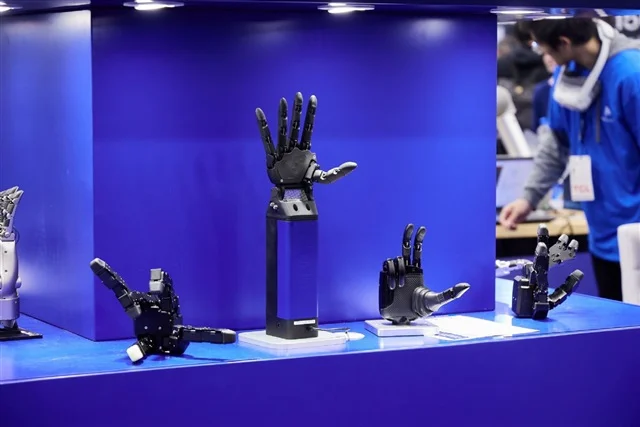
To mimic human dexterity, engineers are increasingly adopting tendon-driven mechanisms. By locating actuators remotely—typically in the forearm—and transmitting power through high-tensile-strength synthetic cables, manufacturers can achieve a higher degree of freedom (DoF) within the strict spatial constraints of a human-sized hand. This architectural choice allows for under-actuated designs that can adapt to the shape of various objects, a feature known as ‘mechanical intelligence.’ However, the path to mass-market commercialization is fraught with engineering trade-offs.
The primary hurdles include sophisticated tension sensing, the wear and tear of the tendon materials, and the high assembly cost associated with complex cable routing. For a senior market architect, the focus must be on the economic scalability of these designs. Currently, most tendon-driven hands are prohibitively expensive prototypes.
For humanoid robots to achieve the ‘home-entry’ strategy envisioned by industry leaders, there must be a convergence of advanced materials science and automated manufacturing for these robotic hand assemblies. DIGITIMES Research highlights that as the market matures, the differentiation will lie in the synergy between sensor-integrated fingertips and the real-time control loops of the tendon systems. The success of future humanoid deployment depends on whether hardware engineers can bridge the gap between industrial rigidity and biological grace.
Ultimately, the robot that masters the complex mechanics of the human hand will be the one that successfully transitions from a curiosity in a lab to a necessity in the home.