Executive Summary
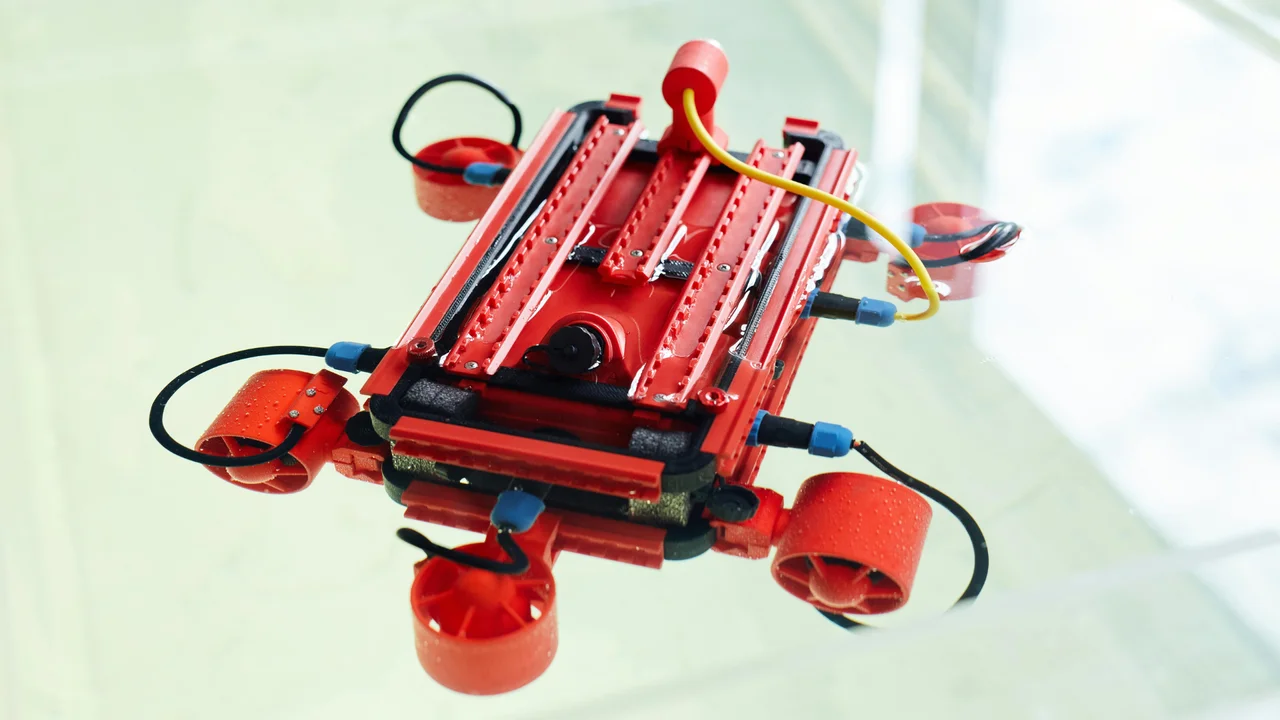
- DARPA is pivoting toward a quantity-over-quality strategy in naval warfare, seeking proposals for low-cost, rapidly deployable autonomous underwater vehicles (AUVs). These ‘attritable’ drones are designed to be manufactured quickly and lost without strategic consequence, providing a scalable and decentralized solution for persistent undersea surveillance.
Strategic Deep-Dive
Decentralizing the Depths: The Strategic Logic of DARPA’s Low-Cost UUVs
DARPA is initiating a program that could fundamentally redefine the calculus of naval engagement and undersea surveillance. By calling for proposals for small, inexpensive, and rapidly manufacturable autonomous underwater vehicles (AUVs), the agency is signaling a departure from the ’exquisite platform’ model that has dominated defense procurement for decades. The future of the ocean floor belongs not just to the silent, billion-dollar nuclear submarine, but to the swarm of ‘attritable’ drones that are cheap enough to be deployed by the thousands and lost without regret.
The strategic rationale for this shift is rooted in the concept of cost-imposition. In modern warfare, the asymmetry of cost is a weapon in itself. If an adversary is forced to use a multi-million dollar torpedo or a sophisticated sensor array to neutralize a drone that costs less than a luxury car, the economic burden of defense becomes unsustainable.
DARPA’s goal is to create a mass-producible fleet that can saturate a contested area, providing persistent ISR (Intelligence, Surveillance, and Reconnaissance) and disrupting enemy movements through sheer volume. These drones are intended to be ‘build-and-deploy’ assets, leveraging commercial-off-the-shelf (COTS) components and modular designs to ensure they can be assembled in a variety of industrial environments globally.
Technically, these autonomous submersibles will focus on long-duration endurance and swarm intelligence. Unlike traditional UUVs that require specialized launch and recovery systems, DARPA’s vision includes drones that can be launched from standard shipping containers or small civilian vessels. This democratization of underwater deployment allows for a level of operational flexibility that was previously unimaginable.
A network of small drones can effectively map the seabed, track acoustic signatures of enemy vessels, and act as a distributed communications relay, all while remaining difficult for traditional sonar to classify due to their small size and low acoustic profile.
Furthermore, this move toward ’low-expectation’ hardware in a military context mirrors trends in the commercial sector. By accepting lower performance ceilings for individual units in exchange for massive scalability, DARPA is acknowledging that in the era of AI and automated target recognition, ‘quantity has a quality of its own.’ The rapid-build requirement also serves as a hedge against the slow, bureaucratic procurement cycles of the past. In a fast-moving conflict, the ability to replenish a fleet of underwater drones in weeks rather than years could be the difference between victory and defeat.
Ultimately, DARPA’s underwater drone program is more than just a search for new hardware; it is a test of a new military philosophy. It moves the needle from a platform-centric force toward a decentralized, network-centric model. If successful, this program will prove that undersea dominance can be achieved through economic expendability and rapid technological iteration.
It marks the end of the era where underwater operations were the exclusive domain of elite, high-cost assets and the beginning of an era where autonomous, expendable swarms rule the depths.