🔍 Executive Summary
- TSMC has officially announced it will not integrate ASML's High-NA EUV equipment into its production lines until at least 2029, opting to leverage existing EUV capabilities and multi-patterning to maintain cost-effectiveness for its clients.
Strategic Deep-Dive
The Physics and Economics of High-NA Lithography
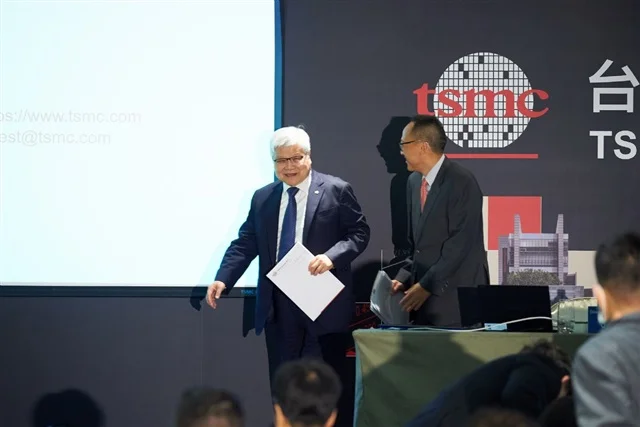
At the North America Technology Symposium held on April 27, 2026, TSMC delivered a definitive stance on the future of lithography: the company will not deploy ASML’s 0.55 High Numerical Aperture (High-NA) EUV scanners for mass production until 2029. This decision clarifies a long-standing industry debate regarding the necessity of the hardware for sub-2nm nodes. High-NA EUV increases the resolution of lithography by enlarging the optics, but it introduces significant complexities, including anamorphic imaging—where the magnification differs in the X and Y directions—requiring a complete overhaul of mask designs and resist materials.
For TSMC, the primary deterrent is not the physics, but the prohibitive cost-per-wafer. Each unit costs upwards of $350 million, and when factoring in the required infrastructure upgrades, the economic profile remains unfavorable for immediate commercial deployment.
Engineering Around the Limitation: Multi-Patterning vs. Single-Exposure
Kevin Zhang, TSMC’s Senior VP of Global Business, articulated a pragmatic vision where Moore’s Law is sustained through clever engineering rather than brute-force equipment acquisition. TSMC plans to bridge the gap using advanced multi-patterning techniques on its existing 0.33 NA EUV fleet. By employing self-aligned quadruple patterning (SAQP) or other hybrid lithography-etch schemes, TSMC believes it can achieve the transistor density required for its upcoming A16 (1.6nm) node.
While multi-patterning increases process steps and cycle time, the mature yield and fully depreciated status of the 0.33 NA tools offer a significant margin advantage over the unproven High-NA systems. This strategy allows TSMC to provide high-performance AI and mobile silicon at price points that its competitors, struggling with the high overhead of new equipment, may find difficult to match.
A Divergent Path from Intel and Samsung
This conservative roadmap creates a stark contrast with Intel, which has positioned itself as the pioneer of High-NA EUV to reclaim process leadership with its ‘Intel 14A’ node. TSMC’s wait-and-see approach is a calculated bet that the ‘first-mover disadvantage’ in High-NA—characterized by low initial throughput and high learning curve costs—will hinder its rivals more than it helps them. By the time TSMC integrates High-NA in 2029, the technology will likely have matured, with improved source power and higher throughput (wafers per hour), allowing for a smoother ramp-up.
Furthermore, this delay puts pressure on ASML to demonstrate that the 0.55 NA tools can achieve the same level of reliability and operational uptime as the current generation. In the interim, TSMC’s focus remains on maximizing the return on its massive current-gen EUV investments, reinforcing its status as a foundry that prioritizes customer profitability alongside technical progress.